When we produce customized solar panels according to the specific needs of customers, we usually need to cut the solar cells into small pieces, and then connect the small pieces of solar cells in series or parallel as needed to form a solar cell string. Then, different numbers of solar cell strings are connected according to the required electrical performance to form a solar panel.
According to different types of solar cells and different production processes, there are usually two ways to connect solar cells.
For traditional crystalline silicon solar cells, in mass production, the connection method is usually through an automatic string welding machine. The positive electrode of one solar cell is connected to the negative electrode of the adjacent solar cell with a soldering ribbon to form a solar cell string. Using a string welding machine can not only greatly improve production efficiency and save labor costs, but also ensure product consistency.
For back-contact solar cells, in mass production, the connection method is usually to attach the solar cells to the PCB board through an SMT machine in a designed way, and then solder the solar cells together through reflow soldering. Or use an automatic string welding machine to connect in series or parallel in the same way as traditional crystalline silicon solar cells.
WSL Solar has been a quality and professional manufacturer of custom solar panels, solar mini panels, IoT solar panels and solar solution provider in China since 2006. https://www.wsl-solar.com
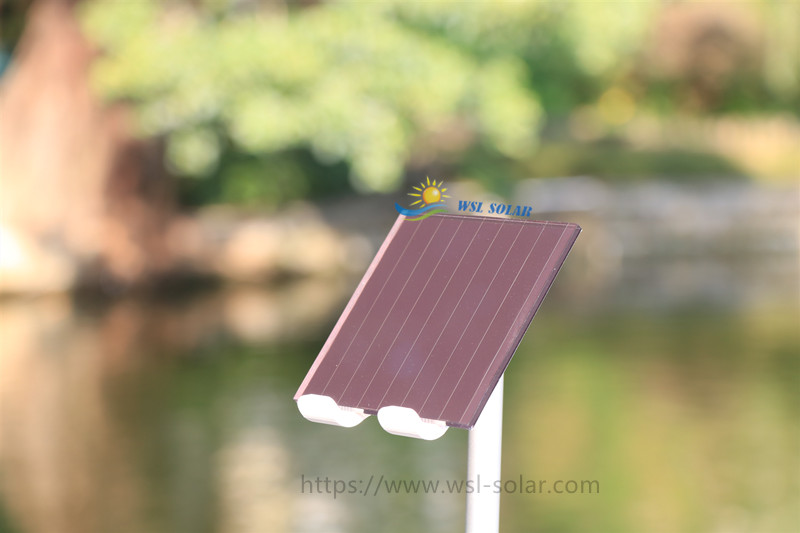
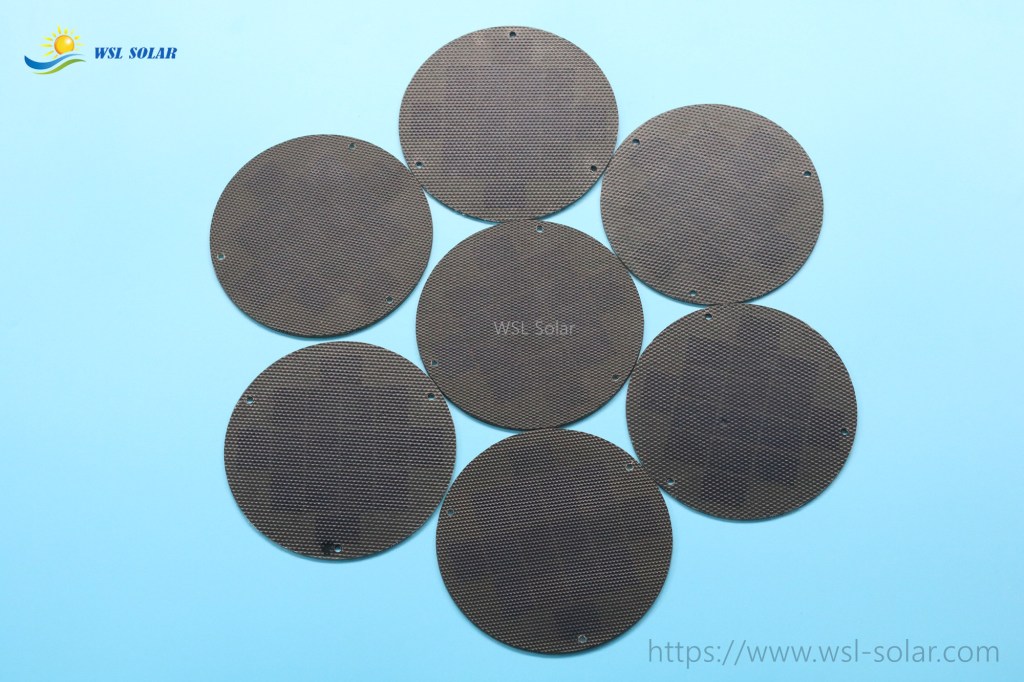
Amorphous solar cell can harvest energy and generate electricity from environment light like sunlight or indoor light. It has good performance during weak light condition. This kind of solar cell can be used to power low-consumption electronic devices.
WSL Solar has been a quality and professional manufacturer of custom solar panels, solar mini panels, IoT solar panels and solar solution provider in China since 2006. https://www.wsl-solar.com
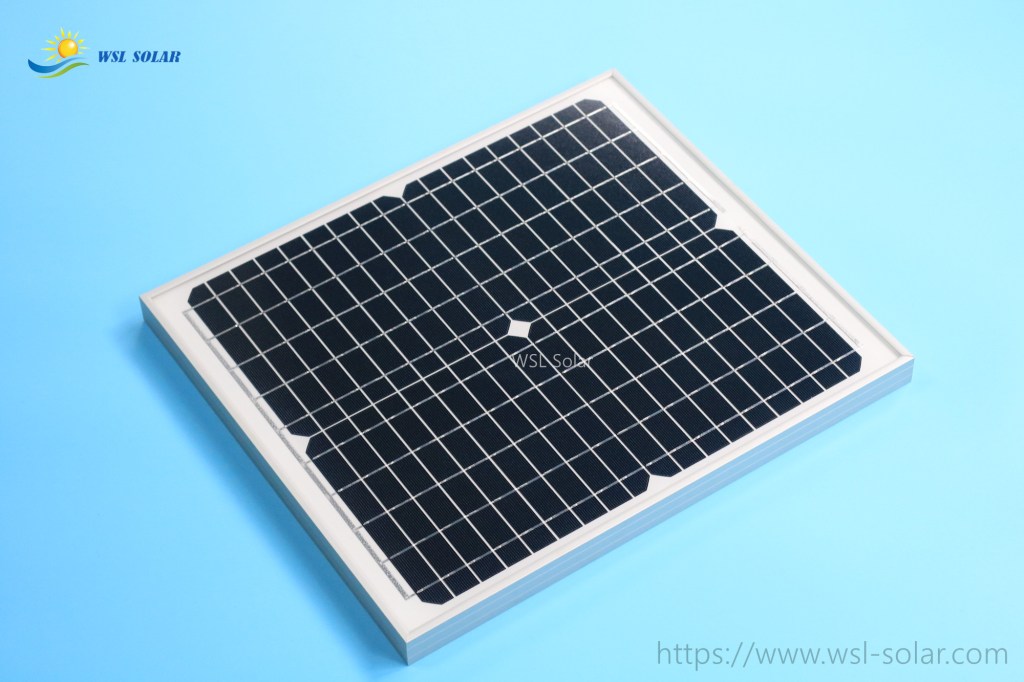
Which is better, polycrystalline silicon solar panels or monocrystalline silicon solar panels?
Both polycrystalline and monocrystalline silicon solar panels have their advantages and disadvantages depending on the specific application. Here are a few differences:
1. Efficiency: Monocrystalline solar panels generally have a higher efficiency, as the manufacturing process produces more pure silicon that has a uniform look and consistent performance. Polycrystalline solar panels, on the other hand, use silicon fragments and have a lower efficiency.
2. Space: Monocrystalline solar panels tend to have a higher power output per unit of space, making them a good option for installations with limited space. Polycrystalline solar panels require more space to generate the same amount of power, making them a good option for larger installations with ample space.
3. Cost: Polycrystalline solar panels are generally less expensive to produce than monocrystalline solar panels, making them a more affordable option. However, as manufacturing processes improve, the difference in pricing has become less noticeable.
4. Temperature and shading: Polycrystalline solar panels are better suited for installations with high outdoor temperatures and shading, while monocrystalline solar panels perform better under low light conditions.
Ultimately, the choice between polycrystalline and monocrystalline solar panels will depend on a variety of factors, including budget, space limitations, and performance requirements.
WSL Solar has been a quality and professional manufacturer of custom solar panels, solar mini panels, IoT solar panels and solar solution provider in China since 2006.
Photovoltaic glass is a special type of glass that converts sunlight into electricity by encapsulating solar cell modules in layers of glass. Usually low-iron tempered glass or double-layer glass is used, and the surface is coated with anti-reflection coating and transparent conductive layer.
Float glass is a common glass manufacturing process. In the production process, glass raw materials (such as silica sand, sodium carbonate, limestone, etc.) are melted, flowed out evenly from the top of the glass melting bath, and solidified into thin flake glass after cooling. This technique produces high-quality, uniform-thickness glass for a wide variety of applications.
The difference between photovoltaic glass and float glass is mainly reflected in the following aspects:
Different uses: Photovoltaic glass is mainly used in the manufacture of solar panels, while float glass is widely used in construction, automobiles and other fields;
Different materials: Photovoltaic glass usually uses special materials such as low-iron tempered glass or double-layer glass, while float glass is produced by using ordinary glass raw materials through special processes;
The manufacturing method is different: photovoltaic glass needs to be coated with anti-reflection coating and transparent conductive layer on the surface, and the solar cell module is encapsulated in it. Float glass, on the other hand, is made from thin sheets of glass by melting the raw material.
Different performance requirements: Photovoltaic glass needs to have certain special properties such as transmittance, reflectivity and wind pressure resistance, while float glass mainly requires uniform thickness, high strength and light transmission performance.
WSL Solar has been a quality and professional manufacturer of custom solar panels, solar mini panels, IoT solar panels and solar solution provider in China since 2006. https://www.wsl-solar.com
Considering factors such as conversion efficiency of solar panels, technical level, maturity of production process, market share, etc., for large-scale grid-connected photovoltaic power plants, the types of solar panels currently commonly used can be roughly divided into crystalline silicon solar panels and amorphous silicon solar panels. Crystalline silicon solar panels are further divided into monocrystalline silicon solar panels and polycrystalline silicon solar panels. Amorphous silicon solar panels are mainly thin-film solar panels. The following is a brief analysis of the conversion efficiency of various photovoltaic solar panels:
1. Monocrystalline silicon solar panels Monocrystalline solar panels are the most common high-efficiency solar panels on the market today. The production process and technological breakthroughs of the single crystal industry chain determine that it has a more perfect crystal lattice, can better absorb light, and has a higher conversion efficiency. For monocrystalline solar panels, the efficiency of PERC high-efficiency monocrystalline solar cells has exceeded 23%, setting a world record. The conversion efficiency of ordinary monocrystalline solar cells is also above 19%, which is the highest photoelectric conversion efficiency among all types of solar cells. With the continuous maturity of technology, the price of monocrystalline solar panels is almost the same as that of polycrystalline. Because monocrystalline silicon is generally encapsulated with tempered glass and waterproof resin, it is durable and its service life can generally reach 20 years, and the maximum can reach 30 years.
2. Polycrystalline silicon solar panels Compared with monocrystalline solar cells, the silicon wafer of polycrystalline solar cells is a combination of multiple tiny single crystals, with a large number of grain boundaries in the middle, including many defects. It is actually a minority carrier recombination center, thus reducing the polycrystalline silicon. At present, the conversion efficiency of polycrystalline solar cells is about 18%-20%.
3. Thin film solar panels After several years of rapid development, the laboratory efficiency of single-junction amorphous silicon thin-film solar cells can reach about 12.7%, and the laboratory efficiency of microcrystalline silicon multi-junction solar cells can reach 13.4%. The laboratory photoelectric conversion efficiency of solar cells can reach 16%, and the average efficiency of commercial solar cells is 8%-10%. The conversion efficiency of copper indium gallium selenide can reach 14%.
However, compared with crystalline silicon solar panels, the main problem of thin-film solar panels is the low photoelectric conversion efficiency, and the area of thin-film solar panels required to convert the same amount of electric energy is huge. In addition, thin-film solar panels also have the disadvantage of poor stability, and their energy conversion efficiency changes with the prolongation of irradiation time. These shortcomings are the biggest obstacles to the wide application of thin-film solar panels. From the analysis of the conversion efficiency of the above three types of photovoltaic solar panels, it is not difficult to see that the conversion efficiency of crystalline silicon solar panels is significantly higher and more stable than that of thin-film solar panels. Monocrystalline silicon solar panels have significantly higher conversion efficiency and are more stable than polycrystalline silicon solar panels. For the selection of photovoltaic power plant components, it should be combined with the specific conditions of the project, and the corresponding technical and economic comparison analysis should be carried out to finally determine the best solar panel selection suitable for the photovoltaic power plant.
WSL Solar has been a quality and professional manufacturer of custom solar panels, solar mini panels, IoT solar panels and solar solution provider in China since 2006. https://www.wsl-solar.com
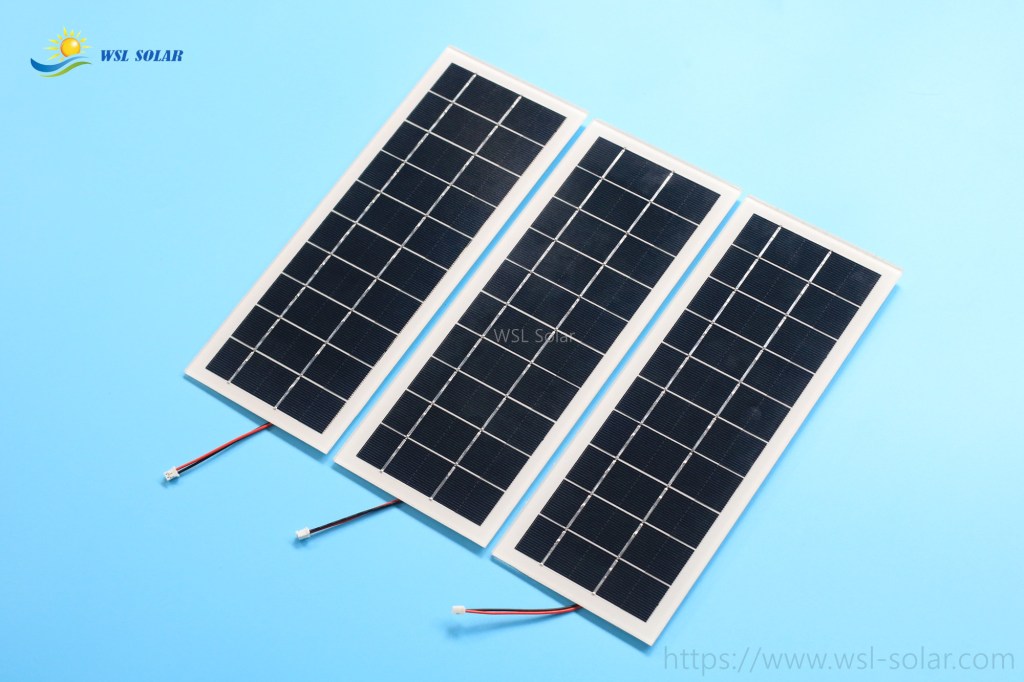
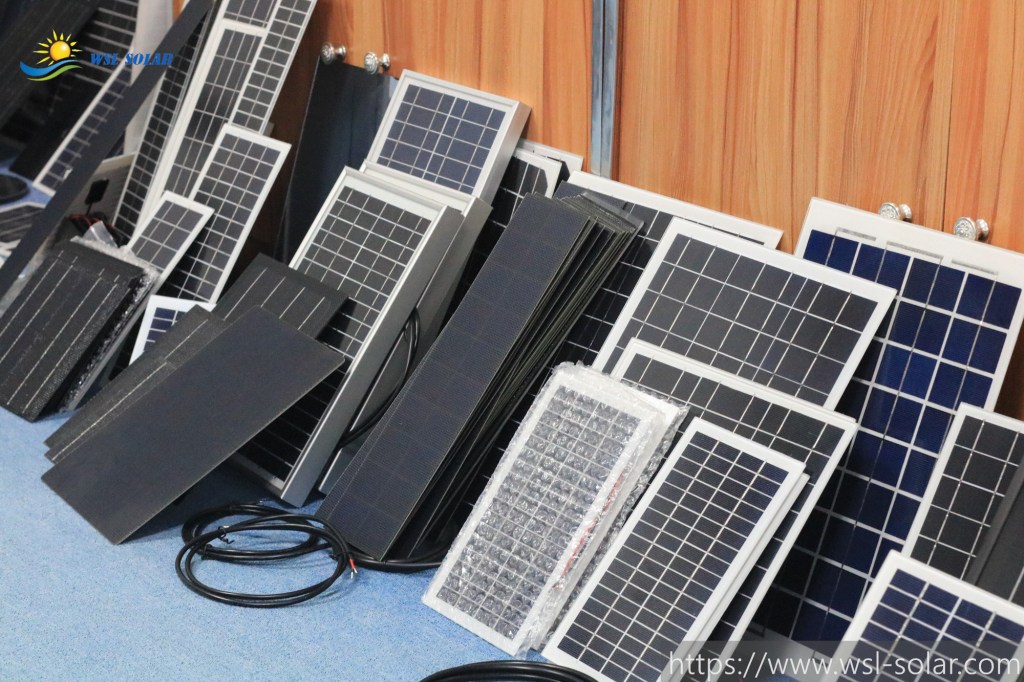
There are different types of custom solar panels: tempered glass solar panel or PET solar panel; mono solar panel or poly solar panel; black solar panel or white solar panel; with frame or not; with junction box or with ribbon only; need wire and terminal or not etc. Do you know how to inquire a custom solar panel? Hope this video could be helpful for you.
In the past two weeks (09.27-10.10), in response to power supply issues, the State Council of China convened an executive meeting to speed up the construction of large-scale photovoltaic bases and promote the implementation of energy-saving and carbon-reducing transformations in key areas. The arrangements made by the State Council will solve the problem of power cuts that have recently appeared, and ensure the basic lives of the people and the smooth operation of the economy. In these deployments, photovoltaics will play an important role. The following is the domestic and international photovoltaic industry information in the past two weeks.
State Council: Ensuring power supply and promoting the construction of large-scale photovoltaic bases
On October 8, the State Council of China held an executive meeting to further make arrangements for the supply of electricity and coal this winter and next spring to ensure the basic lives of the people and the smooth operation of the economy. The meeting pointed out that reforming and improving the market-oriented formation mechanism of coal and electricity prices, adjusting the fluctuation range of market transaction electricity prices from no more than 10% and 15%, respectively, to no more than 20% in principle. The industry can form prices through market transactions and is not subject to a 20% rise. Accelerate the construction of large-scale wind power and photovoltaic bases in the Gobi desert area, and accelerate the construction of emergency standby and peak shaving power sources. Resolutely curb the blind development of the “two highs” project. Improve the local energy consumption dual control mechanism, and promote that new renewable energy consumption will not be included in the total energy consumption within a certain period of time. Promote the implementation of energy-saving and carbon-reduction transformations in key areas.
Encourage rooftop distributed photovoltaic development
On September 30, ten ministries and commissions including the National Development and Reform Commission and the Ministry of Natural Resources issued the “Notice on Printing and Distributing Guidelines for the Standardized and Healthy Development of National Characteristic Towns.” The “Guidelines” pointed out that characteristic towns should, in accordance with the carbon peak and carbon neutral requirements, coordinate to promote high-quality economic development and high-level protection of the ecological environment. Promote clean, low-carbon, safe and efficient use of energy, guide non-fossil energy consumption and the development of distributed energy, develop rooftop distributed photovoltaics where conditions permit, promote clean heating and contract energy management. Promote low-carbon transformation in industry, construction, transportation and other fields, resolutely curb the blind development of “two highs” projects, vigorously develop green buildings, promote prefabricated buildings, energy-saving doors and windows, and green building materials, and promote green construction.
Tianjin promulgated regulations on promoting carbon peak and carbon neutrality to support the development of non-fossil energy such as solar energy
On September 27, the 29th meeting of the Standing Committee of the 17th Tianjin Municipal People’s Congress reviewed and approved the “Regulations on the Promotion of Carbon Peak Carbon Neutrality in Tianjin”, which will come into force on November 1, 2021. The “Regulations” put forward in the “Green Transition” section to support the development of non-fossil energy such as wind energy, solar energy, geothermal energy, and biomass energy, gradually expand non-fossil energy consumption, coordinate the promotion of hydrogen energy utilization, and promote low-carbon energy to replace high-carbon energy.
Lishui, Zhejiang: Accelerate the promotion of distributed photovoltaics and implement the “Photovoltaic +” project
On October 9, the Development and Reform Commission of Lishui City, Zhejiang Province issued a notice on publicly soliciting opinions on the “Implementation Opinions of the People’s Government of Lishui City on Accelerating the Development of Distributed Photovoltaics (Draft for Solicitation of Comments)”. The “Draft for Comments” requires that the large-scale development of distributed photovoltaic counties (cities, districts) is the starting point, and the “photovoltaic +” project will be fully implemented to promote the high-quality development of the green and low-carbon energy industry, and strive to build a green energy base in East China. Strive to add 1.5 million kilowatts of photovoltaic power to the city during the “14th Five-Year Plan” period, and implement policy support for financial rewards and subsidies.
International Photovoltaic Industry Information
Germany’s third-largest state requires solar energy to be installed on the roofs of all new houses
On October 6, the State Assembly of Baden-Württemberg in Germany passed a legal amendment requiring that from May 1 next year, all newly built houses in the state be installed with solar installations on the roof. From January 1, 2023, all existing buildings in the state will also be retrofitted with solar installations on the roof. This move aims to enable the state to achieve its goal of carbon neutrality by 2030. Baden-Württemberg is the third largest state in area and population in Germany, and the state capital Stuttgart is the headquarters of many well-known companies such as Daimler.
Kazakhstan: Double the share of renewable energy power generation by 2023
According to the official website of the Prime Minister of Kazakhstan, Ma Ming, the Prime Minister of Kazakhstan, hosted a video conference of the Council for the Improvement of the Investment Environment on October 9 to study the development of renewable energy and the transition to a “low-carbon economy”. In order to achieve the goal of achieving “carbon neutrality” by 2060 proposed by President Tokayev at the United Nations Climate Ambition Summit, the Kazakh government plans to double the share of renewable energy power generation by 2023 to 6%, compared with the previous one. The planned realization of this goal in 2025 is greatly advanced. In the next four years, the Kazakh government also plans to put into operation more than 60 new renewable energy projects, with a total installed capacity of 2,400 MW and a total investment of more than 2.5 billion US dollars.
Posted by Carrie Wong | WSL Solar
WSL Solar has been a quality and professional manufacturer of custom solar panel and solar solution provider in China since 2006.
Foreword: In September last year, President Xi announced at the United Nations General Assembly: China’s carbon dioxide emissions will peak by 2030 and be carbon neutral by 2060. This solemn commitment demonstrates China’s role as a major country in actively responding to climate change and promoting the building of a community with a shared future for mankind. More than 190 countries around the world have once again formed a high degree of consensus to jointly tackle global climate change.
On September 10, the 2021 4th China International Photovoltaic Industry Summit Forum was successfully held in Chengdu, Sichuan. The chairman of Tongwei Group’s board of directors pointed out at the forum: “China has formed an annual photovoltaic system capacity of about 200GW, and the electricity generated by the products produced each year is equivalent to the equivalent of 100 million tons of oil. Photovoltaics is the background of carbon neutrality. The new oil, the future energy exporting country is very likely to turn from the Middle East to China, changing the world’s new energy landscape.”
Need to balance economic development and environmental protection
As early as August 9, the latest climate analysis report issued by the United Nations pointed out that since the 19th century, humans have obtained energy through the burning of fossil fuels, resulting in global temperatures that are 1.1 degrees Celsius higher than the pre-industrial level. The temperature will continue to rise in ten years, and by then it may be 1.5 degrees Celsius higher than the pre-industrial level.
The report points out that at the end of this century, it is difficult to stabilize the climate at a temperature rise of 1.5 degrees Celsius before the level of industrialization and to achieve the goals of the Paris Agreement. To achieve the goals of the Paris Agreement, carbon dioxide emissions need to be significantly reduced in the next 10 years, and net zero emissions will be achieved by 2050. The Secretary-General of the United Nations therefore pointed out that this report is “a red alert for mankind. Before coal and fossil fuels destroy the earth, their death knell must be sounded!”
“Photovoltaics is the new oil”
At the beginning of this year, Sinopec proposed to build a “one base, two wings, three new” development pattern based on energy resources, with clean energy and synthetic materials as its two wings, and new energy, new economy, and new fields as important growth points. The investment in Fengyang Silicon Valley Intelligent Co., Ltd. is in line with Sinopec’s development direction of “building the world’s leading clean energy chemical company”. It has both financial investment and industrial synergy, and will help Sinopec to take greater steps in new energy and new fields. In addition to Sinopec, large domestic and foreign oil companies have plans to deploy in the field of new energy such as solar energy, and domestic PetroChina and CNOOC are also deploying in the field of new energy. There are more oil companies deploying new energy overseas, and world-class oil companies such as Total, Shell, and BP are all involved in this.
Research and analysis have shown that photovoltaics are the new oil under the background of carbon neutrality. In the future, the major energy exporting countries are likely to switch from the Middle East to China, changing the world’s new energy pattern. This is why the oil giants are so interested in photovoltaics?
As the cost of photovoltaic power generation is reduced to the stage of parity, the global photovoltaic power generation industry is about to enter a new round of stable growth, and photovoltaic power generation will gradually become an important energy supply method. Before the fossil fuel market begins to shrink, Chinese oil companies need to use fossil energy profits to invest in clean energy fields such as photovoltaics to cope with changes in the future energy supply pattern and avoid becoming a single industrial raw material provider.
With the acceleration of the reform of China’s power system, oil companies have the conditions to become power suppliers; oil companies have the space resource endowment to develop the photovoltaic industry, and oil companies can take advantage of the synergy of the industrial chain.
Photovoltaic will be the first protagonist of future energy development
Among the technological paths that can be seen in the next few decades, photovoltaics are relatively inexhaustible, with unlimited resources, high conversion efficiency, short paths, and high use efficiency. They will become the first protagonist of carbon neutrality. Some say it will account for 40% of the future energy composition, and some say it will reach 80%. There is a high probability that 60% to 80% will be provided by photovoltaics. At the same time, with the sound development of China’s photovoltaic industry itself and the resolute implementation of government departments, coupled with a virtuous economic cycle, China’s dual carbon goal may be achieved 5 to 10 years ahead of schedule with the joint efforts of everyone. Photovoltaics is the new oil in the context of carbon neutrality. In the future, major energy exporting countries are likely to switch from the Middle East to China, changing the world’s new energy pattern.
Therefore, photovoltaic power generation has become the most economical power generation method in many countries and regions around the world. It has the conditions for large-scale application and gradually replaces fossil energy, and will become the first protagonist of future energy development.
Posted by Carrie Wong | WSL Solar
WSL Solar has been a quality and professional manufacturer of custom solar panel and solar solution provider in China since 2006.





 Custom Solar Panel