How Solar Cell Laser Cutting Machine Works?

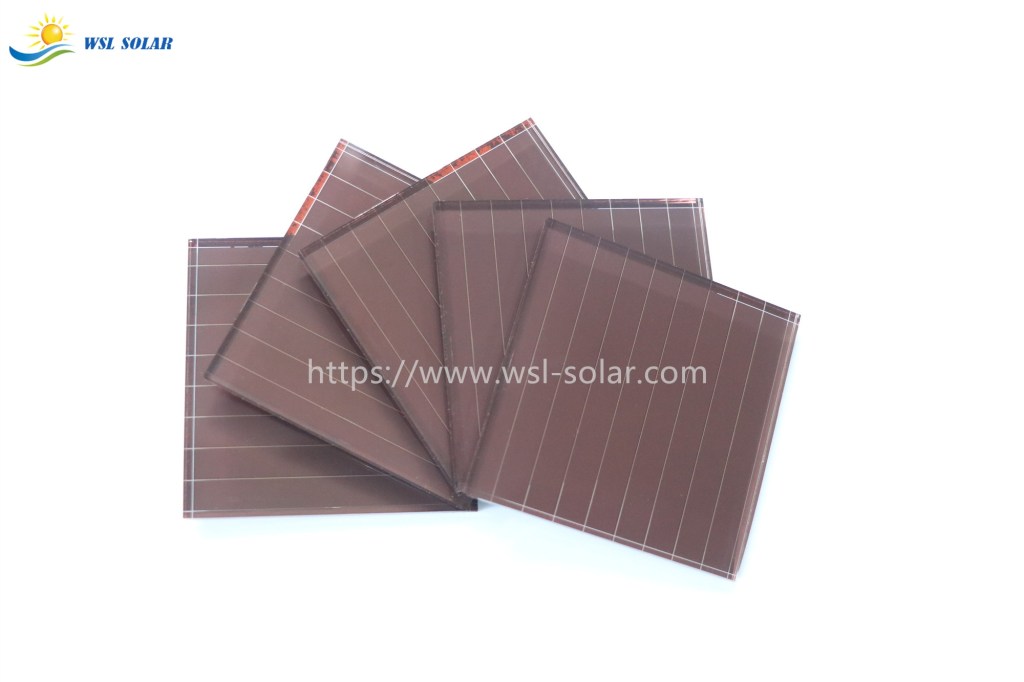
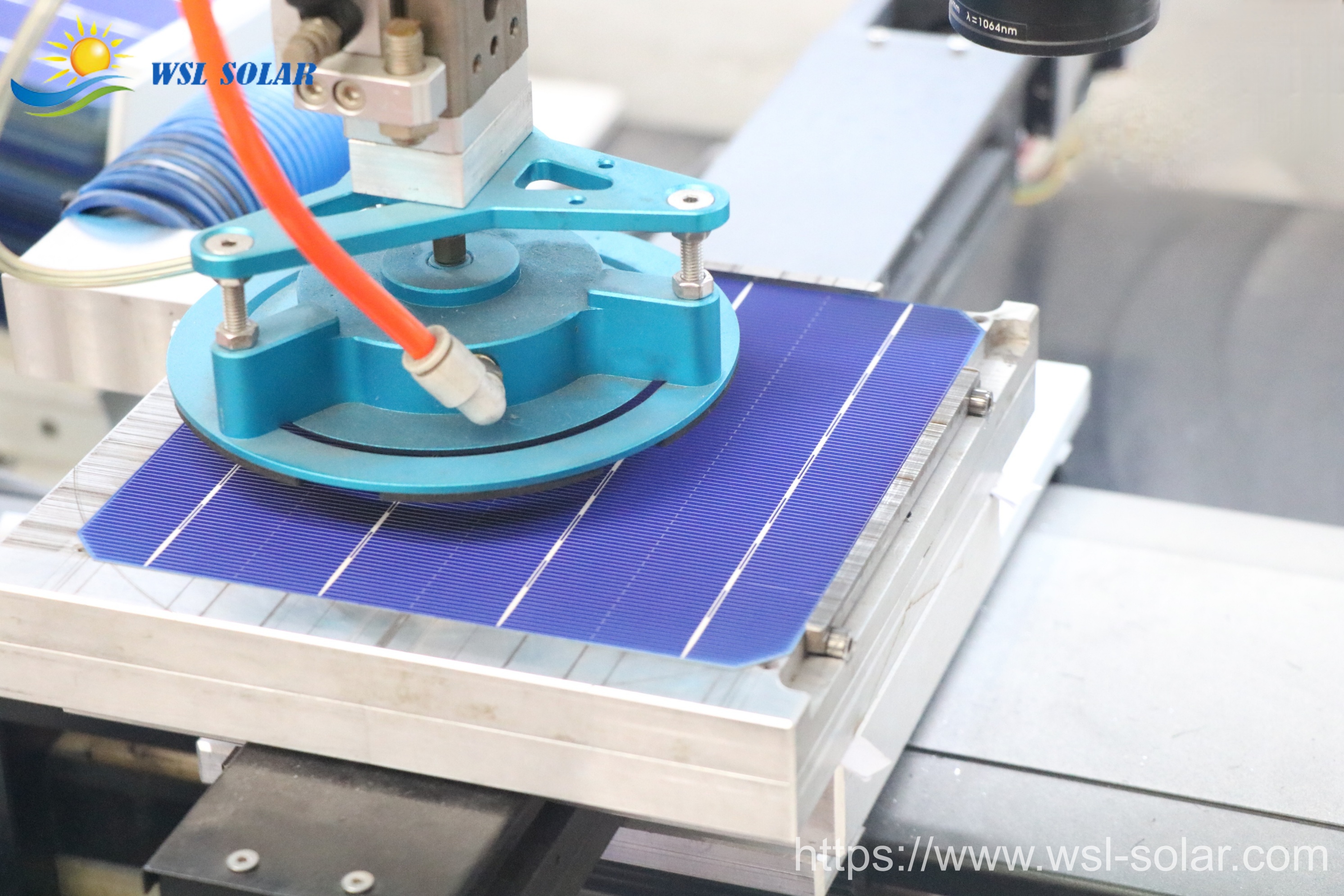
How laser cutting machine works to cut solar cells into small pieces according to your solar panel design?

Cutting solar cells into small pieces is a critical process in solar panel manufacturing, especially for high-efficiency custom solar panels with specific designs. Here’s a detailed breakdown of how laser cutting works for solar cells.

The Core Principle: Controlled-Fracture Cleaving (for Monocrystalline Cells)

The most common method doesn’t “burn” through the silicon like a traditional laser cutter might with metal. Instead, it uses a highly focused, low-power laser to create a controlled thermal stress that induces a perfectly clean split along the crystal lattice. This is known as “laser scribing and cleaving” or “laser thermal separation.”

Step-by-Step Process

1. Design & Programming

  • Your solar panel design is translated into a cutting path by CAD/CAM software.
  • The software accounts for the wafer’s thickness, material properties, and the required edge quality to minimize electrical losses.

2. Laser Scribing (The Key Step)

  • A short-pulse, low-power infrared (IR) laser is focused to an extremely fine spot on the surface of the silicon wafer.
  • The laser rapidly heats a tiny, localized volume of silicon (to over 1000°C) along the desired cut line.
  • This creates micro-cracks or modifies the material structure along a precise, shallow path (the “scribe line”). The depth is carefully controlled – typically only 10-30% of the wafer’s thickness.
  • Crucially, the laser does NOT vaporize the material. It creates internal stress and a weakened zone.

3. Cleaving / Breaking

  • After scribing, a mechanical breaking step is often used.
  • A controlled bending force applies pressure along the scribe line.
  • Due to the induced stress and the guided micro-cracks, the silicon wafer fractures perfectly along the laser-defined path, following its crystalline structure.
  • This results in a clean, smooth edge with minimal micro-cracks and no thermal damage zone (HAZ) that would reduce cell efficiency.

Why Laser Cutting is Superior for Solar Cells (Compared to Mechanical Saws)

FeatureLaser Scribing & CleavingMechanical Diamond Saw/Scribing
Material Loss (Kerf)Minimal (only the laser scribe line). Saves expensive silicon.Significant (the width of the diamond blade). Wastes material.
Edge QualityVery clean, smooth, low micro-crack depth. Higher mechanical strength.Rougher, more micro-cracks, weaker edges prone to chipping.
Precision & FlexibilityExtremely high. Can cut complex shapes, curves, and very small shingles easily.Low flexibility, typically only straight lines.
Throughput & SpeedVery high speed (meters per second). Non-contact process.Slower, mechanical wear on blades.
Dust & ContaminationAlmost none for the scribing step. Clean process.Generates silicon slurry/dust that must be cleaned, causing contamination.
Thin Wafer HandlingExcellent. The only viable method for wafers <150μm thick without breakage.High breakage rates on very thin wafers.

Critical Requirements for the Laser Process

  • Ultra-Precision: Cutting must be accurate to within microns to ensure cells are identical for automated stringing.
  •  
  • Minimal Heat Affected Zone (HAZ): The laser must not overheat the silicon, as heat creates defects that trap electrons, killing cell efficiency.
  •  
  • Strength Preservation: The cut edge must remain strong to survive the subsequent manufacturing processes (transport, stringing, lamination).
  •  

Summary
In essence, a solar cell laser cutting machine uses a low-power, focused laser to “guide” a fracture through the crystalline silicon, rather than melting its way through. This cold-cutting process maximizes material yield, preserves the electrical quality of the silicon, and enables the intricate cell designs needed for today’s high-efficiency, high-power solar panels. It is an enabling technology for the continuous improvement in solar panel performance and cost-effectiveness.

Posted by Carrie Wong / WSL Solar
WSL Solar has been a quality and professional manufacturer of custom solar panels, solar mini panels, IoT solar panels and solar solution provider in China since 2006.
https://www.wsl-solar.com
Source of origin: https://www.wsl-solar.com/Industry_News/2025/1217/how-solar-cell-laser-cutting-machine-wor.html

What Is the Photovoltaic Conversion Efficiency of Solar Panels?

The photovoltaic conversion efficiency of solar panels refers to the effective ratio of solar panels to convert received sunlight energy into electrical energy, usually expressed as a percentage (%). It is one of the key indicators for measuring the performance of solar panels.

Calculation formula:

Photovoltaic conversion efficiency = output power (W) \ incident solar power (W) x 100%

– Output power: The maximum power (such as peak power Pmax) generated by the solar panel under standard test conditions (STC).

– Incident solar power: Usually based on the solar irradiance \(1000 W/m 2) under standard test conditions (i.e. “1 sun” intensity).

Key point analysis:

1. Efficiency range:

– Commercial solar panels: The efficiency of mainstream crystalline silicon cells (monocrystalline silicon/polycrystalline silicon) is 15%~24%, and the efficiency of thin-film cells (such as cadmium telluride and copper indium gallium selenide) is about 10%~15%.

– Laboratory technology: For example, the efficiency of perovskite cells and multi-junction stacked cells can exceed 30%, but they have not yet been commercialized on a large scale.

2. Influencing factors:

– Material properties: Different semiconductor materials (such as silicon and gallium arsenide) have different abilities to absorb photons and excite electrons.

– Temperature: Rising temperature will lead to a decrease in efficiency (crystalline silicon cells have an efficiency decrease of 0.3%~0.5% for every 1°C increase in temperature).

– Spectral response: The ability of solar panels to utilize light of different wavelengths (such as ultraviolet light, visible light, and infrared light).

– Optical loss: Surface reflection, glass cover transmittance, etc.

– Electrical losses: resistance losses, shadowing, series/parallel mismatch, etc.

3. Standard Test Conditions (STC):

– Irradiance 1000 W/m2, spectrum AM1.5, temperature 25℃, used to fairly compare the efficiency of different products.

Why is efficiency important?

– Higher efficiency means more power can be generated in the same area, reducing installation costs (such as when roof space is limited).

– But there is a trade-off between efficiency and cost: high-efficiency technologies (such as N-type TOPCon, HJT cells) are usually more expensive, and the cost-effectiveness needs to be considered comprehensively.

Future trends:

– Technology breakthroughs: Perovskite-silicon stacked cells, quantum dot cells, etc. are expected to push efficiency to 30%~40%.

– Cost reduction and efficiency improvement: Optimize existing technologies through processes such as passivated emitter (PERC) and back contact (IBC).

18V 25W Solar Panel

Key Features:

– Utilize high efficiency mono PERC solar cell, up to   24% efficiency
– Laminated by tempered glass, rigid, durable and long lasting
– Waterproof, scratch resistant, and UV resistant
– Customized solar panels for industrial use

Description:
18V 25W Solar Panel
 
WSL Solar’s 25W solar panel utilizes high efficiency mono PERC solar cells with efficiency up to 24%, to ensure its high output. It is laminated by tempered glass to protect the solar cells inside, making it rigid, durable and long lasting. This custom solar panel is waterproof, scratch resistant, and UV resistant, specially designed for long term outdoor use in any challenging condition.
 
Applications:
Tempered glass solar panels are widely used in IoT applications, marine buoys, wireless sensors, traffic warning devise, GPS devices, asset tracking, electric fence chargers, outdoor lighting systems, weather monitoring systems etc.

Solar Panel Specification

Item No.WSL-C040
Solar Panel Size350x450x25mm
Peak Power (Pmax)27W
Voltage at Pmax (Vmp)13.4V
Current at Pmax (Imp)2.01A
Open Circuit Voltage (Voc)16V
Short Circuit Current (Isc)2.13A
Solar Cell TypeMono PERC Solar Cell
Power Tolerance±5%
Encapsulation method3.2mm Tempered glass
Back sheetTPT
Product Warranty5 Years
Lead time25 Days
Storage temperature-40°C ~ 85°C
Working temperature-40°C ~ 85°C
Standard Test Conditions (STC)1000W/m2, 1.5AM, 25°C Cell temperature

WSL Solar has been a quality and professional manufacturer of custom solar panels, solar mini panels, IoT solar panels and solar solution provider in China since 2006.

https://www.wsl-solar.com

18V 9W Solar Panel

9W solar panel, custom solar panel, WSL Solar

Key Features:

– Utilize high efficiency mono PERC solar cell, up to 22.5% efficiency
– Laminated by tempered glass, rigid, durable and long lasting
– Waterproof, scratch resistant, and UV resistant
– Customized solar panels for industrial use

Description:
18V 9W Solar Panel
 
This 9W solar panel utilizes high efficiency mono PERC solar cells with efficiency up to 22.5%, to ensure its high output. It is laminated by tempered glass to protect the solar cells inside, making it rigid, durable and long lasting. This custom solar panel is waterproof, scratch resistant, and UV resistant, specially designed for long term outdoor use in any challenging condition.
 
Applications:
Tempered glass solar panels are widely used in IoT applications, marine buoys, wireless sensors, traffic warning devise, GPS devices, asset tracking, electric fence chargers, outdoor lighting systems, weather monitoring systems etc.

 Solar Panel Specification

Item No.WSL-C038
Solar Panel Size125x484x4.5mm
Peak Power (Pmax)9.1W
Voltage at Pmax (Vmp)18V
Current at Pmax (Imp)505mA
Open Circuit Voltage (Voc)21.6V
Short Circuit Current (Isc)550mA
Solar Cell TypeMono PERC Solar Cell
Power Tolerance±5%
Encapsulation method3.2mm Tempered glass
Back sheetTPT
Product Warranty5 Years
Lead time25 Days
Storage temperature-40°C ~ 85°C
Working temperature-40°C ~ 85°C
Standard Test Conditions (STC)1000W/m2, 1.5AM, 25°C Cell temperature

Source of origin: https://www.wsl-solar.com/18v-9w-solar-panel.html

What is the Assembly Process of a Crystalline Silicon Solar Panel?

The assembly process of a crystalline silicon solar panel involves several precise steps to transform individual solar cells into a fully functional solar panel. Here’s a detailed breakdown of the process:

1. Cell Testing and Sorting
   – Each solar cell is tested for electrical performance (efficiency, current, and voltage).
   – Cells are sorted into groups with similar electrical characteristics to ensure uniformity in the final panel.

2. Stringing and Tabbing
   – Tabbing: Thin metal strips (usually made of copper coated with solder, called tabbing ribbons) are soldered onto the front and back contacts of each solar cell.
   – Stringing: The tabbed cells are connected in series by soldering the tabbing ribbons of one cell to the back of the next cell. This forms a “string” of cells.

3. Layering the Solar Panel
   – Glass Layer: A sheet of tempered glass (with high transparency and durability) is placed on the bottom. This will be the front side of the panel, facing the sun.
   – Encapsulant Layer: A layer of ethylene-vinyl acetate (EVA) is placed on top of the glass. EVA is a transparent, adhesive material that protects the cells and ensures proper light transmission.
   – Cell Strings: The interconnected strings of solar cells are carefully placed on top of the EVA layer.
   – Backsheet: Another layer of EVA is added, followed by a backsheet (usually made of a polymer like Tedlar). The backsheet provides electrical insulation and protects the panel from environmental factors.

4. Lamination
   – The layered assembly (glass, EVA, cell strings, EVA, backsheet) is placed in a laminator.
   – The laminator applies heat (around 140-150°C) and vacuum pressure to bond the layers together, ensuring there are no air gaps or moisture trapped inside.
   – This process takes about 10-15 minutes and creates a durable, weatherproof panel.

5. Framing
   – The laminated panel is framed with aluminum for structural support and durability.
   – The frame protects the edges of the panel and makes it easier to mount on rooftops or other structures.
   – Silicone sealant is applied to the edges to ensure a watertight seal.

6. Junction Box Installation
   – A junction box is attached to the back of the panel.
   – The junction box contains diodes that allow current to flow in one direction and prevent reverse current flow (which can reduce efficiency).
   – The tabbing ribbons from the solar cells are connected to the junction box, which provides the electrical output terminals.

7. Cleaning and Inspection
   – The panel is cleaned to remove any dust, fingerprints, or residues.
   – It undergoes a visual inspection to check for defects, such as cracks, misaligned cells, or poor soldering.

8. Electrical Testing
   – The panel is tested for electrical performance under standard test conditions (STC):
     – Open-circuit voltage (Voc): Voltage when no load is connected.
     – Short-circuit current (Isc): Current when the terminals are shorted.
     – Maximum power (Pmax): The panel’s peak power output.
   – These tests ensure the panel meets its specified power rating.

9. Quality Assurance and Certification
   – The panel undergoes additional quality checks, including:
     – Durability testing: Exposure to extreme temperatures, humidity, and mechanical stress.
     – Safety certifications: Compliance with international standards (e.g., UL, IEC, TUV).
   – Panels that pass these tests are certified for use.

10. Packaging and Shipping
   – The finished solar panels are packed in protective materials to prevent damage during transportation.
   – They are then shipped to distributors, installers, or end-users.

Summary of Key Components in a Solar Panel:
1. Solar Cells: The core component that converts sunlight into electricity.
2. Tempered Glass: Protects the cells and allows sunlight to pass through.
3. EVA Encapsulant: Bonds the layers and protects the cells.
4. Backsheet: Provides insulation and environmental protection.
5. Aluminum Frame: Adds structural strength and ease of mounting.
6. Junction Box: Manages electrical connections and output.

This assembly process ensures that crystalline silicon solar panels are efficient, durable, and ready to generate electricity for 25-30 years or more.

Posted by Carrie Wong / WSL Solar

WSL Solar has been a quality and professional manufacturer of custom solar panels, solar mini panels, IoT solar panels and solar solution provider in China since 2006.

https://www.wsl-solar.com

What is an Amorphous Solar Panel?

An amorphous solar panel is a type of thin-film solar panel made from amorphous silicon (a-Si), a non-crystalline form of silicon. Unlike traditional crystalline silicon solar panels (monocrystalline or polycrystalline), which have a structured, lattice-like arrangement of silicon atoms, amorphous silicon lacks this ordered structure. This gives it unique properties and applications.

Key Features of Amorphous Solar Panels:

1. Flexibility and Thinness:

   – Amorphous solar panels are extremely thin and lightweight, making them flexible and adaptable to various surfaces.

   – They can be applied to curved or irregular surfaces, unlike rigid crystalline panels.

2. Manufacturing Process:

   – Amorphous silicon is deposited in thin layers onto substrates like glass, plastic, or metal using a process called chemical vapor deposition (CVD).

   – This process is less energy-intensive and cheaper compared to producing crystalline silicon.

3. Efficiency:

   – Amorphous solar panels typically have lower efficiency (around 6-10%) compared to crystalline panels (15-25%).

   – However, they perform better in low-light conditions (e.g., cloudy days or indirect sunlight) and high temperatures.

4. Cost:

   – They are generally cheaper to produce due to the lower amount of silicon required and simpler manufacturing processes.

5. Durability:

   – Amorphous panels are less prone to cracking or damage because of their flexible nature.

   – However, they may degrade faster over time compared to crystalline panels (a phenomenon called the **Staebler-Wronski effect**).

6. Applications:

   – Used in small-scale applications like solar-powered calculators, watches, and portable chargers.

   – Ideal for building-integrated photovoltaics (BIPV), such as solar windows or roofing materials.

   – Suitable for large-scale installations where lightweight and flexible panels are needed.

Advantages:

– Better performance in low-light and high-temperature conditions.

– Lightweight and flexible, enabling unique applications.

– Lower production costs.

Disadvantages:

– Lower efficiency compared to crystalline panels.

– Shorter lifespan and potential degradation over time.

– Requires more space to generate the same amount of power as crystalline panels.

In summary, amorphous solar panels are a versatile and cost-effective option for specific applications, particularly where flexibility, lightweight design, or performance in challenging conditions is needed. However, they are less efficient and durable than traditional crystalline silicon panels.

Posted by Carrie Wong / WSL Solar

WSL Solar has been a quality and professional manufacturer of custom solar panels, solar mini panels, IoT solar panels and solar solution provider in China since 2006.

https://www.wsl-solar.com

How to Choose a Custom Solar Panel for an IoT Device?

Choosing a custom solar panel for an IoT device involves several considerations to ensure optimal performance, efficiency, and compatibility. Here’s a step-by-step guide to help you select the right solar panel:

1. Determine Power Requirements

  • Calculate Energy Consumption: Measure the power consumption of your IoT device in watts (W) or milliwatts (mW). Consider both active and sleep modes.
  • Daily Energy Needs: Estimate the total energy required per day (watt-hours, Wh) by multiplying the power consumption by the number of hours the device operates.
  • Battery Storage: If your device uses a battery, determine the battery capacity and how much energy the solar panel needs to recharge it daily.

2. Assess Sunlight Availability

  • Location: Consider the geographic location where the IoT device will be deployed. Areas with more sunlight will require smaller panels compared to regions with less sunlight.
  • Sunlight Hours: Determine the average peak sunlight hours per day for the location. This will help in sizing the solar panel correctly.

3. Select Solar Panel Type

  • Monocrystalline: High efficiency and space-efficient, ideal for small IoT devices.
  • Polycrystalline: Slightly less efficient but more cost-effective.
  • Thin-Film: Flexible and lightweight, suitable for unconventional surfaces but generally less efficient.

4. Determine Panel Size and Output

  • Power Output: Ensure the solar panel can generate enough power to meet the daily energy needs of your IoT device. Use the formula:
    [
    \text{Panel Size (W)} = \frac{\text{Daily Energy Needs (Wh)}}{\text{Peak Sunlight Hours}}
    ]
  • Physical Size: Consider the physical dimensions of the solar panel to ensure it fits within the design constraints of your IoT device.

5. Voltage and Current Requirements

  • Voltage Matching: Ensure the solar panel’s voltage output matches the input requirements of your IoT device or charge controller.
  • Current Output: The panel should provide sufficient current to charge the battery or power the device directly.

6. Efficiency and Durability

  • Efficiency: Higher efficiency panels generate more power per unit area, which is crucial for compact IoT devices.
  • Durability: Choose panels with robust construction to withstand environmental conditions like temperature fluctuations, humidity, and mechanical stress.

7. Integration with Power Management

  • Charge Controller: If using a battery, ensure the solar panel is compatible with a charge controller to regulate charging and prevent overcharging.
  • Power Management IC: For direct powering, ensure the solar panel’s output is compatible with the device’s power management IC.

8. Customization Options

  • Shape and Size: Custom solar panels can be tailored to fit specific dimensions and shapes required by your IoT device.
  • Connectors and Mounting: Ensure the panel has the appropriate connectors and mounting options for easy integration.

9. Cost and Supplier Reliability

  • Budget: Balance the cost with the performance and durability requirements.
  • Supplier: Choose a reputable supplier with experience in custom solar panels for IoT applications.

10. Testing and Validation

  • Prototype Testing: Test the solar panel with your IoT device in real-world conditions to validate performance.
  • Long-term Reliability: Ensure the panel can maintain performance over the expected lifespan of the IoT device.

By carefully considering these factors, you can select a custom solar panel that effectively powers your IoT device, ensuring reliable and sustainable operation.

Posted by Carrie Wong / WSL Solar

WSL Solar has been a quality and professional manufacturer of custom solar panels, solar mini panels, IoT solar panels and solar solution provider in China since 2006.

https://www.wsl-solar.com

What is an ETFE Solar Panel?

An ETFE solar panel is a type of solar panel that uses Ethylene Tetrafluoroethylene (ETFE) as a protective layer or encapsulant for the photovoltaic (PV) cells. ETFE is a fluorine-based plastic known for its high light transmission, durability, and resistance to environmental factors such as UV radiation, extreme temperatures, and chemical corrosion. Here’s a breakdown of its features and benefits:

Key Features of ETFE Solar Panels:

  1. High Light Transmission: ETFE allows up to 95% of light to pass through, making it highly efficient for solar energy capture.
  2. Durability: ETFE is extremely strong and can withstand harsh weather conditions, including hail, heavy rain, and snow.
  3. Lightweight: ETFE is much lighter than glass, reducing the overall weight of the solar panel and making it easier to install.
  4. Self-Cleaning Properties: ETFE has a non-stick surface that repels dust and dirt, reducing maintenance needs.
  5. UV Resistance: ETFE is highly resistant to UV degradation, ensuring long-term performance.
  6. Flexibility: ETFE can be used in flexible solar panels, enabling innovative applications like curved surfaces or portable solar solutions.

Applications:

  • Building-Integrated Photovoltaics (BIPV): ETFE solar panels are often used in architectural designs, such as solar facades, skylights, or roofs, due to their aesthetic appeal and transparency.
  • Portable Solar Devices: Their lightweight and flexibility make them ideal for portable solar chargers or foldable solar panels.
  • Greenhouses: ETFE panels are used in agricultural settings to allow sunlight to penetrate while generating solar energy.

Advantages Over Traditional Solar Panels:

  • Better Aesthetics: ETFE panels can be designed to be semi-transparent or colored, blending seamlessly into building designs.
  • Improved Efficiency: The high light transmission and self-cleaning properties help maintain optimal energy output over time.

Challenges:

  • Cost: ETFE is more expensive than traditional materials like glass or EVA, which can increase the overall cost of the solar panel.
  • Specialized Manufacturing: Producing ETFE solar panels requires specialized equipment and processes.

In summary, ETFE solar panels are a high-performance, durable, and versatile option for solar energy generation, particularly suited for applications where weight, flexibility, and aesthetics are important considerations.

Posted by Carrie Wong from WSL Solar

WSL Solar has been a quality and professional manufacturer of custom solar panels, solar mini panels, IoT solar panels and solar solution provider in China since 2006.

https://www.wsl-solar.com

How to Choose a Custom Solar Panel for IoT Device?

Choosing a custom solar panel for an IoT device involves a comprehensive evaluation of various factors related to the device’s power requirements, environmental conditions, and the solar panel’s specifications. Here is a detailed guide to assist you in making an informed decision.

Understanding Power Requirements

Determining the power requirements of your IoT device is critical. This involves assessing the device’s functions, such as data processing, acquisition, transmission, and user interaction. It’s essential to measure the current draw in different operational states, including active and sleep modes, to estimate total power consumption. This understanding will help you calculate the required power output of the solar panel to ensure uninterrupted operation.

Assessing Environmental Conditions

The solar panel’s performance is significantly influenced by the environmental conditions in which it will operate. Consider the availability of light, both natural and artificial, as this will affect the solar panel’s energy harvesting capability. It’s essential to evaluate the sunlight exposure at the location of installation, determining the average hours of sunlight per day, and accounting for potential obstructions or shading that may impact performance.

Specifications of the Solar Panel

When selecting a solar panel, key specifications to consider include:

Output Voltage and Current: Ensure that the solar panel’s output voltage and current align with your IoT device’s requirements. For instance, a panel might have outputs of 4VDC, 5VDC, or 12VDC, depending on the application.

Efficiency Rating: Higher efficiency solar panels convert a greater percentage of sunlight into usable energy, which is beneficial in limited light conditions. As of 2024, solar panels typically range from 19% to 24% efficiency, with some premium options exceeding this thresholdand.

Size and Form Factor: The physical dimensions of the solar panel must suit the design and constraints of your IoT device. Custom solutions may need smaller or more uniquely shaped panels that fit within the device’s enclosure.

Durability and Environmental Rating: If the IoT device will be exposed to harsh conditions, selecting a solar panel that is weather-resistant or has an IP rating (e.g., IP67 for waterproofing) is critical.

Integration and Connectivity

Consider how the solar panel will connect to the IoT device. Look for specifications on connector types and compatibility, ensuring that the wiring can support the necessary current without loss. Furthermore, efficient energy management systems may be required to control the charging and discharging process, which includes the use of power controllers that prevent overcharging and ensure operational safety.

Cost and Return on Investment

Lastly, it is essential to evaluate the cost of the solar panel against your budget and the potential return on investment. While higher efficiency and custom features may demand a higher upfront cost, they can lead to significant savings in energy and maintenance over time. Consider the long-term benefits such as reduced reliance on traditional power sources, lower operational costs, and enhanced sustainability.

​By considering these factors carefully, you can select a custom solar panel that meets the specific needs of your IoT device, ensuring efficient and reliable operation in its intended environment.

WSL Solar has been a quality and professional manufacturer of custom solar panels, solar mini panels, IoT solar panels and solar solution provider in China since 2006.

https://www.wsl-solar.com

What is the Difference between Mono Solar Panel and Poly Solar Panel?

Monocrystalline and polycrystalline solar panels are two predominant types of solar technology, each with unique characteristics that affect their efficiency, cost, appearance, and suitable applications.

Composition and Manufacturing Process
Monocrystalline solar panels are composed of a single crystal structure of silicon, which is created by placing a seed crystal in molten silicon to grow a single ingot. This process gives rise to uniform, dark-colored panels that are recognized for their purity and efficiency. On the other hand, polycrystalline solar panels are made from multiple silicon crystals that are melted together and poured into molds, leading to a less uniform appearance characterized by a bluish hue. The manufacturing process for polycrystalline panels is simpler and less expensive, which typically makes them more affordable than their monocrystalline counterparts.

Efficiency Ratings
In terms of efficiency, monocrystalline solar panels generally outperform polycrystalline panels. Monocrystalline panels achieve efficiencies ranging from 20% to over 24%, while polycrystalline panels usually have efficiencies between 18% and 20%. This difference is primarily due to the structure of the solar cells; the single crystal composition of monocrystalline panels allows electrons more freedom to move and generate electricity efficiently.

Performance in Heat
When exposed to high temperatures, monocrystalline panels tend to perform better than polycrystalline panels. They have a lower temperature coefficient, which means their efficiency decreases less drastically as temperature rises. Conversely, polycrystalline panels exhibit a higher temperature coefficient, resulting in a more significant decrease in efficiency in hot conditions.

Cost Considerations
Cost is a crucial factor for many consumers deciding between the two options. Generally, monocrystalline panels come at a higher price due to the complex manufacturing process, with costs typically ranging from $1 to $1.50 per watt before installation. In contrast, polycrystalline panels are priced more affordably, generally around $0.90 to $1 per watt. Despite the initial cost savings with polycrystalline panels, monocrystalline panels may provide better long-term savings through higher efficiency, especially in space-limited installations.

Aesthetic Differences
The visual appeal of solar panels can also influence choice. Monocrystalline panels are usually sleek and all-black, which many find more aesthetically pleasing. Conversely, polycrystalline panels have a blue hue and may appear more variegated due to their composition, which some consumers might not prefer visually.

​In summary, while both monocrystalline and polycrystalline solar panels have their benefits and drawbacks, the choice often hinges on efficiency needs, budget constraints, aesthetic preferences, and roof space considerations.​ Monocrystalline panels are typically favored for their greater efficiency and sleek appearance, making them suitable for residential applications where space is limited. Polycrystalline panels are a more cost-effective option but may require more panels to achieve the same energy output due to their lower efficiency.

WSL Solar has been a quality and professional manufacturer of custom solar panels, solar mini panels, IoT solar panels and solar solution provider in China since 2006.

https://www.wsl-solar.com