What are OPV and OPV-IoT?

OPV is the abbreviation of “Organic Photovoltaics”, also known as “organic solar cell”. It is a solar cell technology that uses organic semiconductor materials to convert light energy into electrical energy. Unlike traditional silicon solar cells, OPV solar cells use organic compounds rather than inorganic materials to capture photons and generate electricity.

OPV-IoT refers to application technology that combines organic photovoltaic technology with Internet of Things technology. In this case, OPV technology will provide energy for IoT devices to drive or charge them. This combination can bring some unique advantages to the Internet of Things, especially in low-light conditions, dark environments that require wireless communication and long-term operation.
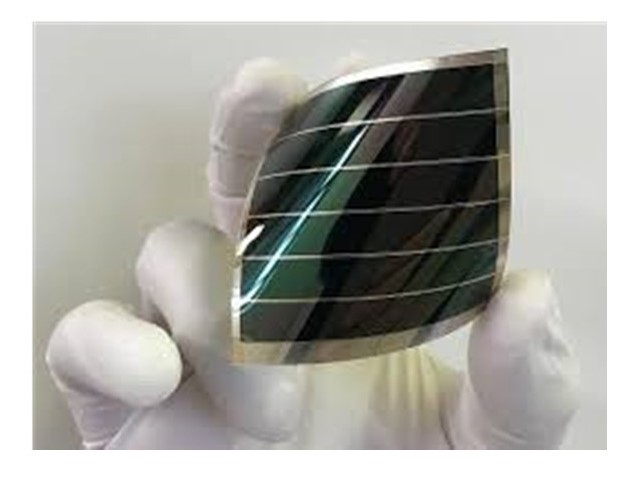
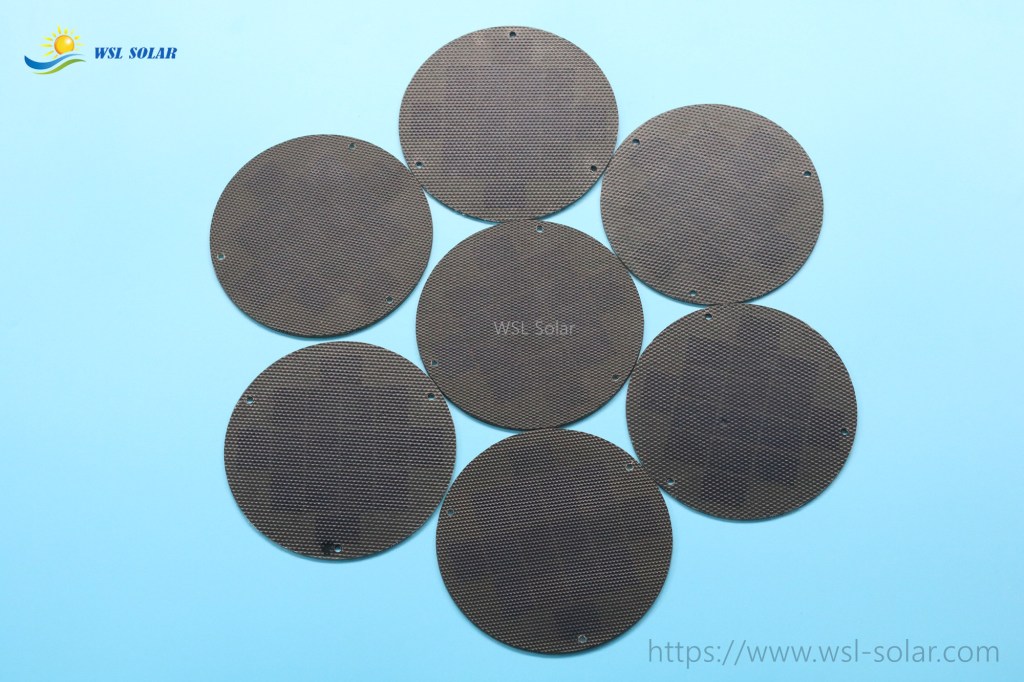
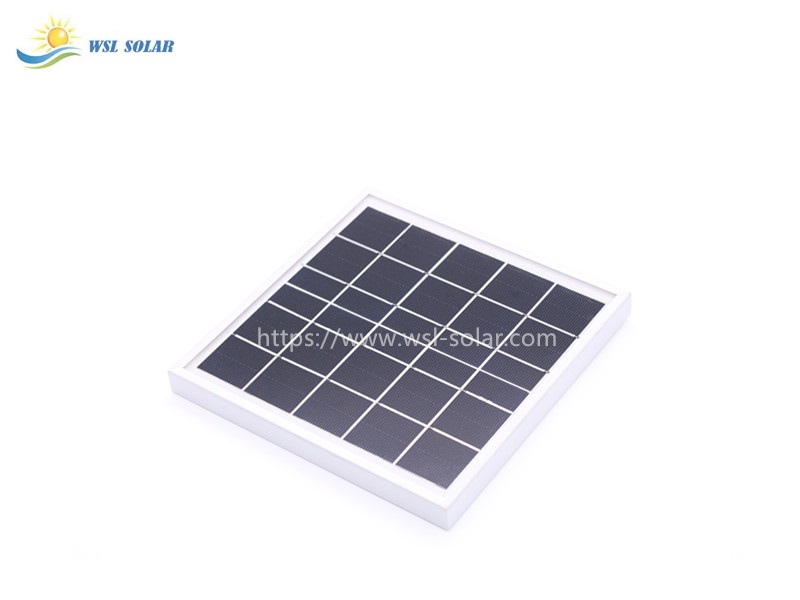
organic solar cell

Organic Solar Cell


Compared with some other photovoltaic technologies, organic photovoltaic (OPV) technology is more suitable for converting electrical energy in low-light environments for three main reasons:

1. Broad spectrum absorption
OPV materials can absorb a broad spectrum of light, including visible light and near-infrared light. This means they are able to capture a wide range of wavelengths in low-light conditions. Some other technologies have more limited spectral absorption capabilities and do not work well in low-light environments.

2. Low light startup ability
OPV technology has low-light start capability, which means it can start generating electricity even in low-light conditions. This is due to the lower light threshold required to initiate the photovoltaic process. In comparison, other technical routes require higher light intensity to start generating electricity.

3. Flexibility and portability
OPV equipment is generally flexible and lightweight, making it suitable for a wide range of applications. They can be integrated into devices of various shapes and used on flexible substrates, which allows them to adapt to different surfaces and shapes. This flexibility is beneficial in low-light indoor environments where traditional rigid solar panels may not be suitable.

OPV technology harvests power in the darkest conditions, such as in warehouses or “black light” factories, and works with as little as 500 lux per unit area. For reference, everyday outdoor light is close to 10,000 lux.

Development and research status of organic photovoltaics

According to data from the China Photovoltaic Industry Association, China’s photovoltaic industry will achieve steady growth in 2021. The output of polysilicon, silicon wafers, cells and modules reached 505,000 tons, 227 GW, 198 GW and 182 GW respectively year-on-year, an increase of 28.8%, 40.7%, 46.9% and 46.1% respectively. The output value of these four compounds exceeded 7500 billion. At the same time, industrial concentration has further increased. In the four major fields of polysilicon, silicon wafers, cells, and components, the top five manufacturing companies accounted for 86.7%, 84%, 53.9%, and 63.4% of the total domestic output respectively. The top five companies have obvious economies of scale.

As for organic photovoltaics, the analysis of Zhiyanzhan Industry Research Institute believes that the global organic photovoltaic market is expected to continue to maintain strong growth in the next few years. However, at present, the market size is relatively small, accounting for only a small part of the solar energy market.

Why is the market size of organic photovoltaics still small?

In 2021, an analysis by Dr. Li Tengfei from the Department of Materials Science and Engineering, School of Engineering, Peking University, and his tutor Professor Zhan Xiaowei mentioned that organic photovoltaics have the following problems:
First, the photovoltaic efficiency is low. The efficiency of organic photovoltaics currently on the market is generally lower than 20%;
Second, the cost of industrialization is high, and the cost of active layer and motor materials is relatively high;
Third, the component life is low. From the stability results, it can be seen that the service life of the device is difficult to reach more than 10 years.

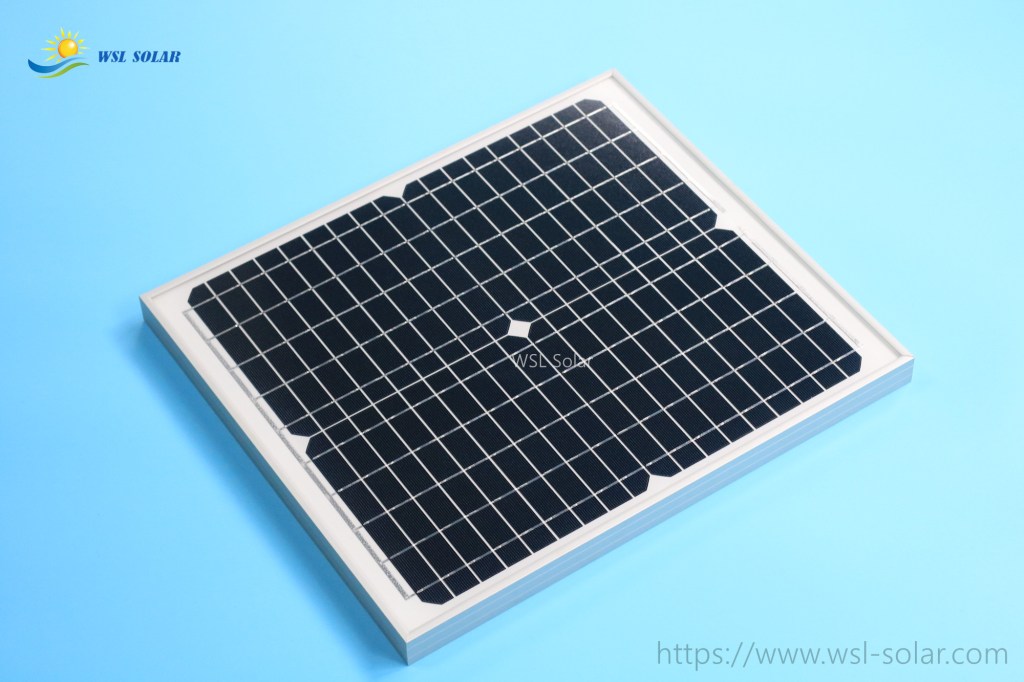
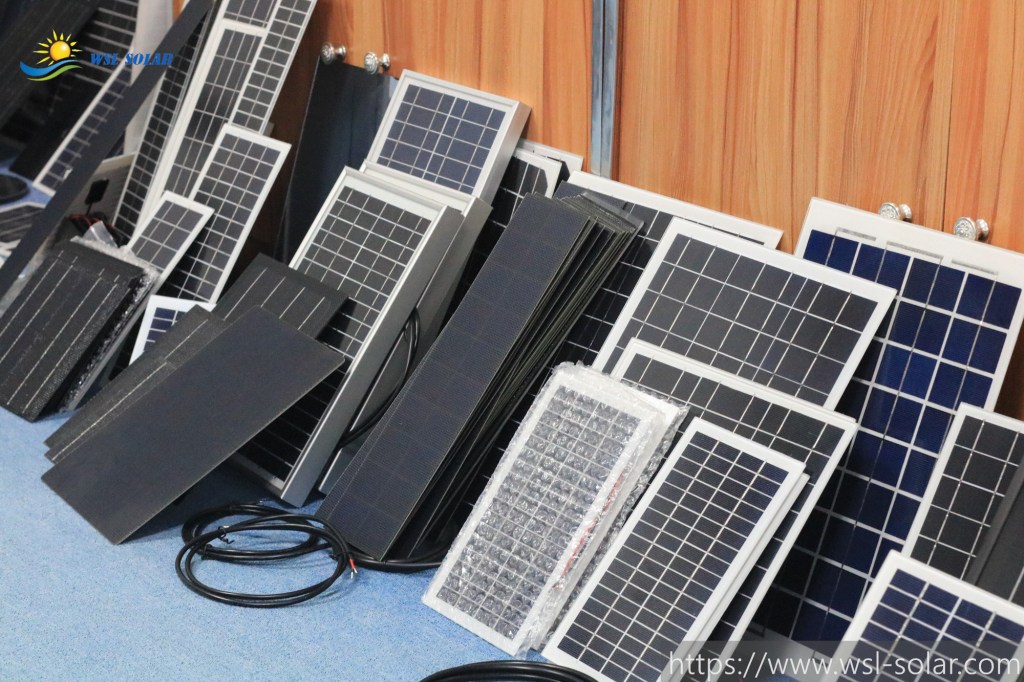
custom solar panel

WSL Solar has been a quality and professional manufacturer of custom solar panels, solar mini panels, IoT solar panels and solar solution provider in China since 2006.

https://www.wsl-solar.com

Source of origin: https://www.wsl-solar.com/Industry_News/2024/0515/opv-iot.html
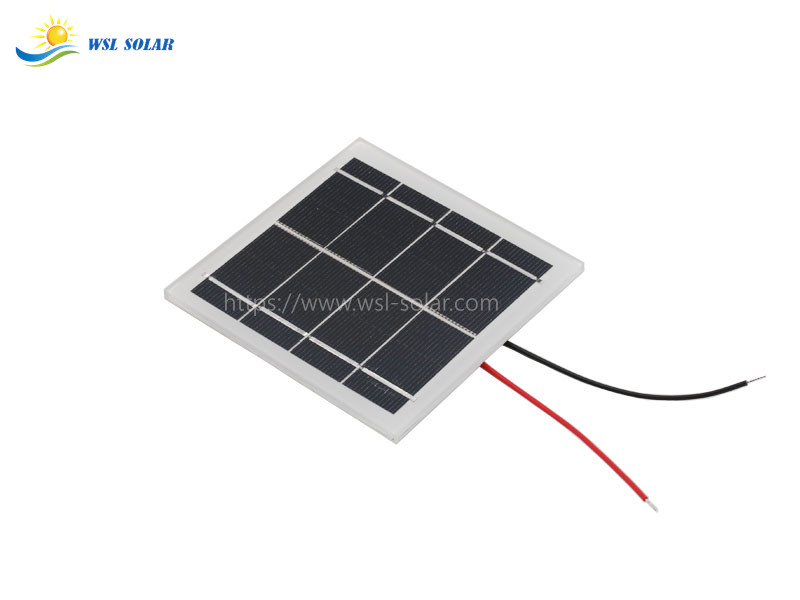
Custom Solar Panel – 4V 1W

Key Features:
– Utilize high efficiency mono PERC solar cell, up to 22.5% efficiency
– Laminated by tempered glass, rigid, durable and long lasting
– Waterproof, scratch resistant, and UV resistant
– Customized solar panels for industrial use

Description:
4.4V 1.3W Solar Panel

This custom solar panel utilizes high efficiency mono PERC solar cells with efficiency up to 22.5%, to ensure its high output. It is laminated by tempered glass to protect the solar cells inside, making it rigid, durable and long lasting. This rigid solar panel is waterproof, scratch resistant, and UV resistant, specially designed for long term outdoor use in any challenging condition.

Applications:
Tempered glass solar panels are widely used in IoT applications, marine buoys, wireless sensors, traffic warning devise, GPS devices, asset tracking, electric fence chargers, outdoor lighting systems, weather monitoring systems etc.


                                                       Solar Panel Specification

Item No.WSL-C033
Solar Panel Size95x95x4.8mm
Peak Power (Pmax)1.3W
Voltage at Pmax (Vmp)4.4V
Current at Pmax (Imp)295mA
Open Circuit Voltage (Voc)5.2V
Short Circuit Current (Isc)320mA
Solar Cell TypeMono PERC Solar Cell
Power Tolerance±5%
Encapsulation method3.2mm Tempered glass
Back sheetTPT
Product Warranty5 Years
Lead time25 Days
Storage temperature-40°C ~ 85°C
Working temperature-40°C ~ 85°C
Standard Test Conditions (STC)1000W/m2, 1.5AM, 25°C Cell temperature

Click here to watch the video of this type of custom solar panels. 

View More Custom Solar Panels

5V Solar Panels   |  6V Solar Panels   |  9V Solar Panels

WSL Solar has been a quality and professional manufacturer of custom solar panels and solar solution provider in China since 2006. 

Source of origin: https://www.wsl-solar.com/4V-1W-Solar-Panel.html

Manufacturer of Custom Solar Panels – WSL Solar

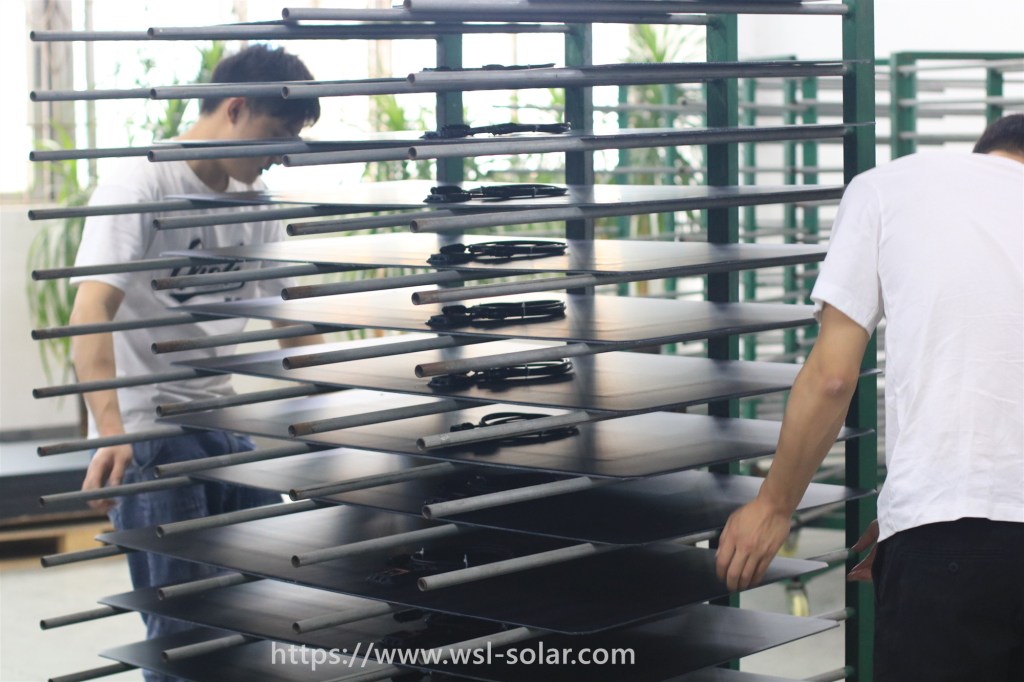
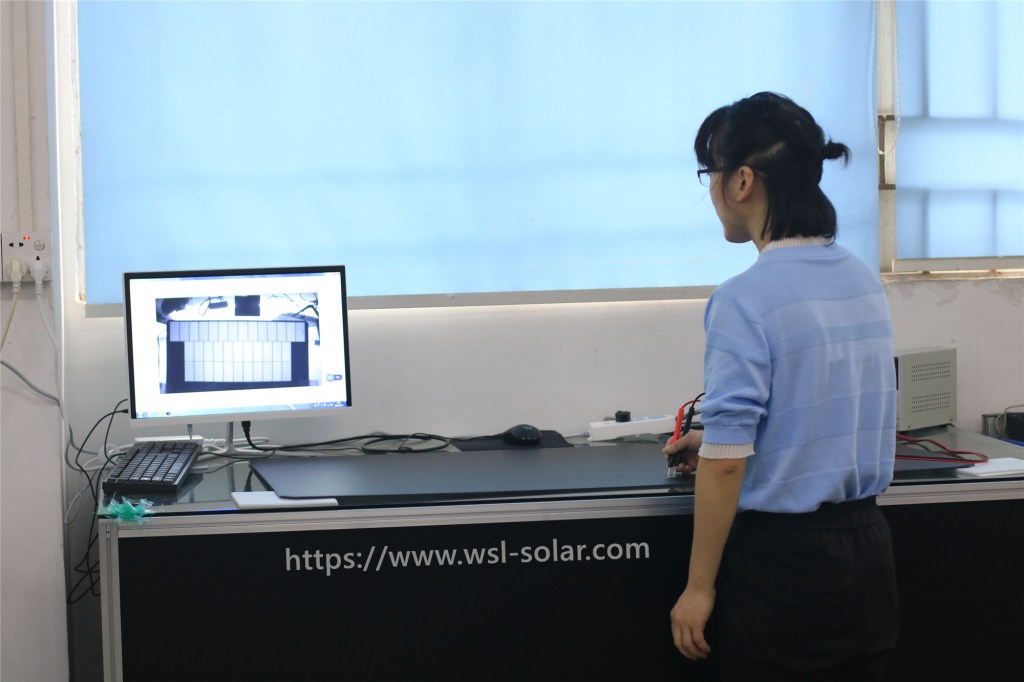
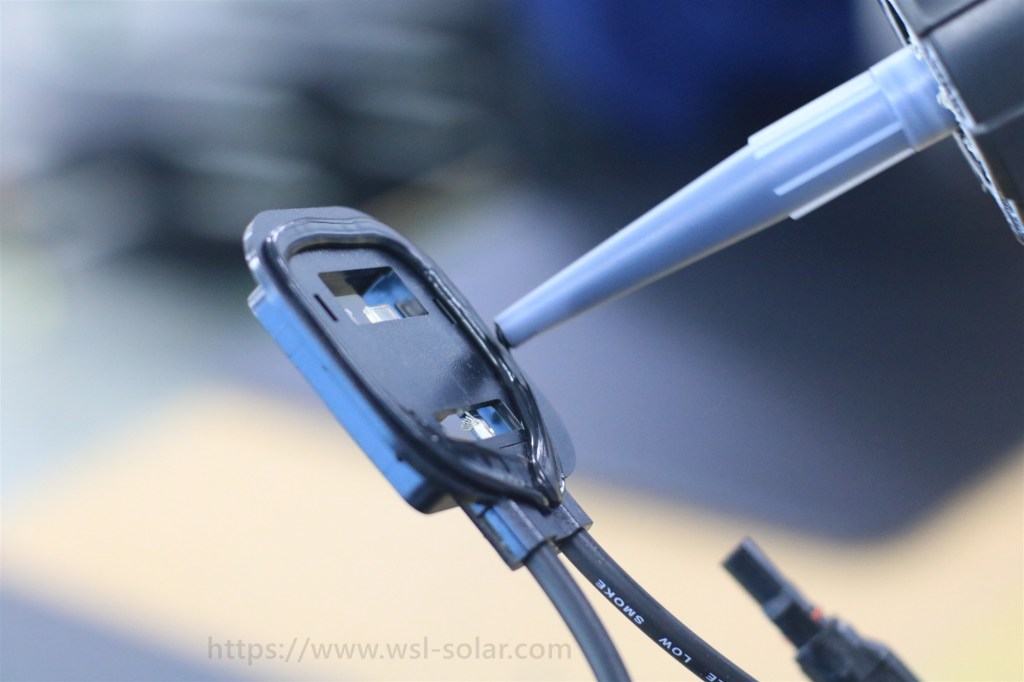
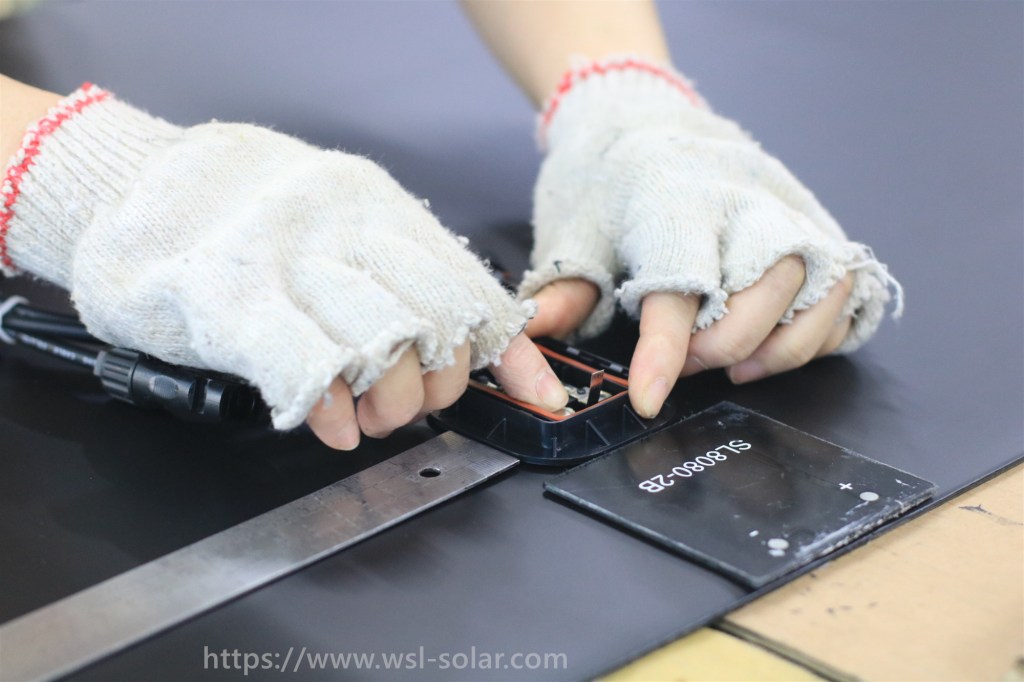
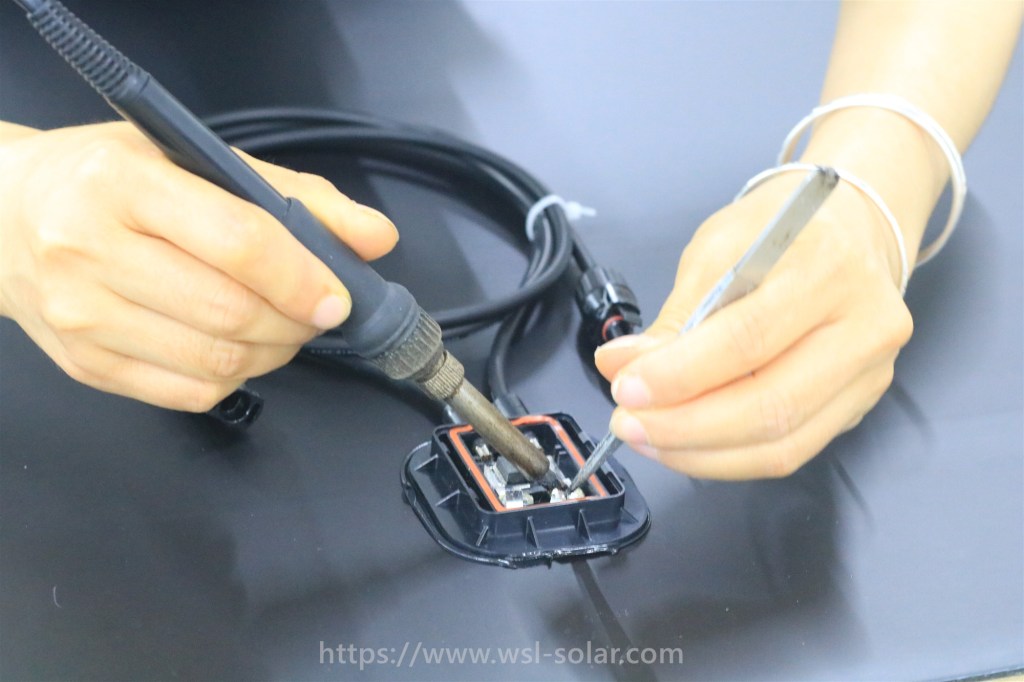
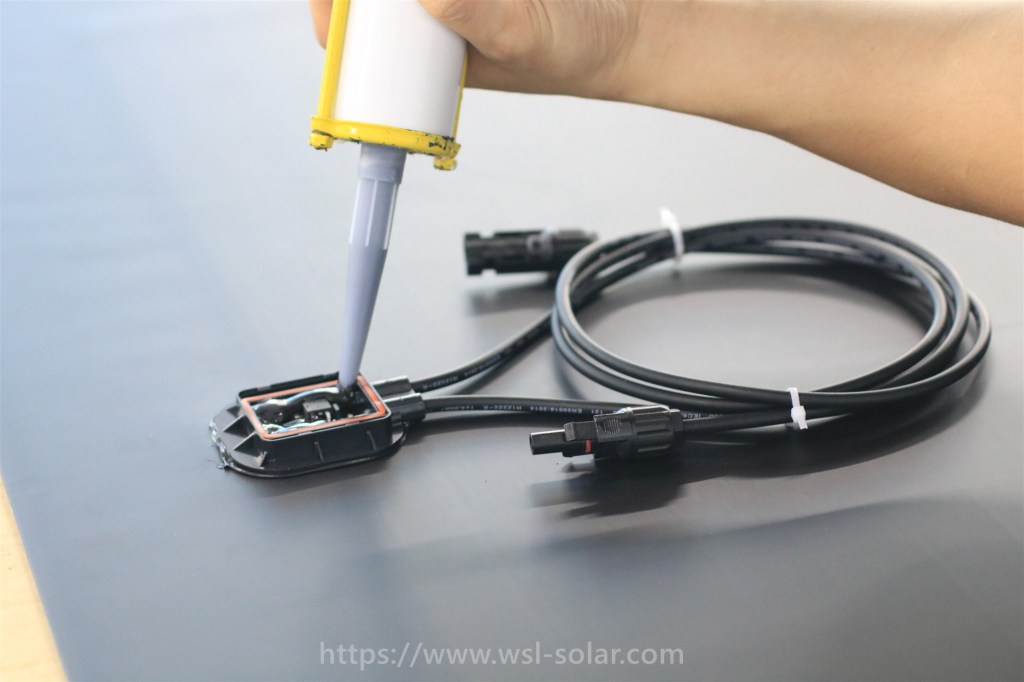
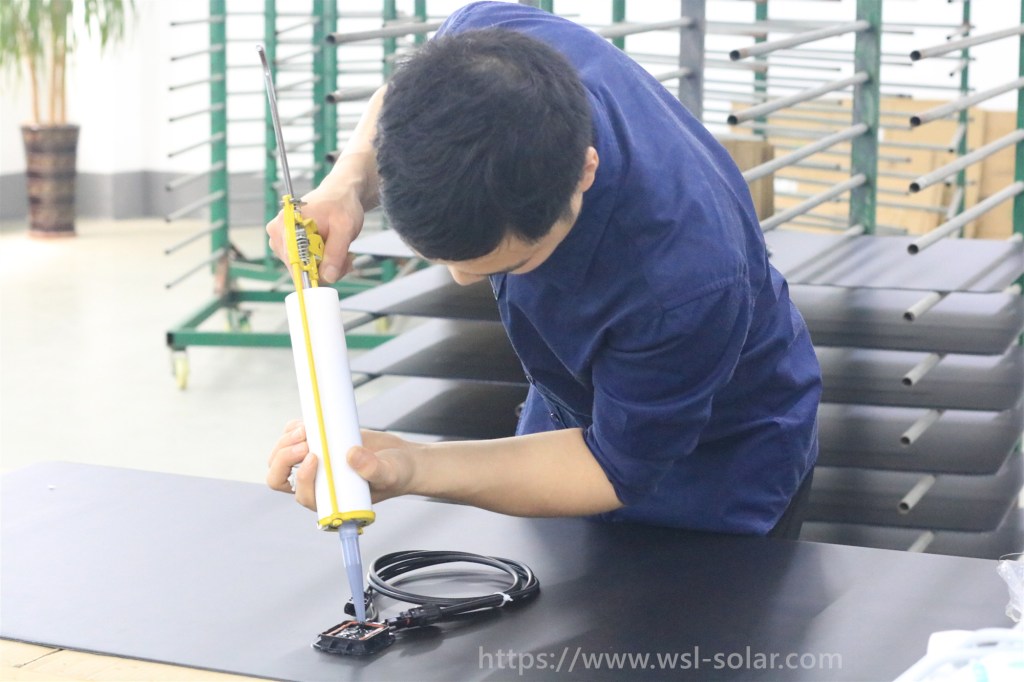
Many thanks to our employees for their hard work. Pay attention to every detail in the production process, such as wire welding, silicone molding, EL testing, measuring dimensions, etc. It is because of their carefulness and hard work that we can produce high quality solar panels.

WSL Solar has been a quality and professional manufacturer of custom solar panels, solar mini panels, IoT solar panels and solar solution provider in China since 2006.

https://www.wsl-solar.com

Custom Solar Panel Construction

The construction of custom solar panels varies slightly depending on the lamination method and the materials used. The following is a brief introduction to the construction of tempered glass solar panels and ETFE solar panels.

1. Solar Panel Construction of Tempered Glass Solar Panels
Tempered Glass / EVA / Solar Cell / EVA / Backsheet

2. Solar Panel Construction of ETFE Solar Panels
ETFE film / EVA / Solar Cell / PCB

Tempered glass:
The role of tempered glass is to protect the solar cells, the selected photovoltaic glass must have high light transmittance (generally more than 91%), and requires ultra-white tempering treatment. The thickness of photovoltaic glass is either 3.2mm or 2.0mm. The most commonly used is the 3.2mm thick glass.

EVA:
EVA is an important encapsulant material, which is used to bond tempered glass and solar cells. It is usually cut into a thin sheet that can be inserted at the front and rear of the solar cells. The quality of transparent EVA material directly affects the lifespan of the solar panel. Should EVA be exposed to the air, it will easily age and turn yellow, thus affecting the light transmittance of the solar panel, and power generation quality.
The thickness of EVA ranges from 3mm to 4.5mm; among them, 4mm and 4.5mm are used the most.

Solar Cell:
Solar cells convert sunlight into electricity via the photovoltaic effect. They are the core parts of solar panels. Generally speaking, the power of a solar panel is proportional to the area of the solar cell.

Backsheet
The function of the backsheet is to seal, insulate and waterproof. Therefore, the selected backsheet materials such as TPT and TPE must be resistant to aging.
The backsheet is available in white and black. The white backsheet is commonly used, but some clients choose to use the black backsheet in order to maintain the color consistency with the application product and to be aesthetically pleasing. 

ETFE Film:
ETFE film is a film used to protect solar cells inside solar panels. Its thickness is usually less than 0.2mm, making it thin and light. In addition, it has the characteristics of resistance to temperature changes, high light transmittance of up to 95%, high self-cleaning, corrosion resistance, and long service life.

IBC Solar Cell
ETFE solar panels adopt IBC solar cells (interdigitated back contact) with efficiency up to 24%, to achieve a higher power output in a limited area. Traditional solar cells achieve energy conversion by having front contacts in the cell, while IBC solar cells have the contacts on the rear side, instead of placing them in the front of the cell. This allows them to achieve higher efficiency due to reduced shading on the front of the cell, and also increases the aesthetics since no contacts are visible on the front. IBC solar cell technology also improves the temperature coefficient, which means an IBC solar panel can deliver a better performance in hot climate installations. It also has excellent performance under low light conditions.

WSL Solar has been a quality and professional manufacturer of custom solar panels, solar mini panels, IoT solar panels and solar solution provider in China since 2006.
https://www.wsl-solar.com

Source of origin: https://www.wsl-solar.com/Product_News/2022/1212/Custom-Solar-Panel-Construction.html

WSL Solar’s Latest Product – 5W Solar Panel | IoT Solar Panel

5W Solar Panel

This 5v 5w solar panel utilizes high efficiency mono PERC solar cells with efficiency up to 22.5%, to ensure its high output. It is laminated by tempered glass to protect the solar cells inside, making it rigid, durable and long lasting. This IoT solar panel is waterproof, scratch resistant, and UV resistant, specially designed for long term outdoor use in any challenging condition.

Key Features:
 
– Utilize high efficiency mono PERC solar cell, up to 22.5% efficiency
– Laminated by tempered glass, rigid, durable and long lasting
– Waterproof, scratch resistant, and UV resistant
– Customized solar panels for industrial use

Applications:
Tempered glass solar panels are widely used in IoT applications, marine buoys, wireless sensors, traffic warning devise, GPS devices, asset tracking, electric fence chargers, outdoor lighting systems, weather monitoring systems etc.

Solar Panel Specification

Item No.WSL-C028
Solar Panel Size185x185x15mm
Peak Power (Pmax)5.5W
Voltage at Pmax (Vmp)5.5V
Current at Pmax (Imp)1A
Open Circuit Voltage (Voc)6.6V
Short Circuit Current (Isc)1.1A
Solar Cell TypeMono PERC Solar Cell
Power Tolerance±5%
Encapsulation method3.2mm Tempered glass
Back sheetTPT
Product Warranty5 Years
Lead time25 Days
Storage temperature-40°C ~ 85°C
Working temperature-40°C ~ 85°C
Standard Test Conditions (STC)1000W/m2, 1.5AM, 25°C Cell temperature

Click here to watch the video of this type of custom solar panels. 

View More Custom Solar Panels

5V Solar Panels   |  6V Solar Panels   |  9V Solar Panels

WSL Solar has been a quality and professional manufacturer of custom solar panels and solar solution provider in China since 2006. 

What is PET Solar Panel?

PET Solar Panel means that the top layer of encapsulated material is PET film, which is a plastic film with a light transmittance of about 85%. Its surface can look shiny without any treatment, and if it is sprayed with a layer of frosted, it will look matte and a little rough to the touch.


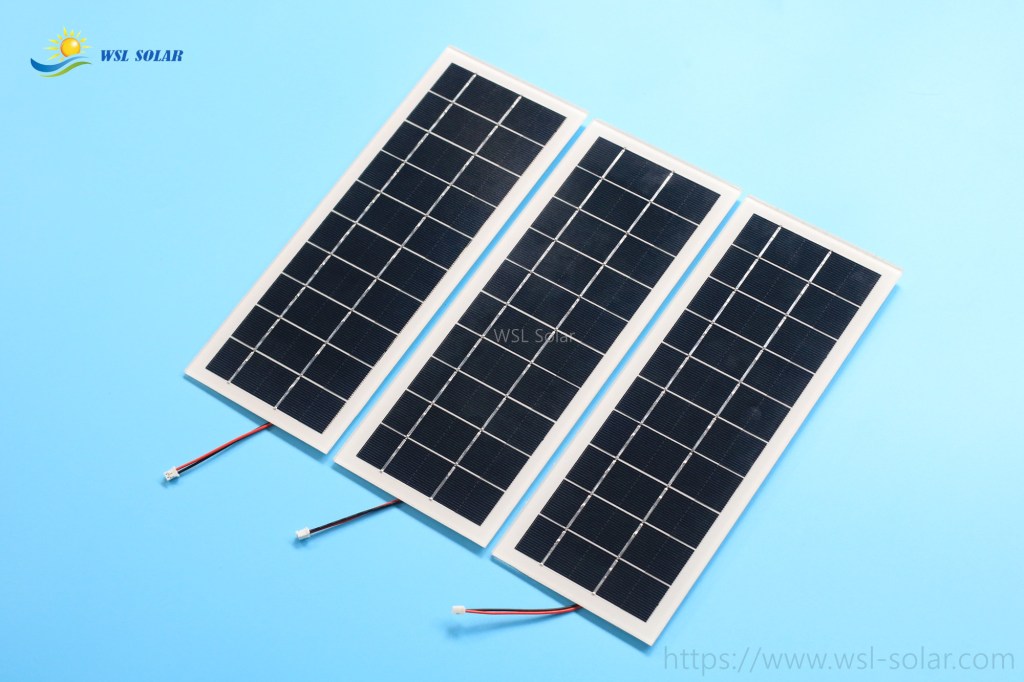
PET solar panels are customized products with small sizes or low power output. The product structure is PET Film + EVA + Solar Cells + EVA or not + PCB. The solar cells are cut into small pieces by a laser machine, and the voltage and the electric current can be done as per the requirements, and then the single-layer transparent PET, EVA, solar cells, EVA, PCB backplanes are sequentially placed in a solar laminator for lamination. After about 20 minutes, take it out and then stick a soft and transparent protective film on the surface of the solar panel.

                                                   PET Solar Panel

What are the advantages of PET solar panels?
1. It is suitable for the production of solar modules of various sizes and different voltages and currents to meet different application scenarios.
2. Quality standards are lower than glass laminated solar panel.
3. Short lamination time and high production efficiency.
4. Low cost.

What are the disadvantages of PET solar panels?
1. Long-term exposure to the outdoors will make the PET film hard, brittle, and discolored, reducing the light transmittance of the solar panel, and at the same time, it can’t well protect the PV cells inside to avoid oxidation and corrosion. If the surface is frosted, this layer of frosted will start to fall off and become very ugly after about 0.5 years.
2. Because the lamination time is not enough, the cross-linking degree of the entire solar panel will not meet the requirements.
3. It can’t resist the relatively large impact from the outside.

What are the applications of PET solar panels?
Used for solar lawn lights, solar wall lights, solar handicrafts, solar toys, solar radios, solar flashlights, solar mobile phone chargers, solar small water pumps, solar home/office power supplies and portable mobile power systems and other products.
It is not recommended to use PET solar panels that need to be placed outdoors for a long time and have a life expectancy of more than 2 years.

WSL Solar has been a quality and professional manufacturer of custom solar panels, solar mini panels, IoT solar panels and solar solution provider in China since 2006.

https://www.wsl-solar.com

Original source: https://www.wsl-solar.com/Product_News/2022/0411/what-is-PET-solar-panel.html

IoT Solar Panel, 4W 5V

WSL Solar’s 4W 5V IoT solar panel is built with the latest monocrystalline PERC solar cell. It is laminated by tempered glass, which is durable and robust. This custom solar panel is ideal for use in off grid applications such as IoT devices, solar powered LED lightings, solar traffic signs, small solar powered systems etc.

IoT Solar Panel


Features:
– With latest high efficiency monocrystalline PERC solar cell
– Positive power tolerance
– Tempered glass laminated, high transmission, durable & robust
– Withstanding challenging environmental conditions
– Waterproof, scratch resistant & UV resistant
– Excellent performance under low light environments

Solar Panel Specification

Item No.WSL-C027
Solar Panel Size250x97x4.5mm
Peak Power (Pmax)4W
Voltage at Pmax (Vmp)5V
Current at Pmax (Imp)0.8A
Open Circuit Voltage (Voc)6V
Short Circuit Current (Isc)0.88A
Solar Cell TypeMonocrystalline PERC Solar Cell
Power Tolerance±5%
Encapsulation method3.2mm Tempered glass
Back sheetTPT
Product Warranty5 Years
Lead time25 Days
Storage temperature-20°C ~ 65°C
Working temperature-40°C ~ 85°C
Standard Test Conditions (STC)1000W/m2, 1.5AM, 25°C Cell temperature

Click here to watch the video of this type of custom solar panels. 

View More Custom Solar Panels

5V Solar Panels   |  6V Solar Panels   |  9V Solar Panels

WSL Solar has been a quality and professional manufacturer of custom solar panels and solar solution provider in China since 2006. 

Source of origin: https://www.wsl-solar.com/iot-solar-panel.html