This video mainly introduces the difference between Crystalline Silicon Solar Cell vs. IBC Solar Cell, and the difference between Mono Solar Cell vs. Poly Solar Cell. Hope it can help you better understand different types of solar cells.
Created by Carrie Wong | WSL Solar
WSL Solar has been a quality and professional manufacturer of customized solar panels and solar solution provider in China since 2006.
WSL Solar has been a quality and professional manufacturer of customized solar panels and solar solution provider in China since 2006.
With our more than 15 years’ experience in solar industry, we are able to design and develop a tailor-made solar panel in a variaty of sizes, shapes and power outputs to meet our client’s specific requirement, and provide solution support to our customers starting from their initial product development stage.
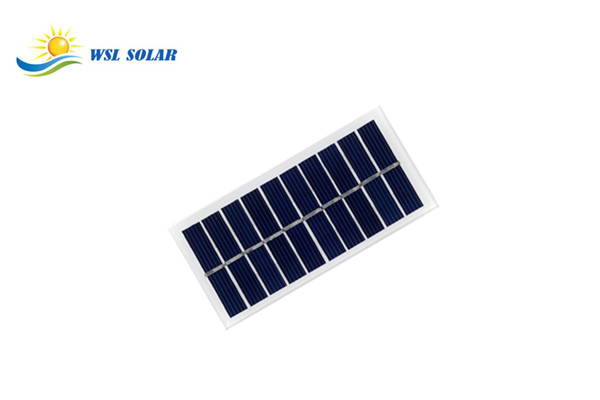
WSL Solar’s 5V solar panel is built with the latest most efficient crystalline silicon solar cells or super high efficiency Sunpower solar cells. These 5v solar panels are great for charging your 3.2V DC batteries and ideal for use in off grid applications such as GPS tracking, educational kits, small electronic devices, LED lighting etc.
5V Solar Panel
Features: – With cutting-edge high efficiency solar cells – Positive power tolerance – Withstanding challenging environmental conditions – Waterproof, scratch resistant & UV resistant – Excellent performance under low light environments
WSL Solar’s 9V solar panels (or 9 volt solar panels) are built with the latest most efficient crystalline silicon solar cells. These custom shaped solar panels are great for charging your 6V DC batteries and ideal for use in off grid applications such as marine buoys, traffic signs, IoT devices, GPS trackings, educational kits, small electronic devices, LED lighting etc.
Stand-alone solar panels are widely used in various industries such as remote telemetry, security, monitoring, fence charger, gate opener, intelligent traffic, senor, IoT and aviation obstruction lights, especially with the improvement of solar cell conversion efficiency and the decrease in the cost per W of the solar panel will inevitably further expand the application range of custom shaped solar panels. How should we choose the solar panel suitable for our system?
1. If the product needs to be placed in harsh environments on the sea, desert, wetland, etc. for a long time, we recommend using glass solar panels. Because glass has the advantages of high light transmittance, hard texture and stable physical and chemical properties, it can well protect solar cells from being oxidized and crushed. However, the disadvantage of glass solar panels is that the unit weight is heavier than other types of solar panels of the same power and the glass is fragile. It is not suitable for products that need to be carried and transported for a long time, but is suitable for stationary systems. At the same time, we recommend that the solar panels be sealed with glue or silica gel, so that the life of the solar panels can be greatly extended.
2. If solar panels are used in consumer electronics, such as outdoor camping, solar chargers, GPS trackers, etc., we recommend using non-glass laminated solar panels, such as rigid solar panel, semi-flexible solar and fully flexible solar panels and foldable solar panels. Currently popular packaging materials are PET film and ETFE film. PET film is made of plastic. If this material is placed outdoors for a long time, its surface will become brittle and atomized. If a layer of coating is added to the PET surface, this coating will fall off after about 0.5 years, making the surface of the solar panel very unsightly and greatly reducing the power output of the solar panel. If the surface of the solar panel is ETFE film, its lifespan will be longer. We generally think that its lifespan may last 3-5 years. However, such non-glass-encapsulated solar panels must avoid impact on the surface and squeeze around them to avoid damage to the solar cells inside and affect the power output of the solar panels.
Sort by low-light performance of solar panels: Thin-film Solar Panel> Mono PERC solar panels> Traditional Monocrystalline Solar Panels> Polycrystalline Solar Panel. So solar panels are used in indoor environments, we recommend thin film solar panels. If it is used outdoors, but the light is not very good, you can consider PERC Mono solar panels and traditional mono solar panels. If it is used in a well-lit outdoor environment, you can choose PERC mono, traditional mono and poly solar panels.
Sort by solar panel conversion efficiency: Mono PERC solar panels> Traditional Monocrystalline Solar Panels> Polycrystalline Solar Panel> Thin-film Solar Panel. At present, the highest conversion efficiency and large-scale commercial use are Mono PERC solar panels, and the lowest efficiency is thin-film solar panels. If it is used for indoor wireless sensors, calculators, etc., you can choose thin-film solar panels. If it is used for outdoor GPS TRACKER, IOT, traffic lighting, etc., you can use PERC or traditional monocrystalline solar panels. If it is used for signal tower, small off-grid power station, you can choose Mono PERC solar panels or polycrystalline solar panels.
With the further improvement of technology, when thin film solar panels, traditional monocrystalline solar panels and polycrystalline solar panels encounter bottlenecks, Mono PERC solar panels will become the choice of most people. As a manufacturer of small solar panels, WSL Solar will provide customers with very constructive suggestions during the product development phase to avoid saving development time and money.
Posted by Carrie Wong | WSL Solar Co., Ltd. WSL Solar has been a quality and professional manufacturer of custom shaped solar panels and solar solution provider in China since 2006. https://www.wsl-solar.com
Detailed explanation of the characteristics and structural principles of organic solar cells
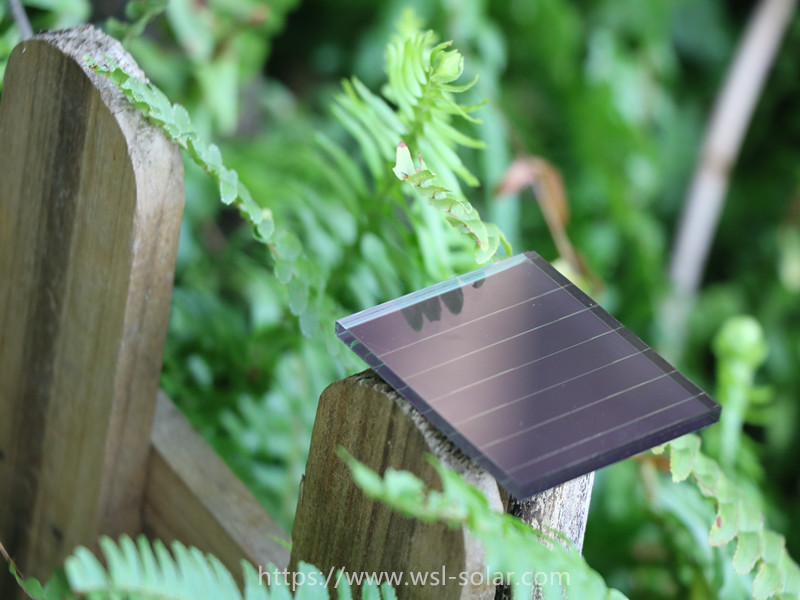
Organic solar cells are solar cells that consist of organic materials at the core. It is mainly based on organic materials with photosensitive properties as semiconductor materials, and the photovoltaic effect generates voltage to form a current to achieve the effect of solar power generation.
As a new type of solar cell device, organic solar cells have the characteristics of flexibility, light weight, adjustable color, solution processing, and large-area printing preparation. They are currently a hot spot in the field of solar cell research. But low efficiency is the main reason that limits its large-scale application.
Second, the structural principle of organic solar cells
1. The principle of organic solar cells
Organic solar cells use photosensitive organics as semiconductor materials, and generate voltages to form currents by the photovoltaic effect. The main photosensitive organic materials have conjugated structure and conductivity, such as phthalocyanine compounds, porphyrins, cyanines, etc.
2. Several structures of organic solar cells
Organic solar cells can be divided into single junction structure, P-N heterojunction structure, and dye-sensitized nanocrystalline structure according to semiconductor materials.
3. Single junction structure
The single-junction structure is an organic solar cell made based on the principle of Schottty barrier. Its structure is glass/metal electrode/dye/metal electrode, which uses the different work functions of the two electrodes to generate an electric field. Electrons are transferred from the metal electrode with low work function to the electrode with high work function to generate photocurrent. Since electrons and holes are all transferred in the same material, the photoelectric conversion rate is relatively low.
4. P-N heterojunction structure P-N
The heterojunction structure refers to a heterojunction structure with a donor-acceptor (N-type semiconductor and P-type semiconductor). Among them, semiconductor materials are mostly dyes, such as phthalocyanine compounds and perylene tetraformaldehyde imine compounds, using the D/A interface (Donor—donor, Acceptor—acceptor) and electron-hole separation between semiconductor layers. The transfer characteristics in different materials increase the separation efficiency. Elias Stathatos and others combined the advantages of inorganic and organic compounds to make solar cells with a photoelectric conversion rate of 5% to 6%.
Dye-sensitized solar cell (DSSC) mainly refers to a type of solar cell that uses dye-sensitized porous nanostructured TiO2 film as the photoanode. It is a solar cell that mimics the photosynthesis principle of plant chlorophyll. However, NPC solar cells can choose appropriate redox electrolytes to increase the photoelectric efficiency, which can generally be stabilized at 10%, and nanocrystalline TiO2 is easy to prepare, low in cost, and has a considerable life span, which has a good market prospect.
Posted by Carrie Wong | WSL Solar Co., Ltd.
WSL Solar has been a quality and professional manufacturer of custom solar panels and solar solution provider in China since 2006.
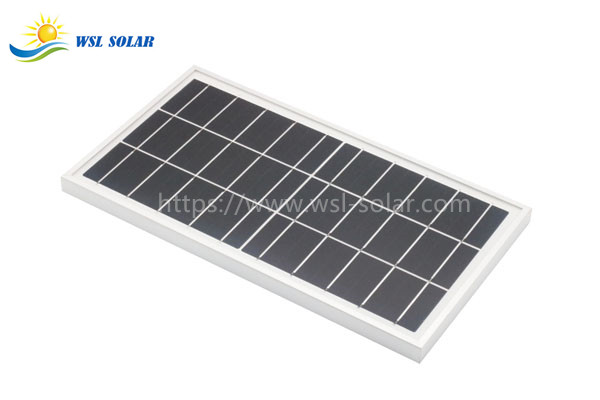
WSL Solar’s 3V 10W solar panel is built with the latest PERC monocrystalline solar cell. It is laminated by tempered glass, which is durable and robust. This custom solar panel is ideal for use in off grid applications such as solar powered LED lighting, IoT solar, solar traffic sign, small solar powered system etc.
Features:
– WSL Solar’s 3V 10W solar panel adopts the latest PERC monocrystalline solar cell, >21% efficiency.
– Dimension 345x190x18mm
– Laminated by tempered glass, durable & robust
– Ideal for use in solar powered LED lighting, IoT solar,solar traffic sign and small solar powered systems etc.


 Custom Solar Panel