Custom Solar Panels from WSL Solar

WSL Solar, a leading manufacturer and solution provider in the solar industry since 2006, offers high quality custom solar panels tailored to meet specific client requirements. With over 18 years of experience, our in-house R&D and management teams ensure the design and development of high-quality solar solutions. From diverse sizes and shapes to varied outputs, we provide comprehensive support from initial product development stage onwards.

https://www.wsl-solar.com

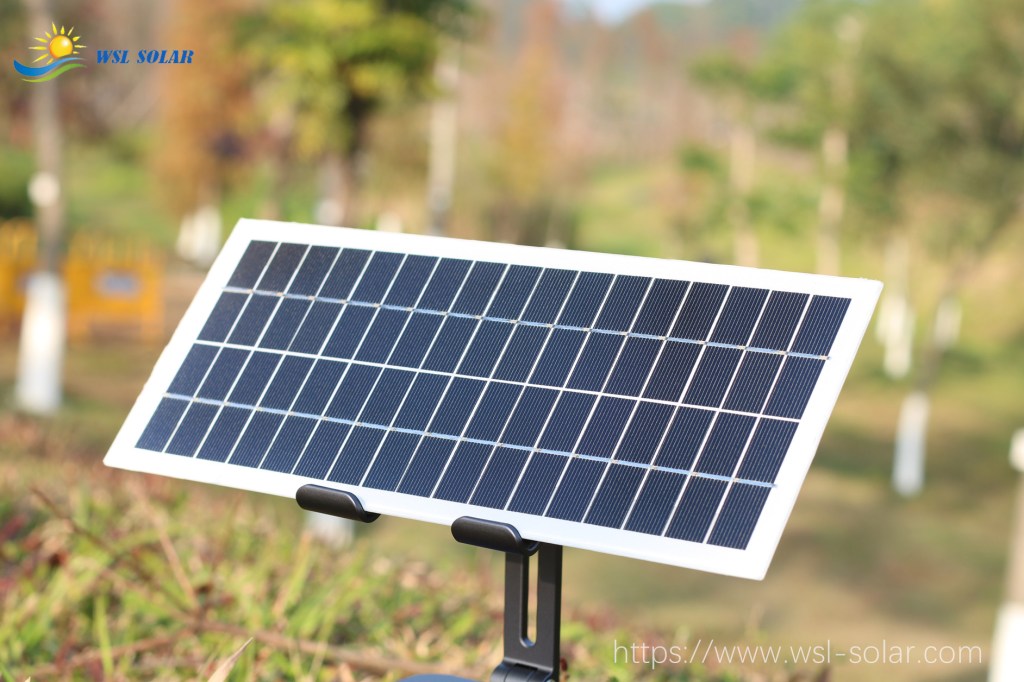
18V 8W Solar Panel

8W solar panel, custom solar panel

Key Features:

– Utilize high efficiency mono PERC solar cell,
  up to 22.5% efficiency
– Laminated by tempered glass, rigid, durable and
  long lasting
– Waterproof, scratch resistant, and UV resistant
– Custom solar panel for IoT application

Description:
18V 8W Solar Panel

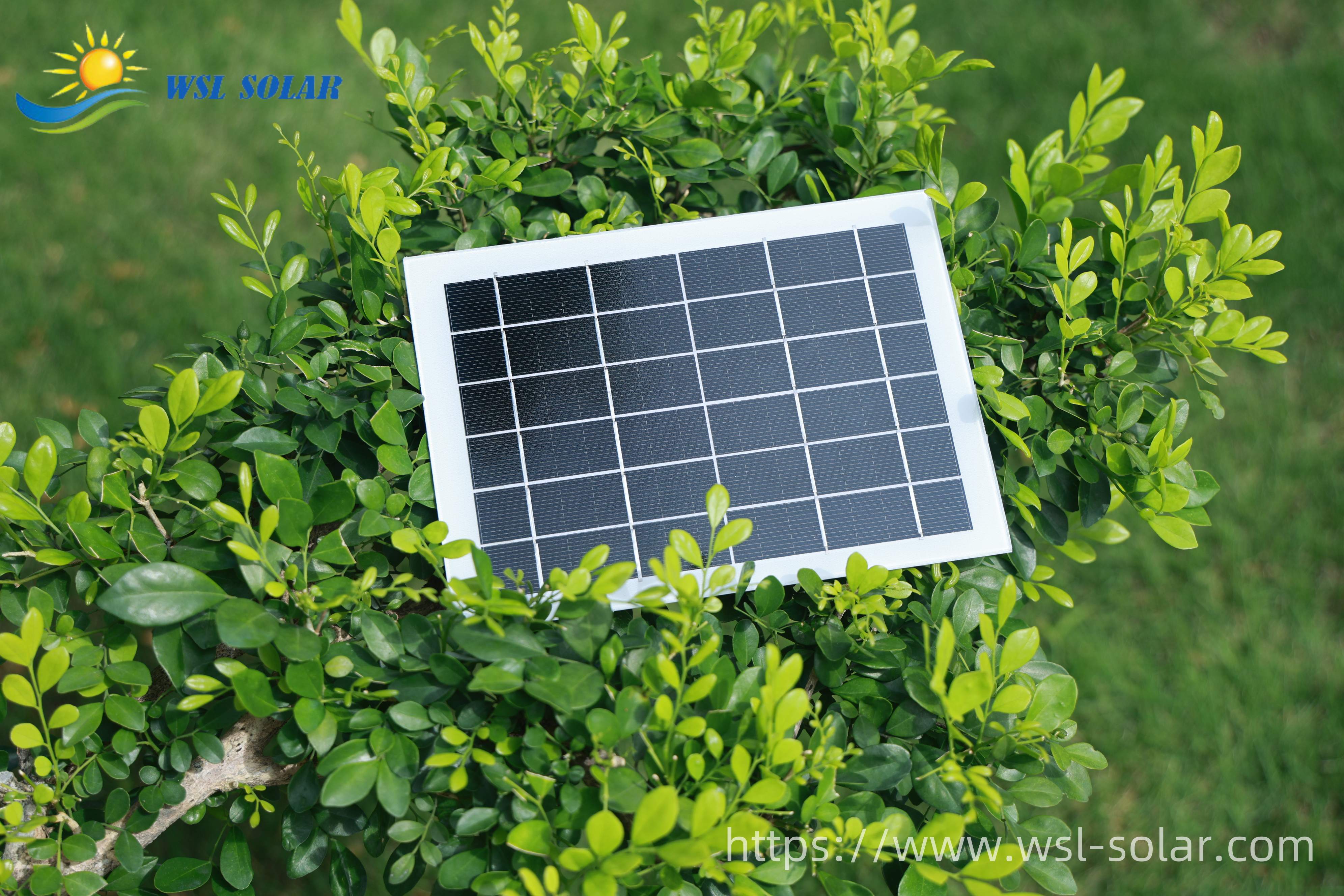
This 8W solar panel is designed for long term outdoor use in any challenging condition. It utilizes high efficiency mono PERC solar cells with an efficiency of up to 22.5%, ensuring high output. This custom solar panel is laminated by tempered glass, making it rigid, durable, and long-lasting. Additionally, it is waterproof, scratch-resistant, and UV resistant. Perfect for sustainable energy solutions in tough environments. 

Applications:
Tempered glass solar panels are widely used in IoT applications, marine buoys, wireless sensors, traffic warning devise, GPS devices, asset tracking, electric fence chargers, outdoor lighting systems, weather monitoring systems etc.

Solar Panel Specification

Item No.WSL-C035
Solar Panel Size185x300x25mm
Peak Power (Pmax)8.6W
Voltage at Pmax (Vmp)18V
Current at Pmax (Imp)477mA
Open Circuit Voltage (Voc)22.3
Short Circuit Current (Isc)520mA
Solar Cell TypeMono PERC Solar Cell
Power Tolerance±5%
Encapsulation method3.2mm Tempered glass
Back sheetTPT
Product Warranty5 Years
Lead time25 Days
Storage temperature-40°C ~ 85°C
Working temperature-40°C ~ 85°C

Click here to watch the video of this type of custom solar panels. 

View More Custom Solar Panels

5V Solar Panels   |  6V Solar Panels   |  9V Solar Panels

WSL Solar has been a quality and professional manufacturer of custom solar panels and solar solution provider in China since 2006. 

Source of origin: https://www.wsl-solar.com/8w-solar-panel.html

What are OPV and OPV-IoT?

OPV is the abbreviation of “Organic Photovoltaics”, also known as “organic solar cell”. It is a solar cell technology that uses organic semiconductor materials to convert light energy into electrical energy. Unlike traditional silicon solar cells, OPV solar cells use organic compounds rather than inorganic materials to capture photons and generate electricity.

OPV-IoT refers to application technology that combines organic photovoltaic technology with Internet of Things technology. In this case, OPV technology will provide energy for IoT devices to drive or charge them. This combination can bring some unique advantages to the Internet of Things, especially in low-light conditions, dark environments that require wireless communication and long-term operation.

organic solar cell

Organic Solar Cell


Compared with some other photovoltaic technologies, organic photovoltaic (OPV) technology is more suitable for converting electrical energy in low-light environments for three main reasons:

1. Broad spectrum absorption
OPV materials can absorb a broad spectrum of light, including visible light and near-infrared light. This means they are able to capture a wide range of wavelengths in low-light conditions. Some other technologies have more limited spectral absorption capabilities and do not work well in low-light environments.

2. Low light startup ability
OPV technology has low-light start capability, which means it can start generating electricity even in low-light conditions. This is due to the lower light threshold required to initiate the photovoltaic process. In comparison, other technical routes require higher light intensity to start generating electricity.

3. Flexibility and portability
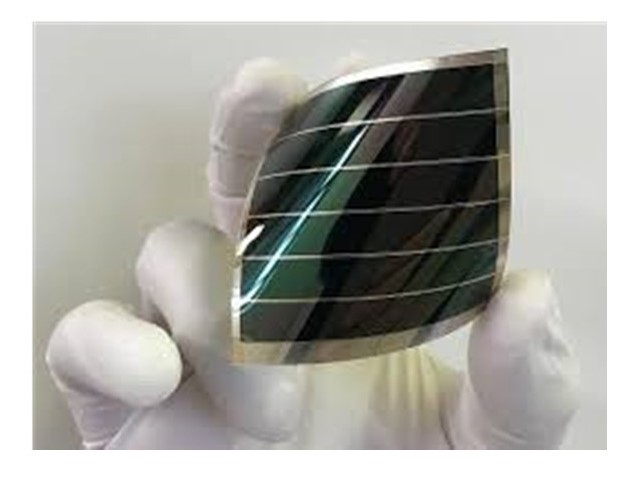
OPV equipment is generally flexible and lightweight, making it suitable for a wide range of applications. They can be integrated into devices of various shapes and used on flexible substrates, which allows them to adapt to different surfaces and shapes. This flexibility is beneficial in low-light indoor environments where traditional rigid solar panels may not be suitable.

OPV technology harvests power in the darkest conditions, such as in warehouses or “black light” factories, and works with as little as 500 lux per unit area. For reference, everyday outdoor light is close to 10,000 lux.

Development and research status of organic photovoltaics

According to data from the China Photovoltaic Industry Association, China’s photovoltaic industry will achieve steady growth in 2021. The output of polysilicon, silicon wafers, cells and modules reached 505,000 tons, 227 GW, 198 GW and 182 GW respectively year-on-year, an increase of 28.8%, 40.7%, 46.9% and 46.1% respectively. The output value of these four compounds exceeded 7500 billion. At the same time, industrial concentration has further increased. In the four major fields of polysilicon, silicon wafers, cells, and components, the top five manufacturing companies accounted for 86.7%, 84%, 53.9%, and 63.4% of the total domestic output respectively. The top five companies have obvious economies of scale.

As for organic photovoltaics, the analysis of Zhiyanzhan Industry Research Institute believes that the global organic photovoltaic market is expected to continue to maintain strong growth in the next few years. However, at present, the market size is relatively small, accounting for only a small part of the solar energy market.

Why is the market size of organic photovoltaics still small?

In 2021, an analysis by Dr. Li Tengfei from the Department of Materials Science and Engineering, School of Engineering, Peking University, and his tutor Professor Zhan Xiaowei mentioned that organic photovoltaics have the following problems:
First, the photovoltaic efficiency is low. The efficiency of organic photovoltaics currently on the market is generally lower than 20%;
Second, the cost of industrialization is high, and the cost of active layer and motor materials is relatively high;
Third, the component life is low. From the stability results, it can be seen that the service life of the device is difficult to reach more than 10 years.

custom solar panel

WSL Solar has been a quality and professional manufacturer of custom solar panels, solar mini panels, IoT solar panels and solar solution provider in China since 2006.

https://www.wsl-solar.com

Source of origin: https://www.wsl-solar.com/Industry_News/2024/0515/opv-iot.html

Custom Solar Panel Manufacturer – WSL Solar

Thank you, my dear customers, for your continued support and recognition of WSL Solar’s products and services. Your satisfaction is our driving force to continue delivering high-quality custom solar panels and solar solutions . We take pride in being a professional and reliable solar solution provider in China since 2006.

https://www.wsl-solar.com

PET Solar Panel, 18V 6W

Key Features:

– Utilize high efficiency mono PERC solar cell,up to 22.5% efficiency
– Laminated by PET film, lightweight, thin and portable
– Waterproof, scratch resistant, and UV resistant
– Customized solar panels for industrial use

Description:
18.5V 6W PET Solar Panel

This PET solar panel utilizes high efficiency mono PERC solar cells with efficiency up to 22.5%, to ensure its high output. It is laminated by PET film to protect the solar cells inside, making it lightweight, thin and portable. This custom solar panel is waterproof, scratch resistant, and UV resistant, it is ideal for use in off grid applications such as solar powered GPS tracking, educational kits, road studs, solar chargers etc.

Applications:
PET solar panels are widely used in IoT applications, marine buoys, wireless sensors, GPS devices, asset tracking, solar chargers and educational DIY kits etc.

Solar Panel Specification

Item No.WSL-C034
Solar Panel Size245×162×3mm
Peak Power (Pmax)6W
Voltage at Pmax (Vmp)18.5V
Current at Pmax (Imp)324mA
Open Circuit Voltage (Voc)22.2V
Short Circuit Current (Isc)356.4mA
Solar Cell TypeMono PERC Solar Cell
Power Tolerance±5%
Encapsulation methodPET film
Back sheetPCB
Product Warranty2 Years
Lead time25 Days
Storage temperature-20°C ~ 45°C
Working temperature-20°C ~ 65°C
Standard Test Conditions (STC)1000W/m2, 1.5AM, 25°C Cell temperature

WSL Solar has been a quality and professional manufacturer of custom solar panels and solar solution provider in China since 2006.

Source of origin: https://www.wsl-solar.com/18v-6w-PET-solar-panel.html 

What is IBC solar cell?

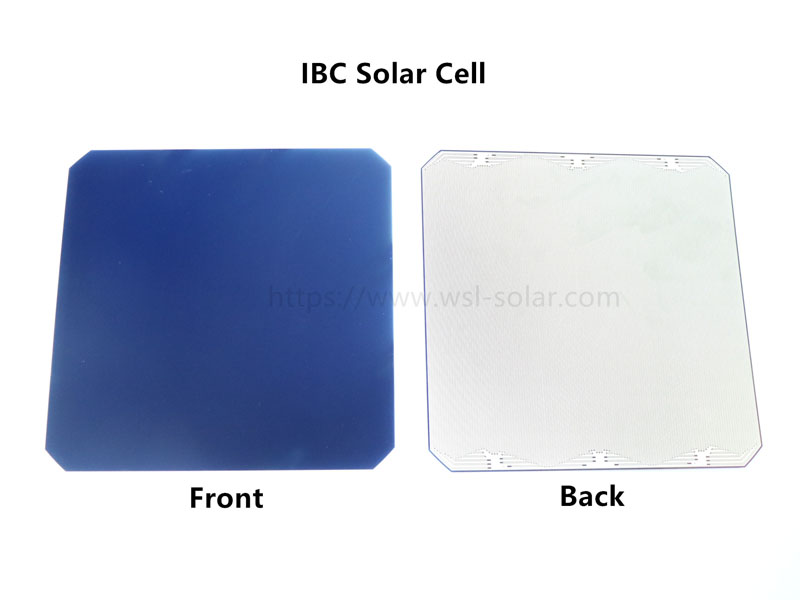
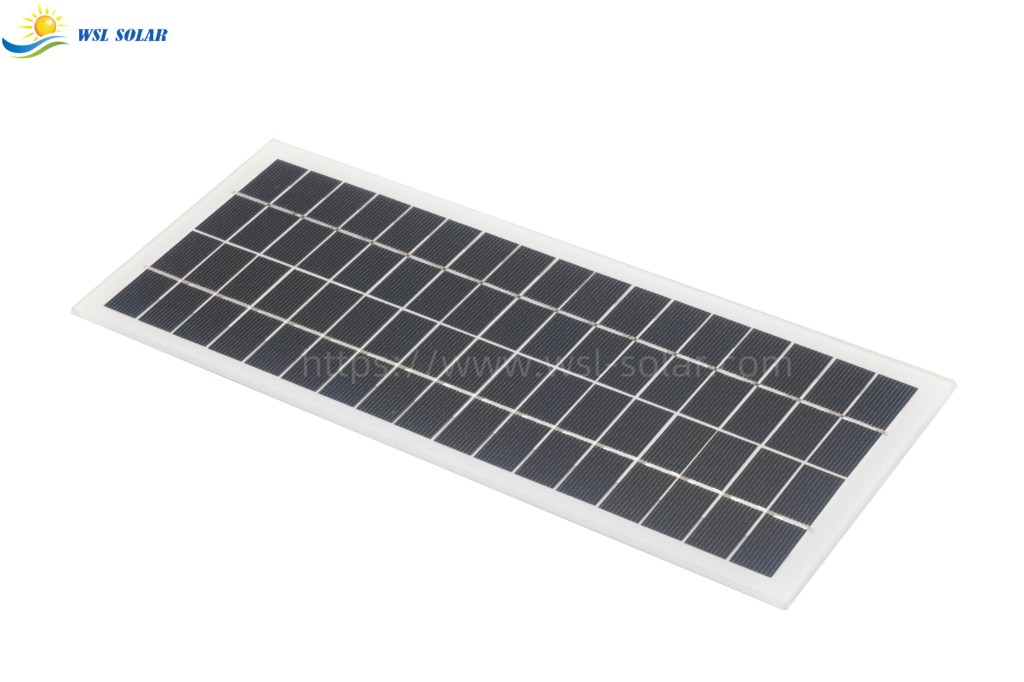
IBC (Interdigitated Back Contact) transfers all the electrode grid lines on the front side of the solar cell to the back side of the solar cell. The PN junction and metal contacts are all on the back side of the solar cell, arranged in an interdigitated manner to reduce the blocking of sunlight by the front grid lines. The light trapping structure composed of pyramid suede structure and anti-reflection layer can maximize the use of incident light. IBC solar cell mainly improves conversion efficiency through structural changes and is a relatively pure single-sided solar cell. This not only brings more effective power generation area to users, but also helps improve power generation efficiency and makes the appearance more beautiful.

Advantages and Disadvantages of IBC Solar Cells

The unique structural design of IBC solar cells gives it the following advantages:
1) There is no grid line shielding on the front of the solar cell, which can eliminate the light-shielding current loss of the metal electrode and maximize the utilization of incident photons. Compared with conventional solar cells, the short-circuit current can be increased by about 7%;
2) Both the positive and negative electrodes are on the back of the solar cell. There is no need to consider the grid line occlusion problem. The grid line ratio can be appropriately widened to reduce the series resistance and increase the fill factor FF;
3) Since the front side does not need to consider factors such as gate line shading and metal contact, the surface passivation and surface light trapping structure can be optimally designed to obtain a lower front surface recombination rate and surface reflection, thereby increasing the open circuit voltage Voc and Short circuit current Isc;
4) Beautiful appearance, especially suitable for building-integrated photovoltaic BIPV, with good commercial prospects;

At the same time, the production and manufacturing of IBC solar cells also faces many challenges:
1) It has higher requirements on the matrix material and requires a higher minority carrier lifetime. Because IBC solar cells are back junction cells, in order to prevent photogenerated carriers from being recombined as little as possible or not at all before reaching the back p-n junction, a higher minority carrier diffusion length is required.
2) IBC solar cells have higher requirements for passivation of the front surface. If the front surface recombination is high, the photogenerated carriers will be recombinated before reaching the back p-n junction area, which will significantly reduce the solar cell conversion efficiency.
3) The process is complex. The cross-shaped p-region and n-region on the back require multiple masking techniques during the production process. In order to prevent leakage, the gap area between the p-region and n-region also needs to be very precise, which undoubtedly increases the difficulty and cost of the process.

IBC Solar Panel

WSL Solar has been a quality and professional manufacturer of custom solar panels, solar mini panels, IoT solar panels and solar solution provider in China since 2006.
https://www.wsl-solar.com

Source of origin: https://www.wsl-solar.com/Product_News/2024/0315/what-is-ibc-solar-cell.html

10 Watt Solar Panel

Key Features:

– Utilize high efficiency mono PERC solar cell, up to 22.5% efficiency
– Laminated by tempered glass, rigid, durable and long lasting
– Waterproof, scratch resistant, and UV resistant
– Customized solar panels for industrial use

Description:
10Watt Solar Panel
 
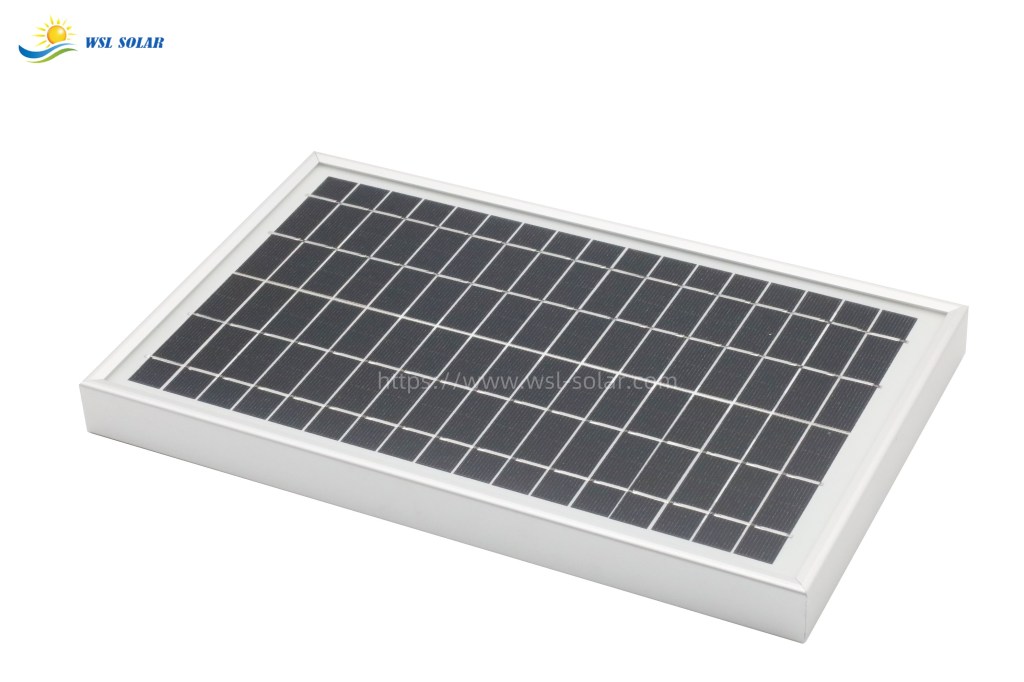
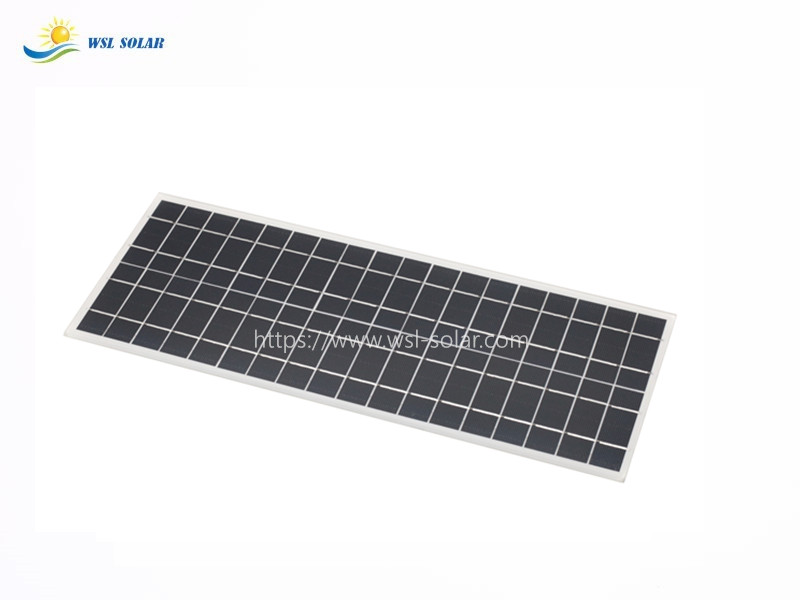
This custom solar panel utilizes high efficiency mono PERC solar cells with efficiency up to 22.5%, to ensure its high output. It is laminated by tempered glass to protect the solar cells inside, making it rigid, durable and long lasting. This rigid solar panel is waterproof, scratch resistant, and UV resistant, specially designed for long term outdoor use in any challenging condition.
 
Applications:
Tempered glass solar panels are widely used in IoT applications, marine buoys, wireless sensors, traffic warning devise, GPS devices, asset tracking, electric fence chargers, outdoor lighting systems, weather monitoring systems etc.

Solar Panel Specification

Item No.WSL-C032
Solar Panel Size150x380x4.5mm
Peak Power (Pmax)10W
Voltage at Pmax (Vmp)19.8V
Current at Pmax (Imp)505mA
Open Circuit Voltage (Voc)23.1V
Short Circuit Current (Isc)550mA
Solar Cell TypeMono PERC Solar Cell
Power Tolerance±5%
Encapsulation method3.2mm Tempered glass
Back sheetTPT
Product Warranty5 Years
Lead time25 Days
Storage temperature-40°C ~ 85°C
Working temperature-40°C ~ 85°C
Standard Test Conditions (STC)1000W/m2, 1.5AM, 25°C Cell temperature

Click here to watch the video of this type of custom solar panels. 

View More Custom Solar Panels

5V Solar Panels   |  6V Solar Panels   |  9V Solar Panels

WSL Solar has been a quality and professional manufacturer of custom solar panels and solar solution provider in China since 2006. 

Source of origin: https://www.wsl-solar.com/10watt-solar-panel.html

Back Contact Solar Panels

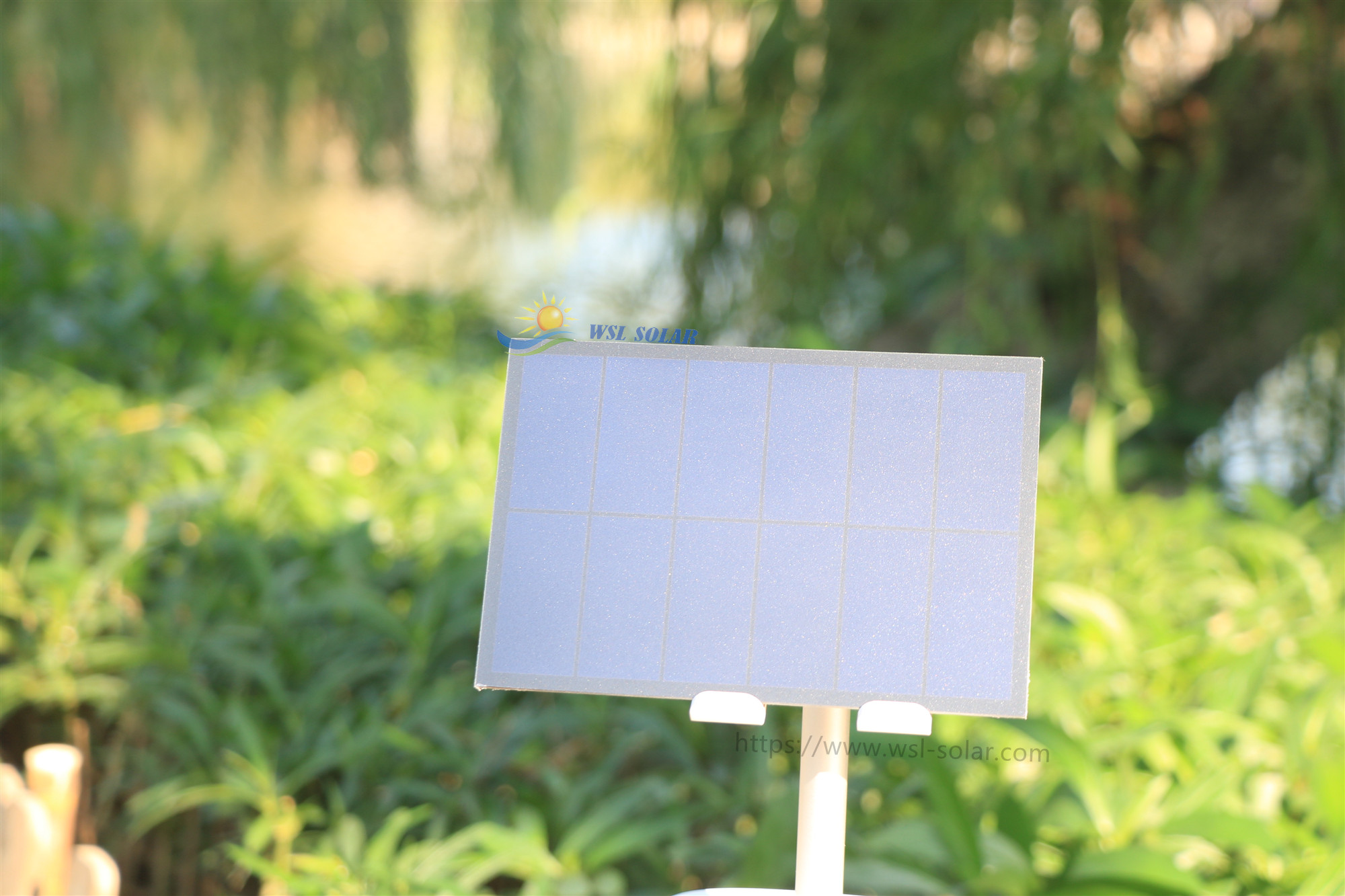
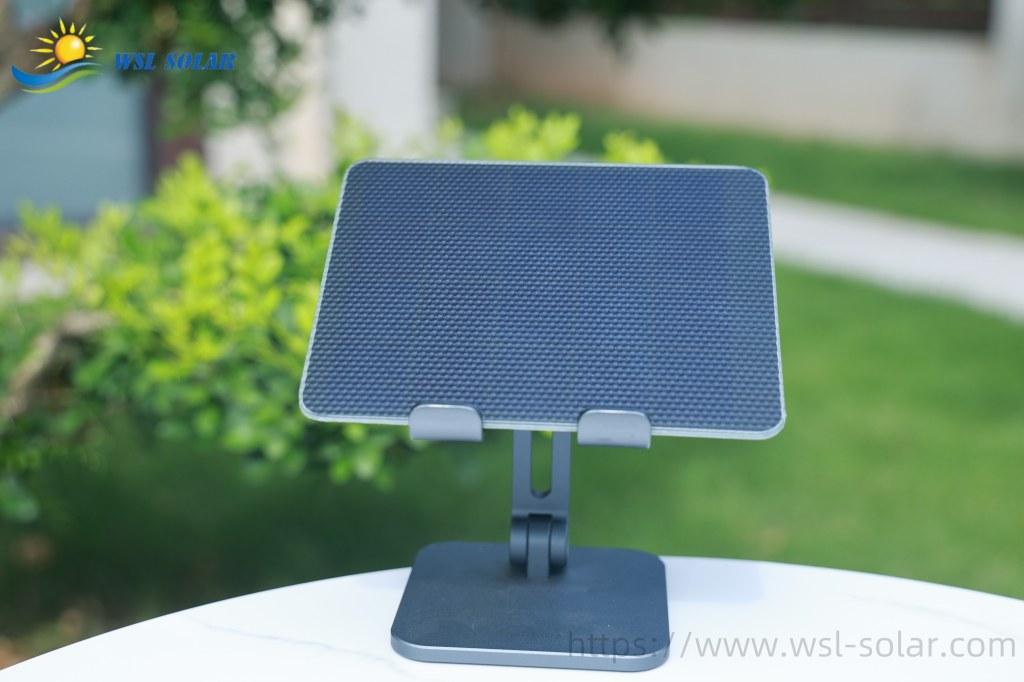
Back contact solar panels adopt back contact solar cells, the cell efficiency can reach 23%, it can generate more power than traditional solar cells within the same area. The surface of this panel is ETFE film, which makes this solar panel very thin, lightweight, and portable. The back of this solar panel is PCB board. This kind of solar panel is widely used in wireless sensors, IoT devices, LED lights and other small electronic devices.

Introduced by Carrie Wong of WSL Solar.

WSL Solar has been a professional manufacturer of high quality custom solar panels and solar solution provider in China since 2006.

https://www.wsl-solar.com

Custom Solar Panels – WSL Solar

WSL Solar has been a professional manufacturer of custom solar panels and solar solution provider in China since 2006. With our in-house R&D team and management team for over 17 years’ experience in solar industry, we can design and develop customized solar panels in a variaty of sizes, shapes and outputs according to our client’s specific requirement, and provide solution support start from their initial product development stage.

Welcome to contact us for high quality customized solar panels.

https://www.wsl-solar.com

What kind of tests do photovoltaic solar modules face under high temperatures?

Recently, under the combined effect of the greenhouse effect and the El Niño phenomenon, extreme high temperature weather has generally occurred in various parts of the world. For photovoltaic modules exposed for a long time, high temperatures will reduce their power generation, affect the power generation efficiency of the modules, accelerate the loss of sensitive components, and reduce the insulation performance of the enameled wires of motor coils in photovoltaic modules, cables, inverters and other electrical equipment, causing a short circuit and ignition of the circuit. In severe cases, it may even cause a fire in the photovoltaic power station, endangering personal safety and property safety.

Since the design and operation cycle of photovoltaic power plants is as long as 25-30 years, they are bound to experience extreme weather many times during their long life cycle. So, what efforts have photovoltaic manufacturers made to ensure that modules operate reliably at high temperatures?

By observing the “peak power temperature coefficient” (Pmax) of the solar module, we can intuitively compare the power generation performance of photovoltaic modules from different manufacturers in high-temperature environments, and then evaluate their heat resistance. The peak power temperature coefficient is a negative number. The smaller its absolute value, the better the power generation performance of the component under high temperature conditions. Generally speaking, when the module operates at a standard operating temperature of 25°C, the module output power is 100%. After that, every time the operating temperature increases by 1°C, the module output power will decrease accordingly. For example, the peak power temperature coefficient of the mainstream PERC solar module currently on the market is -0.34%/°C. When the operating temperature of the solar module is higher than 25°C, its output power will decrease by 0.34% for every degree of increase.

In an era of frequent extreme weather, solar modules with smaller absolute peak power temperature coefficients are obviously more popular.

WSL Solar has been a quality and professional manufacturer of custom solar panels, solar mini panels, IoT solar panels and solar solution provider in China since 2006.
https://www.wsl-solar.com

Source of origin: https://www.wsl-solar.com/Industry_News/2023/1013/tests-solar-modules-high-temperatures.html