What is a Solar Panel?

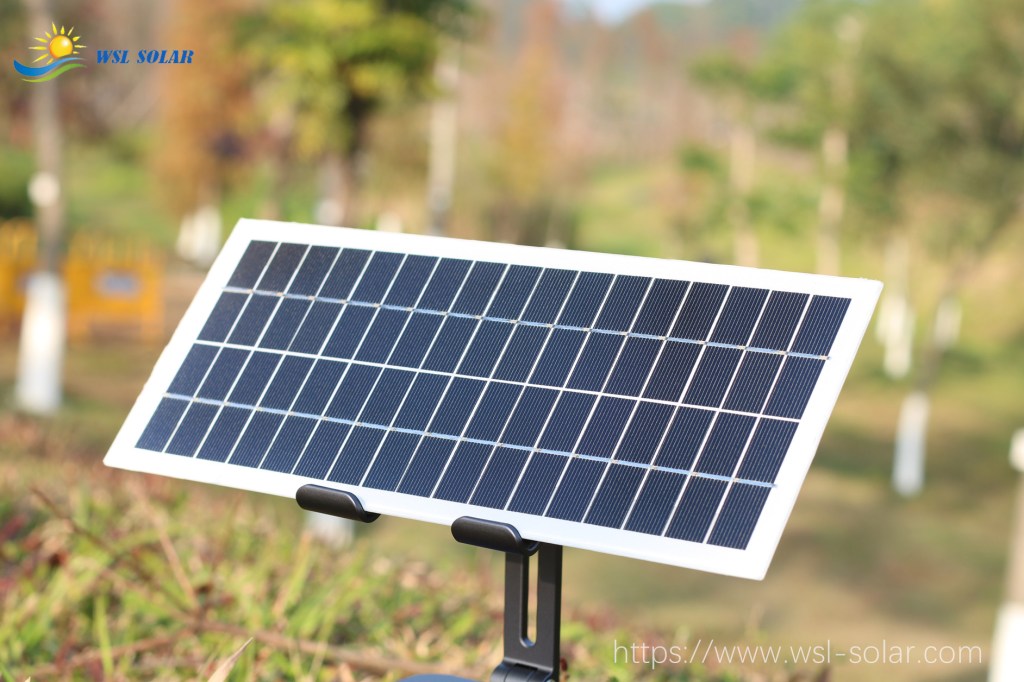
A solar panel is a device designed to convert sunlight into electricity using photovoltaic (PV) cells.​ These cells are typically made of semiconductor materials like silicon, which produce an electric current when exposed to sunlight.

Functionality of Solar Panels

Solar panels operate by absorbing sunlight and converting it into electricity through the photovoltaic effect. This process includes several key components: the solar cells within the panel generate direct current (DC) electricity, which can then be converted into alternating current (AC) electricity suitable for household use using an inverter. An average solar panel consists of multiple solar cells that work in unison to produce a higher voltage and current, creating a more substantial power output.

Types of Solar Panels

There are primarily two types of solar panels: monocrystalline and polycrystalline. Monocrystalline panels, made from a single crystal structure, are known for their high efficiency and performance in low-light conditions. In contrast, polycrystalline panels, formed from multiple crystal structures, tend to be less expensive but also have slightly lower efficiency rates. Thin-film solar panels are another category that utilizes layers of photovoltaic material deposited onto a substrate, which allows for a flexible form factor but often at reduced efficiency compared to crystalline panels.

Applications of Solar Panels

Solar panels have a broad range of applications. They are commonly used in residential and commercial settings to power homes and businesses. Additionally, solar panels are employed in standalone systems for remote areas, satellite systems, and even automotive applications. The versatility of solar panels makes them a suitable solution for a wide array of energy needs, including off-grid living and providing power to essential services in remote locations.

Benefits of Using Solar Panels

Utilizing solar panels offers numerous advantages, including reduced electricity costs, minimal environmental impact, and energy independence. Solar energy is renewable and does not produce greenhouse gases during operation, making it a cleaner alternative to fossil fuels. Furthermore, many government incentives, such as tax credits, encourage the adoption of solar technology by offsetting initial installation costs.

Conclusion

In summary, solar panels are essential components of modern renewable energy systems, allowing for the efficient conversion of sunlight into usable electricity. Their growing popularity is driven by advancements in technology and increasing awareness of sustainable energy practices. As solar technology continues to evolve, it is expected that the efficiency and affordability of solar panels will improve further, expanding their applications and benefits.

WSL Solar has been a quality and professional manufacturer of custom solar panels, solar mini panels, IoT solar panels and solar solution provider in China since 2006.
https://www.wsl-solar.com

Custom Solar Panels from WSL Solar

WSL Solar, a leading manufacturer and solution provider in the solar industry since 2006, offers high quality custom solar panels tailored to meet specific client requirements. With over 18 years of experience, our in-house R&D and management teams ensure the design and development of high-quality solar solutions. From diverse sizes and shapes to varied outputs, we provide comprehensive support from initial product development stage onwards.

https://www.wsl-solar.com

Custom Solar Module Manufacturer

Findy Solar has been designing and manufacturing high quality, high-efficiency custom solar panels in China since 2006.
 
With over 18 years of experience in the solar industry, we work closely with our customers to provide technical support and optimize solar panel design to meet their specific needs.
 
Our complete range of customized solar panels comes in a variety of sizes, shapes, materials, and outputs for a wide range of solar applications, including IoT devices, wireless sensors, transportation, marine, agriculture, parking, security, and weather monitoring. Trust Findy Solar to provide the perfect solar panel solution for your needs. https://www.findysolar.com

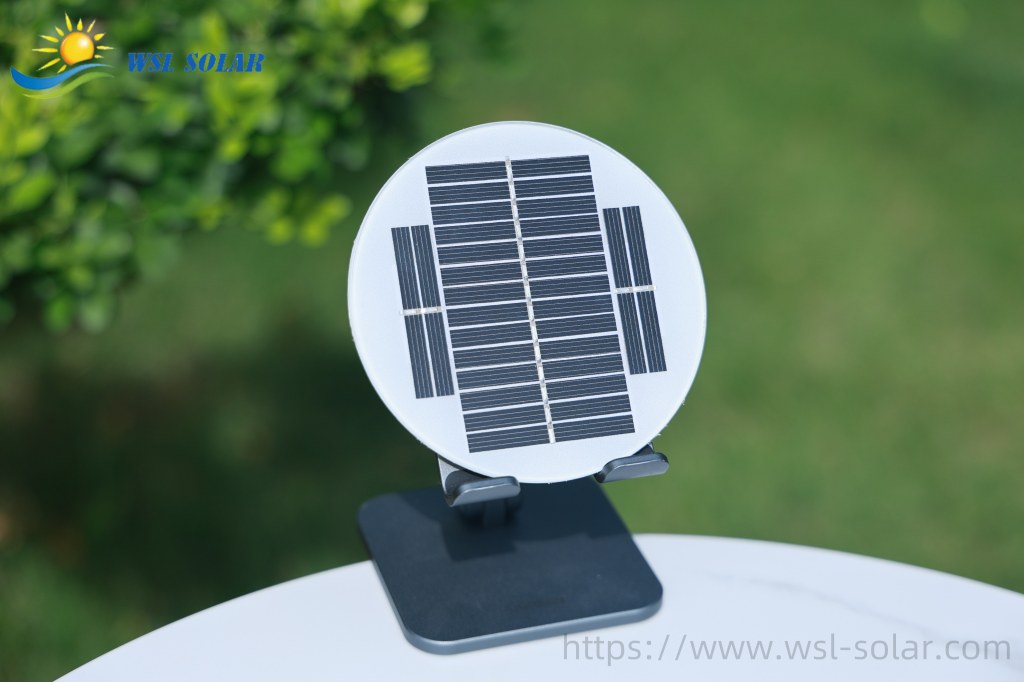
6V 3W Solar Panel

This 6V 3W solar panel is built with high-efficiency PERC solar cells, delivering up to 21% efficiency. It not only has stable output power, but also has good low light performance. This custom solar module is encapsulated with tempered glass, which makes it durable and long service life. This 3W solar panel is also waterproof, UV resistant and scratch resistant.

Features:

– Built with high efficiency PERC solar cell, upto 21% efficiency
– Tempered glass encapsulation, durable, long service life
– Positive tolerance power, consistent appearance
– Waterproof, UV- and scratch- resistant
– Excellent performance under low light environments

Applications:  
This custom solar module is widely used in wireless sensors, IoT devices,  marine devices, traffic signs, LED lights and other small electronics etc.

Item No.: FYD-CS002

Technical Details

Output:
Peak Power (Pmax): 3W
Voltage at Pmax (Vmp): 6V
Current at Pmax (Imp): 500mA
Open Circuit Voltage (Voc): 7.2V
Short Circuit Current (Isc): 550mA
Power Tolerance: ±5%
Solar Panel Size: 120x160x4.5mm
Cell Type: High Efficiency Mono Solar Cell
Number of Cells: 12 pcs
Construction: Tempered glass / EVA / Solar Cell / EVA / Back sheet (TPT)
Product Warranty:                        5 Years
Storage temperature:                  -20°C ~ 45°C
Working temperature:                 -40°C ~ 65°C
Standard Test Conditions (STC):  1000W/m2, 1.5AM, 25°C Cell temperature

Source of origin: https://www.findysolar.com/6V-3W-Solar-Panel.html

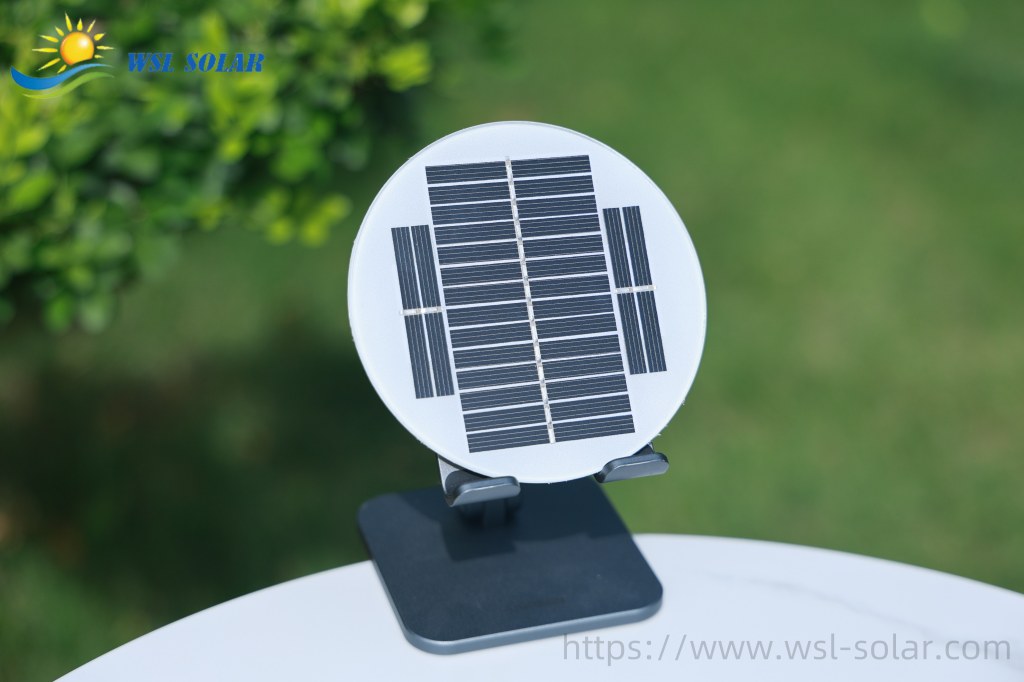
9V 2W Solar Panel

This 9V 2W solar panel is built with high-efficiency PERC solar cells, delivering up to 21% efficiency. It not only has stable output power, but also has good low light performance. This custom solar module is encapsulated with tempered glass, which makes it durable and long service life. This 2W solar panel is also waterproof, UV resistant and scratch resistant.

Features:

– Built with high efficiency PERC solar cell, upto 21% efficiency
– Tempered glass encapsulation, durable, long service life
– Positive tolerance power, consistent appearance
– Waterproof, UV- and scratch- resistant
– Excellent performance under low light environments

Applications:  
This custom solar module is widely used in traffic signs, IoT devices,  marine devices, LED lights and other small electronics etc.

Item No.: FYD-CS001

Technical Details

Output:
Peak Power (Pmax): 1.8W
Voltage at Pmax (Vmp): 9V
Current at Pmax (Imp): 200mA
Open Circuit Voltage (Voc):10.8V
Short Circuit Current (Isc): 220mA
Power Tolerance: ±5%

Solar Panel Size:  130x140x17mm
Cell Type:  High Efficiency Mono Solar Cell
Number of Cells: 18 pcs
Construction: Tempered glass / EVA / Solar Cell / EVA / Back sheet (TPT)

Product Warranty: 5 Years
Storage temperature: -20°C ~ 45°C
Working temperature: -40°C ~ 65°C
Standard Test Conditions (STC): 1000W/m2, 1.5AM, 25°C Cell temperature 

Source of origin: https://www.findysolar.com/9v-2w-solar-panel.html

Custom Solar Panel Manufacturer – WSL Solar

Thank you, my dear customers, for your continued support and recognition of WSL Solar’s products and services. Your satisfaction is our driving force to continue delivering high-quality custom solar panels and solar solutions . We take pride in being a professional and reliable solar solution provider in China since 2006.

https://www.wsl-solar.com

Tips to Choose the Right Solar Panel for Your Battery

Are you looking for the right solar panel to charge your battery? Here are some tips to help you choose the right one.

When selecting a solar panel to charge your battery, it is essential to ensure that the voltage of the solar panel is greater than the fully charged voltage of the battery by 20-30%. For instance, a 6V battery requires an 8-9V solar panel, and a 12V battery requires a 15-18V solar panel.

Custom Solar Panel - Findy Solar 2024.jpg

Another crucial factor to consider is the solar panel’s Voltage Open Circuit (VOC), which should be between 1.4 and 1.8 times the nominal battery bank voltage. Suppose you have a 24-volt system, in that case, the VOC should be between 33.6V and 43.2 volts.

In addition to voltage, also consider the amperage of the solar cell. The amperage will fluctuate with sun exposure and determine how long it takes to recharge the battery. By keeping these factors in mind, you can choose the perfect solar panel to power your battery.

Choosing the right solar panel for your battery is crucial to ensure optimal performance and longevity. Keep these tips in mind when selecting your solar panel, and you’ll be on your way to powering your devices with renewable energy.

Findy Solar has been a custom solar solution provider and high efficiency custom solar panels manufacturer in China since 2006.

https://www.findysolar.com

10 Watt Solar Panel

Key Features:

– Utilize high efficiency mono PERC solar cell, up to 22.5% efficiency
– Laminated by tempered glass, rigid, durable and long lasting
– Waterproof, scratch resistant, and UV resistant
– Customized solar panels for industrial use

Description:
10Watt Solar Panel
 
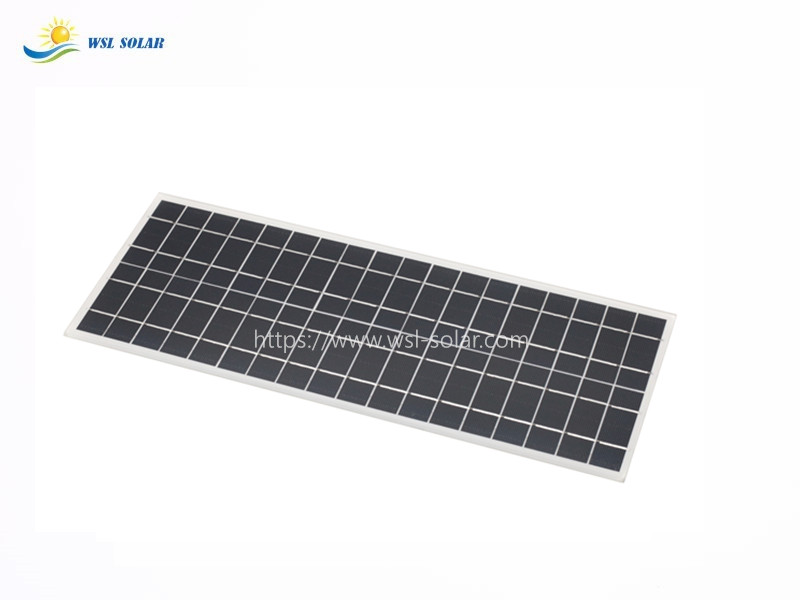
This custom solar panel utilizes high efficiency mono PERC solar cells with efficiency up to 22.5%, to ensure its high output. It is laminated by tempered glass to protect the solar cells inside, making it rigid, durable and long lasting. This rigid solar panel is waterproof, scratch resistant, and UV resistant, specially designed for long term outdoor use in any challenging condition.
 
Applications:
Tempered glass solar panels are widely used in IoT applications, marine buoys, wireless sensors, traffic warning devise, GPS devices, asset tracking, electric fence chargers, outdoor lighting systems, weather monitoring systems etc.

Solar Panel Specification

Item No.WSL-C032
Solar Panel Size150x380x4.5mm
Peak Power (Pmax)10W
Voltage at Pmax (Vmp)19.8V
Current at Pmax (Imp)505mA
Open Circuit Voltage (Voc)23.1V
Short Circuit Current (Isc)550mA
Solar Cell TypeMono PERC Solar Cell
Power Tolerance±5%
Encapsulation method3.2mm Tempered glass
Back sheetTPT
Product Warranty5 Years
Lead time25 Days
Storage temperature-40°C ~ 85°C
Working temperature-40°C ~ 85°C
Standard Test Conditions (STC)1000W/m2, 1.5AM, 25°C Cell temperature

Click here to watch the video of this type of custom solar panels. 

View More Custom Solar Panels

5V Solar Panels   |  6V Solar Panels   |  9V Solar Panels

WSL Solar has been a quality and professional manufacturer of custom solar panels and solar solution provider in China since 2006. 

Source of origin: https://www.wsl-solar.com/10watt-solar-panel.html

Custom Solar Panels – WSL Solar

WSL Solar has been a professional manufacturer of custom solar panels and solar solution provider in China since 2006. With our in-house R&D team and management team for over 17 years’ experience in solar industry, we can design and develop customized solar panels in a variaty of sizes, shapes and outputs according to our client’s specific requirement, and provide solution support start from their initial product development stage.

Welcome to contact us for high quality customized solar panels.

https://www.wsl-solar.com

How to Connect Solar Cells?

When we produce customized solar panels according to the specific needs of customers, we usually need to cut the solar cells into small pieces, and then connect the small pieces of solar cells in series or parallel as needed to form a solar cell string. Then, different numbers of solar cell strings are connected according to the required electrical performance to form a solar panel.

According to different types of solar cells and different production processes, there are usually two ways to connect solar cells.

For traditional crystalline silicon solar cells, in mass production, the connection method is usually through an automatic string welding machine. The positive electrode of one solar cell is connected to the negative electrode of the adjacent solar cell with a soldering ribbon to form a solar cell string. Using a string welding machine can not only greatly improve production efficiency and save labor costs, but also ensure product consistency.

For back-contact solar cells, in mass production, the connection method is usually to attach the solar cells to the PCB board through an SMT machine in a designed way, and then solder the solar cells together through reflow soldering. Or use an automatic string welding machine to connect in series or parallel in the same way as traditional crystalline silicon solar cells.

WSL Solar has been a quality and professional manufacturer of custom solar panels, solar mini panels, IoT solar panels and solar solution provider in China since 2006.
https://www.wsl-solar.com

Source of origin: https://www.wsl-solar.com/Product_News/2023/1130/how-to-connect-solar-cells.html