Revolution of Indoor Photovoltaic Technology: Challenges and Opportunities of Solar Cells in IoT Applications

Against the backdrop of today’s rapid technological development, the increasing popularity of indoor Internet of Things (IoT) applications has made the prospects of smart homes and industrial sensors more promising. However, providing continuous and efficient power to these numerous devices has become a major challenge faced by various industries. Especially in indoor environments, traditional power supply methods are stretched, and the rise of indoor photovoltaic (IPV) technology provides a potential solution to this problem. This article will explore in depth the challenges and opportunities of indoor photovoltaic technology in IoT applications and reveal the future development direction of this field.
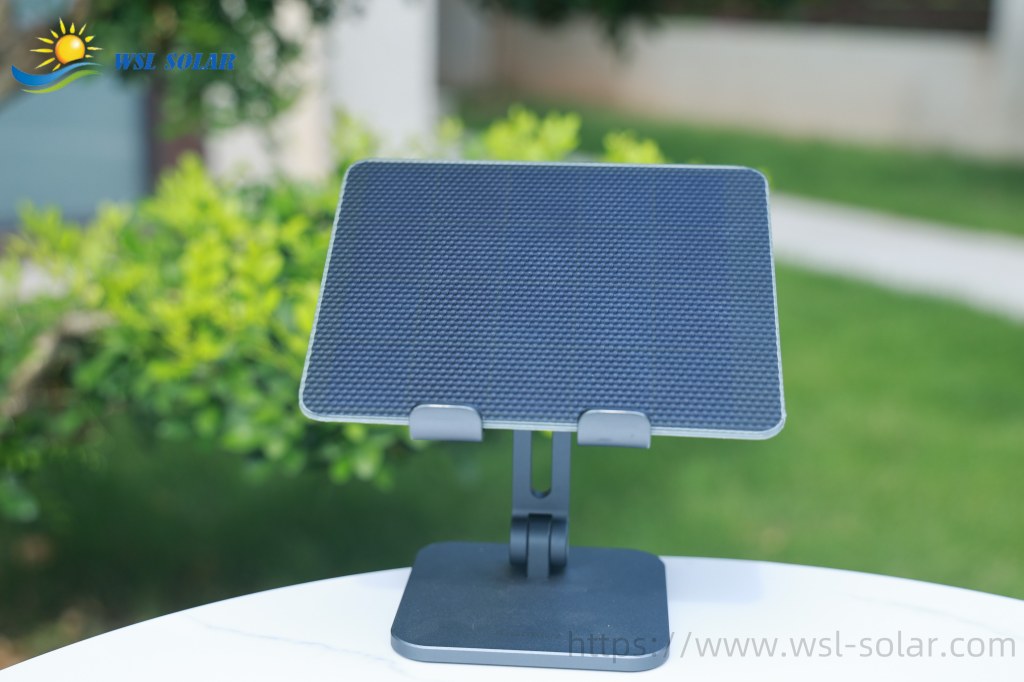
First, the foundation of indoor photovoltaic technology lies in its ability to adapt to lighting conditions that are different from those outdoors. Outdoor solar cells are usually tested under standardized sunlight, while the intensity and spectrum of indoor light sources are more complex. For example, LED lamps configured indoors can be divided into warm and cool colors, and their spectral characteristics are very different from natural sunlight. For this reason, the design of indoor photovoltaic cells must take this into account to achieve optimal energy capture. Therefore, the development of photovoltaic materials suitable for low light intensity and specific spectrum has become an important direction of research and development.

Secondly, one of the main challenges of current indoor photovoltaic technology is how to improve the conversion efficiency of cells. Existing crystalline silicon solar panels perform well in outdoor environments, but their energy conversion efficiency drops significantly in indoor environments. This is attributed to the fact that the energy band width (bandgap) of crystalline silicon materials is much lower than the ideal condition required for indoor photovoltaics. To improve efficiency, researchers are exploring third-generation photovoltaic technologies including organic solar cells (OSCs) and perovskite solar cells (PSCs), which not only have the advantages of adjustable bandgap but also perform well under low light intensity conditions. In addition, reducing the manufacturing cost of materials and improving the flexibility and loadability of equipment are also key to promoting this technological innovation.

Not only that, the market potential of indoor photovoltaic technology should not be underestimated. According to industry analysis, the indoor photovoltaic market is expected to exceed US$1 billion by 2030. In addition, the role of the Internet of Things in improving energy efficiency and reducing carbon emissions is highly anticipated. By optimizing indoor photovoltaic technology, IoT devices can not only achieve energy self-sufficiency, but also reduce dependence on disposable batteries and reduce resource waste. This move is not only in line with the current trend of sustainable development, but also an important part of smart city construction.

However, the development of the industry also needs to solve the problem of standardized testing. At present, the testing standards for indoor photovoltaics are relatively weak, mainly due to the complexity brought by the diversity of indoor lighting conditions. The International Electrotechnical Commission (IEC) has introduced some specifications, but they still need to be improved. Establishing consistent testing standards will not only help improve the competitiveness of the industry, but also enhance consumers’ trust in technology, thereby accelerating the popularization of the market. In addition, although indoor photovoltaic solutions are theoretically feasible, in-depth research on their stability and security is still needed to meet the needs of various IoT applications.

In the future, indoor photovoltaic technology will play an increasingly important role in the Internet of Things. With the continuous innovation of technology, indoor photovoltaics can not only provide sustainable energy support for billions of low-power nodes, but also achieve smarter and more efficient space management. To achieve this goal, cooperation between governments, enterprises and academia is essential. By strengthening research investment, promoting technology sharing and optimizing the policy environment, we can jointly accelerate the maturity and development of this industry. The advancement and widespread application of indoor photovoltaic technology will inject new vitality into the Internet of Things and pave the way for the realization of smart life.

In summary, although indoor photovoltaic technology faces many challenges in IoT applications, it has great potential. Through technological innovation, standard setting and cross-border cooperation, we have reason to believe that indoor photovoltaics will provide a continuous source of power for future smart life and drive society towards sustainable development.

WSL Solar has been a quality and professional manufacturer of custom solar panels, solar mini panels, IoT solar panels and solar solution provider in China since 2006.
https://www.wsl-solar.com

What are Perovskite Solar Cells and Their Latest Significant Progress?

Perovskite solar cells are solar cells that use perovskite-type organic metal halide semiconductors as light-absorbing materials. They belong to the third generation of solar cells and are also called new concept solar cells.

Custom Solar Panels from WSL Solar

A recent study by Chinese scholars collaborating with international researchers has made significant progress in developing high-efficiency and high-temperature stable perovskite solar cells, achieving notable results by focusing on compositional engineering, defect management, and encapsulation techniques to enhance both efficiency and operational stability under extreme temperatures. 

Key points about the research:

High Efficiency:
The research has led to perovskite solar cells with significantly improved power conversion efficiency, reaching levels comparable to the best commercially available solar cells. 

High-Temperature Stability:
A key focus of the research has been on enhancing the stability of the perovskite solar cells under high temperatures, allowing them to operate effectively in harsh environments. 

Collaboration:
Chinese scholars have partnered with researchers from other countries, leveraging diverse expertise to tackle the complex challenges associated with developing highly stable perovskite solar cells. 

Potential applications:

Concentrated solar power:
The high-temperature stability of these perovskite solar cells could be particularly beneficial for concentrating solar power applications where high operating temperatures are encountered.

Desert environments:
Regions with extreme heat could benefit from the use of these solar cells due to their improved thermal stability. 

Challenges and future directions:

Scaling up production:
Further research is necessary to scale up the production of these high-performance perovskite solar cells to make them commercially viable. 

Material optimization:
Continued research on perovskite material composition and synthesis methods could further enhance efficiency and stability.

WSL Solar has been a quality and professional manufacturer of custom solar panels, solar mini panels, IoT solar panels and solar solution provider in China since 2006.

How to Connect Solar Cells?

When we produce customized solar panels according to the specific needs of customers, we usually need to cut the solar cells into small pieces, and then connect the small pieces of solar cells in series or parallel as needed to form a solar cell string. Then, different numbers of solar cell strings are connected according to the required electrical performance to form a solar panel.

According to different types of solar cells and different production processes, there are usually two ways to connect solar cells.

For traditional crystalline silicon solar cells, in mass production, the connection method is usually through an automatic string welding machine. The positive electrode of one solar cell is connected to the negative electrode of the adjacent solar cell with a soldering ribbon to form a solar cell string. Using a string welding machine can not only greatly improve production efficiency and save labor costs, but also ensure product consistency.

For back-contact solar cells, in mass production, the connection method is usually to attach the solar cells to the PCB board through an SMT machine in a designed way, and then solder the solar cells together through reflow soldering. Or use an automatic string welding machine to connect in series or parallel in the same way as traditional crystalline silicon solar cells.

WSL Solar has been a quality and professional manufacturer of custom solar panels, solar mini panels, IoT solar panels and solar solution provider in China since 2006.
https://www.wsl-solar.com

Source of origin: https://www.wsl-solar.com/Product_News/2023/1130/how-to-connect-solar-cells.html

The Price of Silicon Material is not Panic, or Other Solar Cell Opportunities

Since last year, the industry thought that silicon materials would increase in price, and finally began to “grab the show” in the near future. Data show that the price of polysilicon materials has soared recently, and the density of single crystal materials has risen by more than 10%.

This has overwhelmed the most closely related silicon wafer companies. Even though the wafers are processed into thin slices, they still cannot amortize costs and can only take the road of rising prices.

OFweek Veken believes that the price increase of silicon materials will eventually be transmitted to the modules, which will affect the annual photovoltaic installations in the short term. However, in the long run, it will certainly promote the development of other low-silicon, even non-silicon solar cells.

WSL Solar – Leading Custom Solar Panel Manufacturer 

At present, more attention is paid to thin-film solar cells and perovskite solar cells.

Among them, the thin-film battery is to prepare a layer of thin film into a solar battery, which uses very little silicon, making it easier to reduce costs. Although it sounds forward-looking, it is not far from our lives.

The more familiar American company First Solar is a photovoltaic company with profound knowledge in the field of thin-film cells. Its module shipments in 2020 have also entered the top ten, and it is also the photovoltaic company that is most hopeful of making a breakthrough in the field of thin-film cells.

Perovskite solar cells belong to the third generation of solar cells, and their advantages are high conversion efficiency upper limit and extremely low cost. However, the disadvantage is also very obvious, that is, the stability is poor. Although many scientific research teams have announced that they have developed perovskite solar cells with a conversion efficiency of more than 20%, they rarely mention key stability issues. Hope that as technology advances, a breakthrough will be made as soon as possible.

In the long run, photovoltaics still have a very broad room for growth in the future. Therefore, companies and scientific research teams need to make breakthroughs in different technical routes to achieve greater progress. The rise in the price of silicon materials this time is also an opportunity for the development of other solar cell technology routes.

Posted by Carrie Wong | WSL Solar

WSL Solar has been a quality and professional manufacturer of custom solar panel and solar solution provider in China since 2006.

https://www.wsl-solar.com

Source from https://www.wsl-solar.com/Industry_News/2021/0301/rising-price-of-silicon-material.html