Custom Solar Panels have several basic parameters, rated power (Pmax), efficiency (η), open circuit voltage (Voc), short circuit current (Isc), peak voltage (Vmpp), and peak current (Impp).
Rated power (Pmax): indicates the power generated by the maximum power point voltage when the custom solar panel is at the standard ambient temperature (STC, ie, the atmospheric mass is 1.5, ambient temperature is 25 ° C, the light radiation intensity is 1000 W/m 2 );
Efficiency (η): represents the photoelectric conversion efficiency of the silicon wafer inside the custom solar panel, such as an efficiency of 16.5%, which means that the silicon wafer can generate 165 W of electricity per square meter;
Open circuit voltage (Voc): indicates the voltage across the positive and negative terminals (custom solar panel’s no-load voltage) when the solar panel is open at standard ambient temperature;
Short-circuit current (Isc): indicates the short-circuit current generated by short-circuit between the positive and negative terminals of the solar panel when the panel is at the standard ambient temperature;
Peak voltage (Vmpp): indicates the operating voltage of the customized solar panel at the maximum power point (the highest voltage in strong light) when the panel is at the standard ambient temperature;
Peak current (Impp): Indicates the operating current corresponding to the operating voltage of the solar panel at the maximum power point when the panel is at the standard ambient temperature.
Author: Carrie Wong
From WSL Solar Co., Ltd.
WSL Solar has been a quality and professional manufacturer of custom solar panel and solar solution provider in China since 2006.
A few days ago, Wang Bohua, secretary general of the China Photovoltaic Industry Association, provided data that from January to October 2019, China’s photovoltaic product exports reached a new high.
According to statistics, the total export of silicon wafers, solar cells and solar panels reached US $ 17.74 billion, a year-on-year increase of 32.3%. Among them, the high-tech midstream photovoltaic products’ solar cell exports in the first half of this year have exceeded the whole of 2018; downstream solar panel exports have exceeded the whole of 2018 in the first eight months of this year.
Not only that, Wang Bohua said that based on the substantial increase in export value, the diversification trend of China’s solar photovoltaic exports has also become stronger. At present, there are 26 countries and regions with exports exceeding US $ 100 million, and 13 countries with exports exceeding 1 GW.
AIoT (Artificial Intelligence Internet of Things) = AI (Artificial Intelligence) + IoT (Internet of Things). AIoT integrates AI technology and IoT technology. Through the Internet of Things, massive amounts of data are generated and collected in the cloud and at the edge, and then big data analysis and higher forms of artificial intelligence are used to realize dataization and intelligentization of everything. The Internet of Things technology and artificial intelligence are pursuing an intelligent ecosystem. In addition to the need for continuous innovation in technology, the implementation and application of technology are the core issues in the field of Internet of Things and artificial intelligence that need to be broken at this stage.
Concept of AIoT
From a broad definition, AIoT is the integration of artificial intelligence technology and the Internet of Things in practical applications. It is not a new technology, but a new form of IoT application, which distinguishes it from traditional IoT applications. If the Internet of Things is to interconnect all ordinary objects that can perform independent functions and connect everything with the network, then AIoT will give it more intelligent features based on this, so that everything in the true sense can be interconnected.
On October 16, 2017, Legrand and Nanjing IoT jointly held the Internet of Things and Smart Home Global Summit Forum in Nanjing with the theme “AIoT, Meet a New Future”. The event attracted experts from the fields of artificial intelligence, the Internet of Things, the Internet, and home appliances to discuss in depth the application and impact of related technologies such as AIoT. For the first time, the industry pushed the concept of AIoT to the masses.
On November 28, 2017, at the “Smart Future of All Things · AIoT Future Summit” co-sponsored by Guangji Capital, 36 氪, and Tsinglian, experts and industry guests believed that with the continuous expansion of the Internet of Things application scenarios, the industry The space is gradually expanding, and AI enters the second half of development. When combined with IoT, it will open an important channel for artificial intelligence to really land.
On the same day, at the first Xiaomi IoT Developers Conference, Xiaomi announced that it had reached an in-depth cooperation with Baidu and would cooperate in the field of Internet of Things (IoT) and artificial intelligence (AI). The era of the Internet of Everything and artificial intelligence has arrived, and artificial intelligence and the Internet of Things will form a perfect complementarity and combination. Artificial intelligence will become a new breakthrough point for the further sustainable development of the Internet of Things. It will allow the Internet of Things to enter a new era. .
Whether it is AI or the Internet of Things, one key is indispensable: data.
Data is the foundation of Internet of Everything and human-computer interaction. The involvement of AI gives the IoT a “brain”. Similarly, thanks to the development of current storage technology, data has a basic “logistical guarantee”. The rapid expansion of cloud services has given data a material basis for value.
After the “integration” of AI and IoT, “artificial intelligence” has gradually developed to “application intelligence”. Deep learning requires the sensor collection of the Internet of Things, and the system of the Internet of Things also needs artificial intelligence to correctly identify, find anomalies, and predict the future. From this, it can be seen that artificial intelligence combined with the Internet of Things (AIoT) is the next major development. And this development affects all walks of life, and even subverts the industry. In other words, AIoT services will appear in large numbers next to us.
In the list of the first batch of national new generation artificial intelligence open innovation platforms, relying on Baidu ’s “autonomous driving” national new generation artificial intelligence open innovation platform, relying on Alibaba Cloud ’s “urban brain” national new generation artificial intelligence open innovation platform, relying on Tencent The new generation of artificial intelligence open innovation platform of “Medical Imaging” national construction, and the new generation of artificial intelligence open innovation platform of “Smart Voice” national construction relying on HKUST.
Editor: Carrie Wong / WSL Solar
WSL Solar has been a quality and professional manufacturer of custom solar panels and solar solution provider in China since 2006.
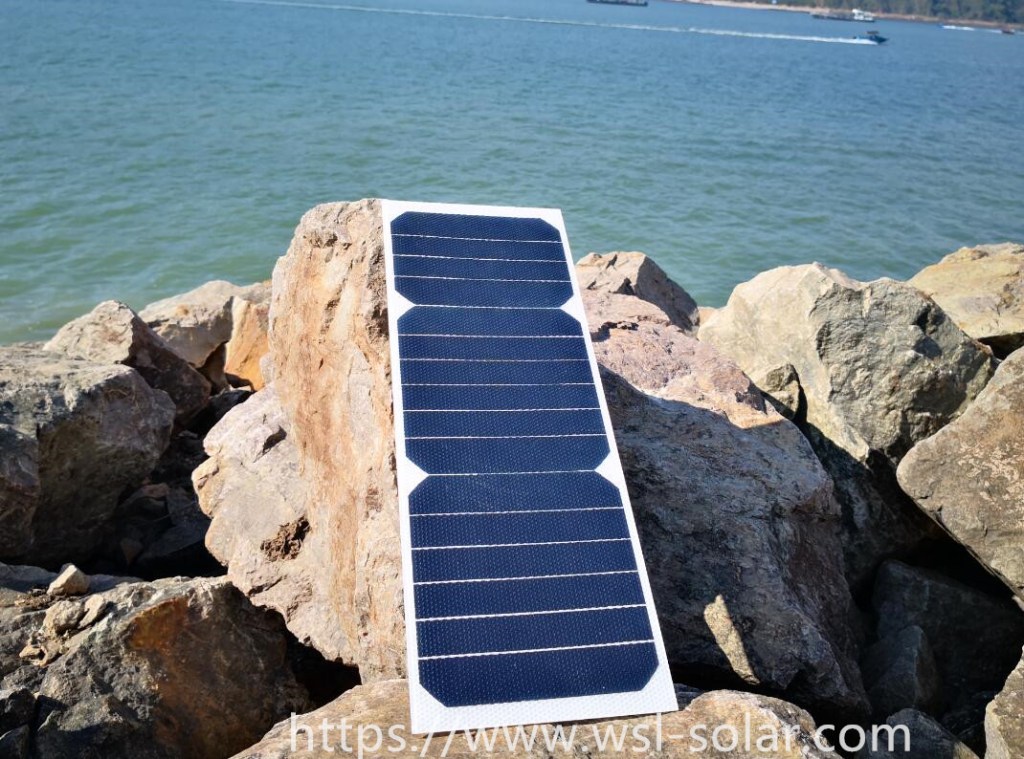
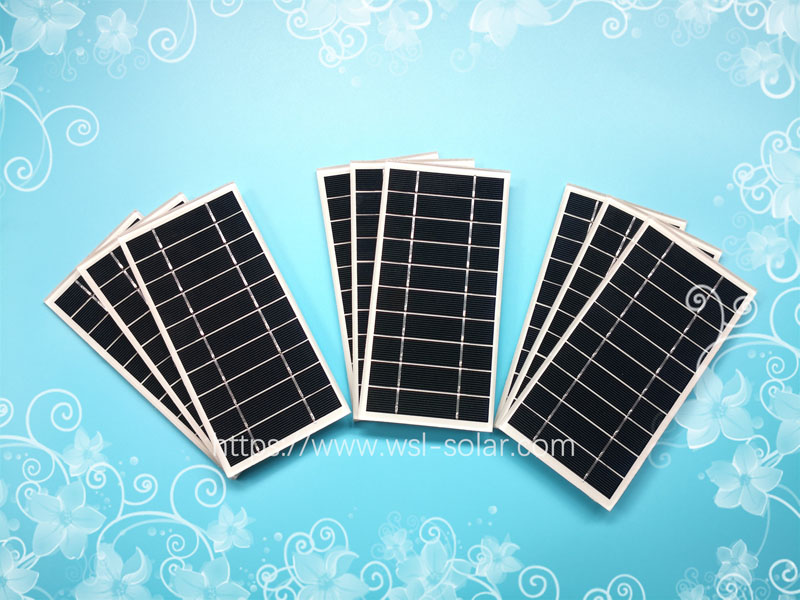
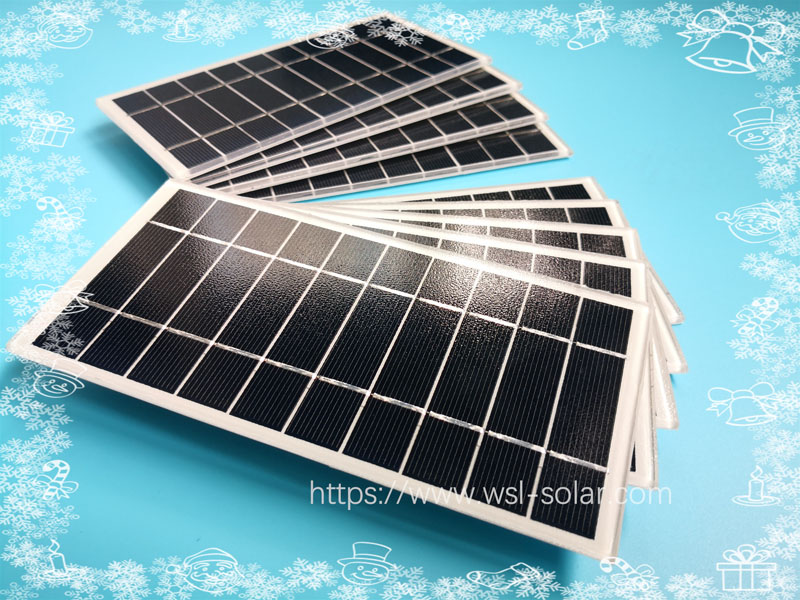
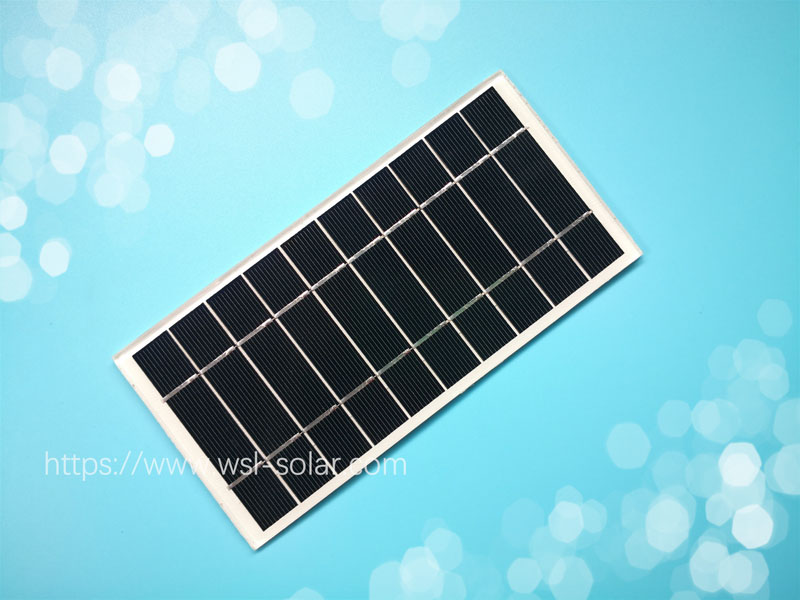
Epoxy Solar Panel is a kind of solar panel, but the encapsulation method is different. The solar cell is cut into small pieces by using a laser cutter to make the required voltage and current, and then encapsulated. Due to the small size, the encapsulation method such as glass laminated or PET laminated solar panel is generally not used, but the solar cell sheet is covered with epoxy resin and bonded with the PCB circuit board.
The size of the solar panel can be customized according to the size required by the customer. The working voltage and working current can be customized. Generally, the epoxy solar panel is used to charge the battery of solar charger, solar light, toy and other small solar application electronic products. The working current is measured in the simulated standard light intensity. The standard test conditions are 1000 W/M 2, 25 ° C, and AM 1.5 conditions. The voltage and current emitted will change with the light intensity of the day. In sunny days, the power generated by the solar panel can be calculated in 4 hours.
Product
Usage
Epoxy solar panel is an accessory for solar products. It can charge battery or directly connect load. It can be used in solar lawn light, solar floor lamp, solar garden lamp, solar charger, solar street sign, solar road stud, solar traffic sign, solar flashlights, solar toys and other small electrical products. Medium or large-size solar panels are generally encapsulated in a laminate way. Only solar panels with too small size and a power of only a few watts will be made into epoxy solar panels. Because laminated solar panels have a longer life than epoxy solar panel.
Advantages
and Disadvantages of Epoxy Solar Panel
The epoxy solar panel has the
characteristics of high production speed, pressure and corrosion resistance,
beautiful appearance and low cost.
However, its disadvantage is that
the lifespan of the epoxy solar panel is shorter than that of laminated solar
panels, and usually the lifespan is only about one year. If it is often exposed
to the outdoors, the surface of the epoxy solar panel will become whitish and
yellow, which affects the appearance. Therefore, if you want a long-life solar
panel, you better choose glass laminated solar panels, ETFE or PET laminated
solar panels.
Editor: Carrie Wong / WSL Solar
WSL Solar has been a quality and professional manufacturer of custom solar panels and solar solution provider in China since 2006.
A solar panel is a device that converts solar energy into electrical energy. Since solar panels can be customized flexibly, small custom solar panels have been applied to many off-grid solar applications, such as solar chargers, solar attic fans, and solar LED lights etc.
Usually
the solar panels we see are a complete piece of panel, but do you know what the
internal structure of the solar panels is?
Here,
we mainly introduce the crystal silicon solar panels that are more common on
the market as an example.
The
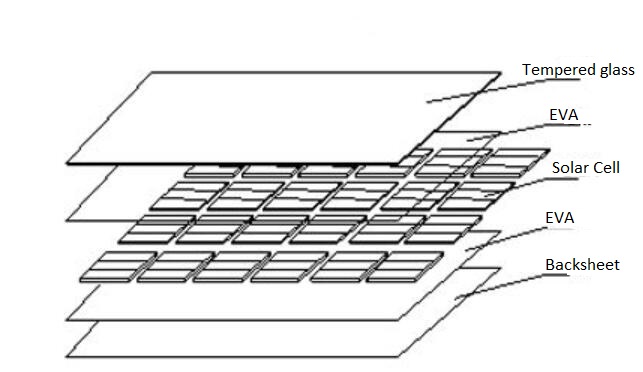
structure of crystalline silicon solar panels is usually: tempered glass / EVA
/ solar cell / EVA / backsheet.
Solar Panel Construction
(1) Tempered glass: Its function is to protect the main body of power generation (such as solar cells). The choice of light transmission is required:
1. The light transmittance must be high (generally 91% or more); 2. Ultra-white tempering treatment.
(2) EVA: Used to
bond fixed tempered glass and solar cell. The quality of transparent EVA
material directly affects the life of solar panels. EVA exposed to air is prone
to aging and yellowing, thus affecting the light transmission of solar panels,
so then, affecting the power generation quality of the solar panels. In
addition to the quality of the EVA itself, the influence of the lamination
process of the custom solar
panel manufacturers is also very large. For example, if the EVA
adhesiveness is not up to standard, the bonding strength of EVA and tempered
glass and backing plate is insufficient, which will cause EVA early aging, thus
affects solar panel’s life.
(3) Solar Cell: Solar
cells are the core components of solar panels. The main function of solar cell
is power generation.
(4) Back sheet: Its function is sealed,
insulated and waterproof. Generally, materials such as TPT and TPE must be
resistant to aging. Most solar panel manufacturers are guaranteed for 25 years.
Tempered glass and aluminum alloys are generally no problem. The key is whether
the back sheet and silica gel can meet the requirements.
When the
solar cell is soldered, the next step is to laminate, according to the
following sequence, tempered glass / EVA / solar cell / EVA / back plate,
stacked, and then sent to the laminator for vacuuming, and high temperature
lamination. EVA is solid at room temperature, but when EVA is exposed to high
temperatures, it becomes liquid. Therefore, in the laminator, after the EVA is
melted into a liquid state, the solar cell sheet and the tempered glass and the
back sheet are glued together.
Just after laminating from the laminator, usually on the four sides of the solar panel, there is some excess EVA overflow, which requires a knife to cut and burr. After processing, a complete solar panel is produced.


 Custom Solar Panel