What are OPV and OPV-IoT?

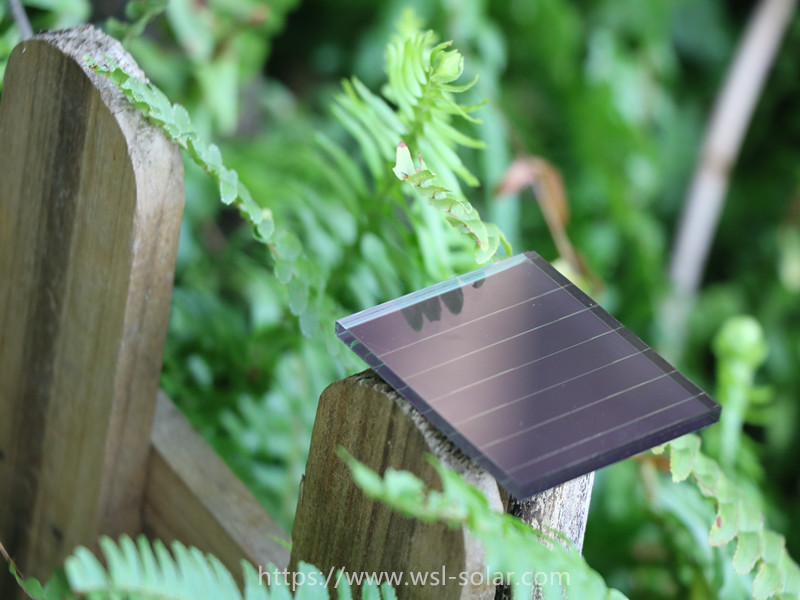
OPV is the abbreviation of “Organic Photovoltaics”, also known as “organic solar cell”. It is a solar cell technology that uses organic semiconductor materials to convert light energy into electrical energy. Unlike traditional silicon solar cells, OPV solar cells use organic compounds rather than inorganic materials to capture photons and generate electricity.

OPV-IoT refers to application technology that combines organic photovoltaic technology with Internet of Things technology. In this case, OPV technology will provide energy for IoT devices to drive or charge them. This combination can bring some unique advantages to the Internet of Things, especially in low-light conditions, dark environments that require wireless communication and long-term operation.
organic solar cell

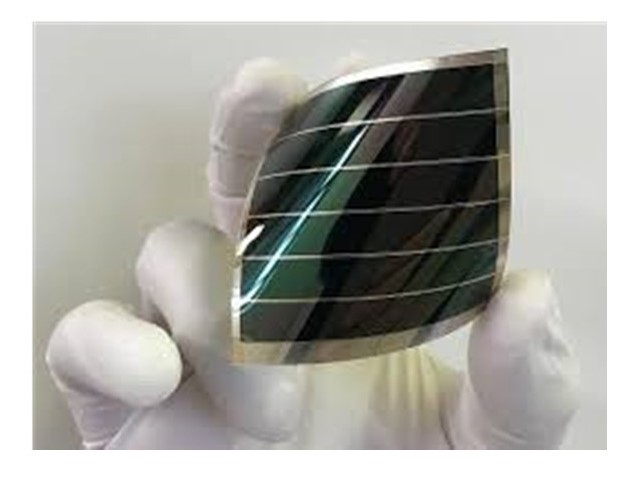
Organic Solar Cell


Compared with some other photovoltaic technologies, organic photovoltaic (OPV) technology is more suitable for converting electrical energy in low-light environments for three main reasons:

1. Broad spectrum absorption
OPV materials can absorb a broad spectrum of light, including visible light and near-infrared light. This means they are able to capture a wide range of wavelengths in low-light conditions. Some other technologies have more limited spectral absorption capabilities and do not work well in low-light environments.

2. Low light startup ability
OPV technology has low-light start capability, which means it can start generating electricity even in low-light conditions. This is due to the lower light threshold required to initiate the photovoltaic process. In comparison, other technical routes require higher light intensity to start generating electricity.

3. Flexibility and portability
OPV equipment is generally flexible and lightweight, making it suitable for a wide range of applications. They can be integrated into devices of various shapes and used on flexible substrates, which allows them to adapt to different surfaces and shapes. This flexibility is beneficial in low-light indoor environments where traditional rigid solar panels may not be suitable.

OPV technology harvests power in the darkest conditions, such as in warehouses or “black light” factories, and works with as little as 500 lux per unit area. For reference, everyday outdoor light is close to 10,000 lux.

Development and research status of organic photovoltaics

According to data from the China Photovoltaic Industry Association, China’s photovoltaic industry will achieve steady growth in 2021. The output of polysilicon, silicon wafers, cells and modules reached 505,000 tons, 227 GW, 198 GW and 182 GW respectively year-on-year, an increase of 28.8%, 40.7%, 46.9% and 46.1% respectively. The output value of these four compounds exceeded 7500 billion. At the same time, industrial concentration has further increased. In the four major fields of polysilicon, silicon wafers, cells, and components, the top five manufacturing companies accounted for 86.7%, 84%, 53.9%, and 63.4% of the total domestic output respectively. The top five companies have obvious economies of scale.

As for organic photovoltaics, the analysis of Zhiyanzhan Industry Research Institute believes that the global organic photovoltaic market is expected to continue to maintain strong growth in the next few years. However, at present, the market size is relatively small, accounting for only a small part of the solar energy market.

Why is the market size of organic photovoltaics still small?

In 2021, an analysis by Dr. Li Tengfei from the Department of Materials Science and Engineering, School of Engineering, Peking University, and his tutor Professor Zhan Xiaowei mentioned that organic photovoltaics have the following problems:
First, the photovoltaic efficiency is low. The efficiency of organic photovoltaics currently on the market is generally lower than 20%;
Second, the cost of industrialization is high, and the cost of active layer and motor materials is relatively high;
Third, the component life is low. From the stability results, it can be seen that the service life of the device is difficult to reach more than 10 years.

custom solar panel

WSL Solar has been a quality and professional manufacturer of custom solar panels, solar mini panels, IoT solar panels and solar solution provider in China since 2006.

https://www.wsl-solar.com

Source of origin: https://www.wsl-solar.com/Industry_News/2024/0515/opv-iot.html

The working principle and advantages and disadvantages of organic solar cells

Organic Solar Cell (OSC) is a solar cell made of organic materials such as dyes or conjugated polymers, which can convert sunlight into electrical energy, and has high stability and preparation flexibility.

Organic solar cells work by absorbing sunlight and photons excite and separate charges to form charge carriers. In organic solar cells, conjugated polymers are usually used as charge transport materials, in which cations or oxides with low ionization potential are used as electron acceptors, and the charge transfer between the conjugated group and the electron acceptor constitutes the charge separation, the process of transport, which is the determinant of the performance of organic solar cells.

Organic Solar Cell

Compared with traditional silicon solar cells, organic solar cells have the characteristics of low manufacturing cost, good flexibility, and adjustable color. Specifically, their main advantages are:

Low manufacturing cost: Compared with silicon solar cells, the manufacturing cost of organic solar cells is lower, and the preparation process is simple, and simple preparation methods such as printing can be used.

Good flexibility: Since organic solar cells use flexible organic substances and substrates, they have higher bendability and thinness, and can be made into various forms of flexible solar cells.

Adjustable color: organic solar cells are made of organic materials such as dyes or conjugated polymers, and the color range of solar cells can be adjusted by changing the type and ratio of materials.

Organic solar cells also have some disadvantages, mainly including:

Low Efficiency: Current organic solar cells have lower conversion efficiencies than crystalline silicon solar cells.

Poor stability: Organic substances are more easily affected by factors such as light, oxygen, and moisture. Therefore, organic solar cells have poor stability and are hardly suitable for long-term stable operation.

Short lifespan: Due to the relatively short lifespan of organic solar cell materials, the stable output of solar cells cannot be guaranteed for a long time.

At present, organic solar cell technology is still under continuous research and development, and its advantages in flexibility, low cost, and adjustable color still have great prospects and potential.

Posted by Carrie Wong | WSL Solar Co., Ltd.
WSL Solar has been a quality and professional manufacturer of customized solar panels and solar solution provider in China since 2006.
https://www.wsl-solar.com

What is an Organic Solar Cell?

Detailed explanation of the characteristics and structural principles of organic solar cells

Organic solar cells are solar cells that consist of organic materials at the core. It is mainly based on organic materials with photosensitive properties as semiconductor materials, and the photovoltaic effect generates voltage to form a current to achieve the effect of solar power generation.

Custom Solar Panels

First, the characteristics of organic solar cells

As a new type of solar cell device, organic solar cells have the characteristics of flexibility, light weight, adjustable color, solution processing, and large-area printing preparation. They are currently a hot spot in the field of solar cell research. But low efficiency is the main reason that limits its large-scale application.

Second, the structural principle of organic solar cells

1. The principle of organic solar cells

Organic solar cells use photosensitive organics as semiconductor materials, and generate voltages to form currents by the photovoltaic effect. The main photosensitive organic materials have conjugated structure and conductivity, such as phthalocyanine compounds, porphyrins, cyanines, etc.

2. Several structures of organic solar cells

Organic solar cells can be divided into single junction structure, P-N heterojunction structure, and dye-sensitized nanocrystalline structure according to semiconductor materials.

3. Single junction structure

The single-junction structure is an organic solar cell made based on the principle of Schottty barrier. Its structure is glass/metal electrode/dye/metal electrode, which uses the different work functions of the two electrodes to generate an electric field. Electrons are transferred from the metal electrode with low work function to the electrode with high work function to generate photocurrent. Since electrons and holes are all transferred in the same material, the photoelectric conversion rate is relatively low.

4. P-N heterojunction structure P-N

The heterojunction structure refers to a heterojunction structure with a donor-acceptor (N-type semiconductor and P-type semiconductor). Among them, semiconductor materials are mostly dyes, such as phthalocyanine compounds and perylene tetraformaldehyde imine compounds, using the D/A interface (Donor—donor, Acceptor—acceptor) and electron-hole separation between semiconductor layers. The transfer characteristics in different materials increase the separation efficiency. Elias Stathatos and others combined the advantages of inorganic and organic compounds to make solar cells with a photoelectric conversion rate of 5% to 6%.

5. NPC (nanocrystaline photovoltaic cell) dye-sensitized nanocrystals

Dye-sensitized solar cell (DSSC) mainly refers to a type of solar cell that uses dye-sensitized porous nanostructured TiO2 film as the photoanode. It is a solar cell that mimics the photosynthesis principle of plant chlorophyll. However, NPC solar cells can choose appropriate redox electrolytes to increase the photoelectric efficiency, which can generally be stabilized at 10%, and nanocrystalline TiO2 is easy to prepare, low in cost, and has a considerable life span, which has a good market prospect.

Posted by Carrie Wong | WSL Solar Co., Ltd.

WSL Solar has been a quality and professional manufacturer of custom solar panels and solar solution provider in China since 2006.

https://www.wsl-solar.com