Revolution of Indoor Photovoltaic Technology: Challenges and Opportunities of Solar Cells in IoT Applications

Against the backdrop of today’s rapid technological development, the increasing popularity of indoor Internet of Things (IoT) applications has made the prospects of smart homes and industrial sensors more promising. However, providing continuous and efficient power to these numerous devices has become a major challenge faced by various industries. Especially in indoor environments, traditional power supply methods are stretched, and the rise of indoor photovoltaic (IPV) technology provides a potential solution to this problem. This article will explore in depth the challenges and opportunities of indoor photovoltaic technology in IoT applications and reveal the future development direction of this field.
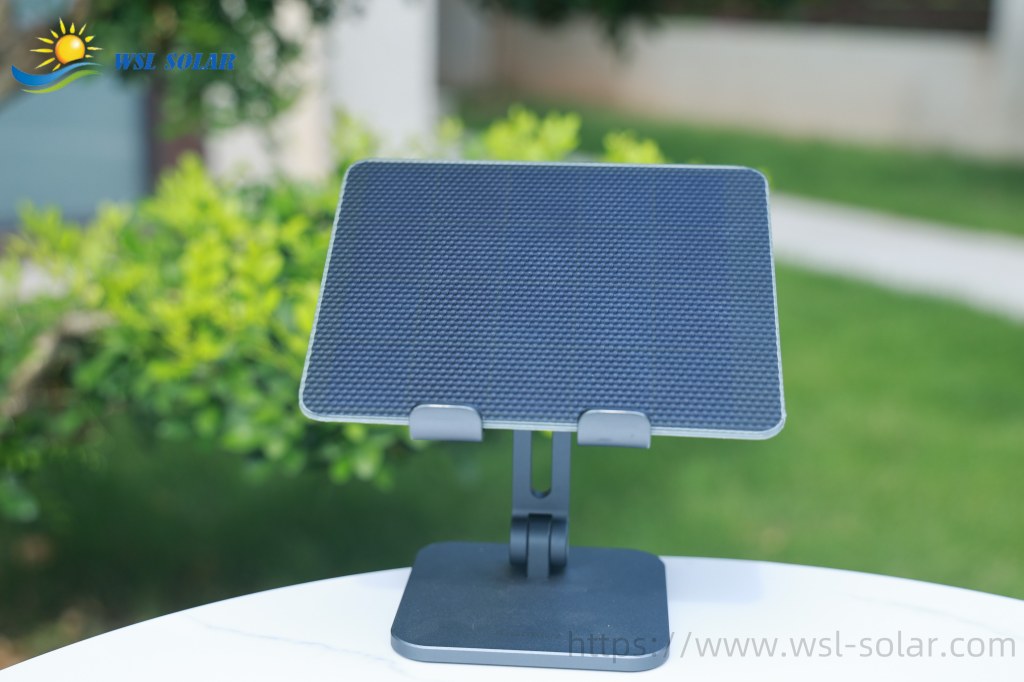
First, the foundation of indoor photovoltaic technology lies in its ability to adapt to lighting conditions that are different from those outdoors. Outdoor solar cells are usually tested under standardized sunlight, while the intensity and spectrum of indoor light sources are more complex. For example, LED lamps configured indoors can be divided into warm and cool colors, and their spectral characteristics are very different from natural sunlight. For this reason, the design of indoor photovoltaic cells must take this into account to achieve optimal energy capture. Therefore, the development of photovoltaic materials suitable for low light intensity and specific spectrum has become an important direction of research and development.

Secondly, one of the main challenges of current indoor photovoltaic technology is how to improve the conversion efficiency of cells. Existing crystalline silicon solar panels perform well in outdoor environments, but their energy conversion efficiency drops significantly in indoor environments. This is attributed to the fact that the energy band width (bandgap) of crystalline silicon materials is much lower than the ideal condition required for indoor photovoltaics. To improve efficiency, researchers are exploring third-generation photovoltaic technologies including organic solar cells (OSCs) and perovskite solar cells (PSCs), which not only have the advantages of adjustable bandgap but also perform well under low light intensity conditions. In addition, reducing the manufacturing cost of materials and improving the flexibility and loadability of equipment are also key to promoting this technological innovation.

Not only that, the market potential of indoor photovoltaic technology should not be underestimated. According to industry analysis, the indoor photovoltaic market is expected to exceed US$1 billion by 2030. In addition, the role of the Internet of Things in improving energy efficiency and reducing carbon emissions is highly anticipated. By optimizing indoor photovoltaic technology, IoT devices can not only achieve energy self-sufficiency, but also reduce dependence on disposable batteries and reduce resource waste. This move is not only in line with the current trend of sustainable development, but also an important part of smart city construction.

However, the development of the industry also needs to solve the problem of standardized testing. At present, the testing standards for indoor photovoltaics are relatively weak, mainly due to the complexity brought by the diversity of indoor lighting conditions. The International Electrotechnical Commission (IEC) has introduced some specifications, but they still need to be improved. Establishing consistent testing standards will not only help improve the competitiveness of the industry, but also enhance consumers’ trust in technology, thereby accelerating the popularization of the market. In addition, although indoor photovoltaic solutions are theoretically feasible, in-depth research on their stability and security is still needed to meet the needs of various IoT applications.

In the future, indoor photovoltaic technology will play an increasingly important role in the Internet of Things. With the continuous innovation of technology, indoor photovoltaics can not only provide sustainable energy support for billions of low-power nodes, but also achieve smarter and more efficient space management. To achieve this goal, cooperation between governments, enterprises and academia is essential. By strengthening research investment, promoting technology sharing and optimizing the policy environment, we can jointly accelerate the maturity and development of this industry. The advancement and widespread application of indoor photovoltaic technology will inject new vitality into the Internet of Things and pave the way for the realization of smart life.

In summary, although indoor photovoltaic technology faces many challenges in IoT applications, it has great potential. Through technological innovation, standard setting and cross-border cooperation, we have reason to believe that indoor photovoltaics will provide a continuous source of power for future smart life and drive society towards sustainable development.

WSL Solar has been a quality and professional manufacturer of custom solar panels, solar mini panels, IoT solar panels and solar solution provider in China since 2006.
https://www.wsl-solar.com

What are OPV and OPV-IoT?

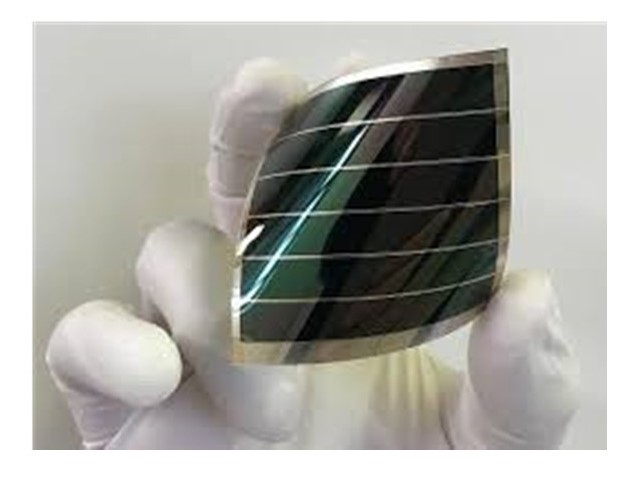
OPV is the abbreviation of “Organic Photovoltaics”, also known as “organic solar cell”. It is a solar cell technology that uses organic semiconductor materials to convert light energy into electrical energy. Unlike traditional silicon solar cells, OPV solar cells use organic compounds rather than inorganic materials to capture photons and generate electricity.

OPV-IoT refers to application technology that combines organic photovoltaic technology with Internet of Things technology. In this case, OPV technology will provide energy for IoT devices to drive or charge them. This combination can bring some unique advantages to the Internet of Things, especially in low-light conditions, dark environments that require wireless communication and long-term operation.

organic solar cell

Organic Solar Cell


Compared with some other photovoltaic technologies, organic photovoltaic (OPV) technology is more suitable for converting electrical energy in low-light environments for three main reasons:

1. Broad spectrum absorption
OPV materials can absorb a broad spectrum of light, including visible light and near-infrared light. This means they are able to capture a wide range of wavelengths in low-light conditions. Some other technologies have more limited spectral absorption capabilities and do not work well in low-light environments.

2. Low light startup ability
OPV technology has low-light start capability, which means it can start generating electricity even in low-light conditions. This is due to the lower light threshold required to initiate the photovoltaic process. In comparison, other technical routes require higher light intensity to start generating electricity.

3. Flexibility and portability
OPV equipment is generally flexible and lightweight, making it suitable for a wide range of applications. They can be integrated into devices of various shapes and used on flexible substrates, which allows them to adapt to different surfaces and shapes. This flexibility is beneficial in low-light indoor environments where traditional rigid solar panels may not be suitable.

OPV technology harvests power in the darkest conditions, such as in warehouses or “black light” factories, and works with as little as 500 lux per unit area. For reference, everyday outdoor light is close to 10,000 lux.

Development and research status of organic photovoltaics

According to data from the China Photovoltaic Industry Association, China’s photovoltaic industry will achieve steady growth in 2021. The output of polysilicon, silicon wafers, cells and modules reached 505,000 tons, 227 GW, 198 GW and 182 GW respectively year-on-year, an increase of 28.8%, 40.7%, 46.9% and 46.1% respectively. The output value of these four compounds exceeded 7500 billion. At the same time, industrial concentration has further increased. In the four major fields of polysilicon, silicon wafers, cells, and components, the top five manufacturing companies accounted for 86.7%, 84%, 53.9%, and 63.4% of the total domestic output respectively. The top five companies have obvious economies of scale.

As for organic photovoltaics, the analysis of Zhiyanzhan Industry Research Institute believes that the global organic photovoltaic market is expected to continue to maintain strong growth in the next few years. However, at present, the market size is relatively small, accounting for only a small part of the solar energy market.

Why is the market size of organic photovoltaics still small?

In 2021, an analysis by Dr. Li Tengfei from the Department of Materials Science and Engineering, School of Engineering, Peking University, and his tutor Professor Zhan Xiaowei mentioned that organic photovoltaics have the following problems:
First, the photovoltaic efficiency is low. The efficiency of organic photovoltaics currently on the market is generally lower than 20%;
Second, the cost of industrialization is high, and the cost of active layer and motor materials is relatively high;
Third, the component life is low. From the stability results, it can be seen that the service life of the device is difficult to reach more than 10 years.

custom solar panel

WSL Solar has been a quality and professional manufacturer of custom solar panels, solar mini panels, IoT solar panels and solar solution provider in China since 2006.
https://www.wsl-solar.com

Source of origin: https://www.wsl-solar.com/Industry_News/2024/0515/opv-iot.html

What is AIoT?

AIoT (Artificial Intelligence Internet of Things) = AI (Artificial Intelligence) + IoT (Internet of Things). AIoT integrates AI technology and IoT technology. Through the Internet of Things, massive amounts of data are generated and collected in the cloud and at the edge, and then big data analysis and higher forms of artificial intelligence are used to realize dataization and intelligentization of everything. The Internet of Things technology and artificial intelligence are pursuing an intelligent ecosystem. In addition to the need for continuous innovation in technology, the implementation and application of technology are the core issues in the field of Internet of Things and artificial intelligence that need to be broken at this stage.

Concept of AIoT

From a broad definition, AIoT is the integration of artificial intelligence technology and the Internet of Things in practical applications. It is not a new technology, but a new form of IoT application, which distinguishes it from traditional IoT applications. If the Internet of Things is to interconnect all ordinary objects that can perform independent functions and connect everything with the network, then AIoT will give it more intelligent features based on this, so that everything in the true sense can be interconnected.

On October 16, 2017, Legrand and Nanjing IoT jointly held the Internet of Things and Smart Home Global Summit Forum in Nanjing with the theme “AIoT, Meet a New Future”. The event attracted experts from the fields of artificial intelligence, the Internet of Things, the Internet, and home appliances to discuss in depth the application and impact of related technologies such as AIoT. For the first time, the industry pushed the concept of AIoT to the masses.

On November 28, 2017, at the “Smart Future of All Things · AIoT Future Summit” co-sponsored by Guangji Capital, 36 氪, and Tsinglian, experts and industry guests believed that with the continuous expansion of the Internet of Things application scenarios, the industry The space is gradually expanding, and AI enters the second half of development. When combined with IoT, it will open an important channel for artificial intelligence to really land.

On the same day, at the first Xiaomi IoT Developers Conference, Xiaomi announced that it had reached an in-depth cooperation with Baidu and would cooperate in the field of Internet of Things (IoT) and artificial intelligence (AI). The era of the Internet of Everything and artificial intelligence has arrived, and artificial intelligence and the Internet of Things will form a perfect complementarity and combination. Artificial intelligence will become a new breakthrough point for the further sustainable development of the Internet of Things. It will allow the Internet of Things to enter a new era. .

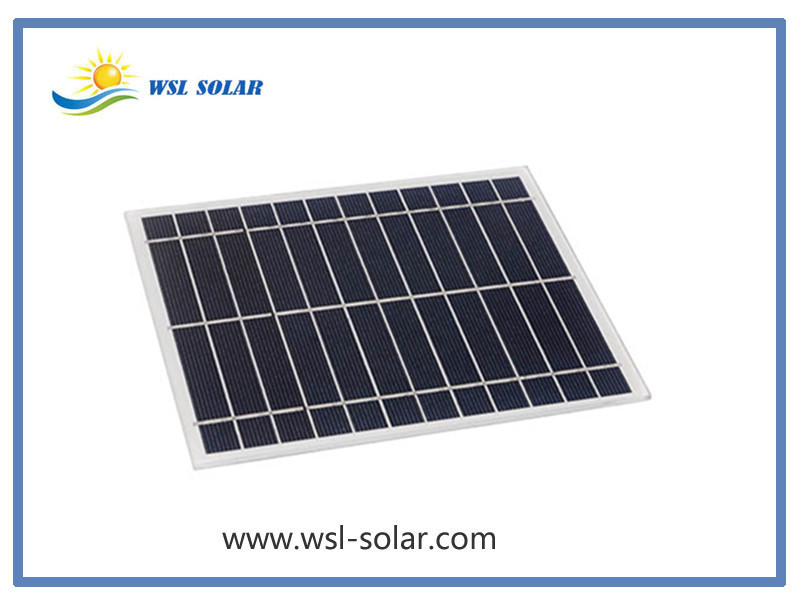
WSL Solar’s 6V Solar Panel for AIoT

Application Range of AIoT

Whether it is AI or the Internet of Things, one key is indispensable: data.

Data is the foundation of Internet of Everything and human-computer interaction. The involvement of AI gives the IoT a “brain”. Similarly, thanks to the development of current storage technology, data has a basic “logistical guarantee”. The rapid expansion of cloud services has given data a material basis for value.

After the “integration” of AI and IoT, “artificial intelligence” has gradually developed to “application intelligence”. Deep learning requires the sensor collection of the Internet of Things, and the system of the Internet of Things also needs artificial intelligence to correctly identify, find anomalies, and predict the future. From this, it can be seen that artificial intelligence combined with the Internet of Things (AIoT) is the next major development. And this development affects all walks of life, and even subverts the industry. In other words, AIoT services will appear in large numbers next to us.

In the list of the first batch of national new generation artificial intelligence open innovation platforms, relying on Baidu ’s “autonomous driving” national new generation artificial intelligence open innovation platform, relying on Alibaba Cloud ’s “urban brain” national new generation artificial intelligence open innovation platform, relying on Tencent The new generation of artificial intelligence open innovation platform of “Medical Imaging” national construction, and the new generation of artificial intelligence open innovation platform of “Smart Voice” national construction relying on HKUST.

Editor: Carrie Wong / WSL Solar

WSL Solar has been a quality and professional manufacturer of custom solar panels and solar solution provider in China since 2006.
https://www.wsl-solar.com/