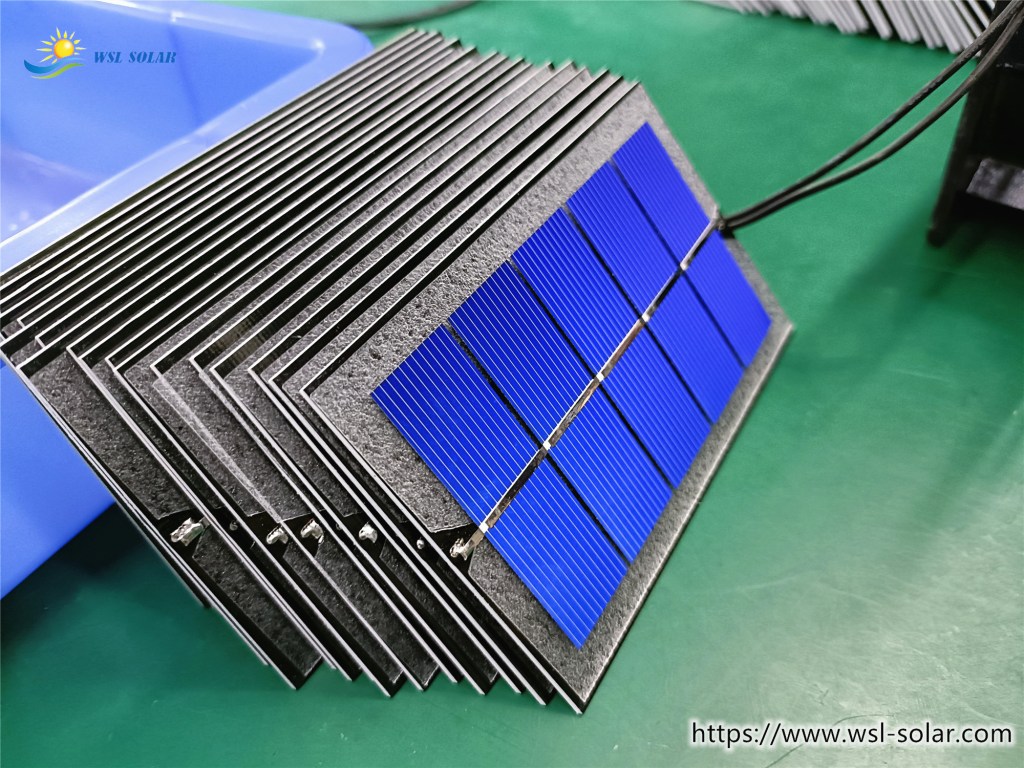
What are 12BB Solar Cells?

12BB (12 busbar) solar cells use multi-busbar (MBB) technology to collect electricity from the solar cell, which increases efficiency and power output compared to traditional designs with fewer busbars. The increased number of busbars shortens the electrical path, which reduces resistance and power loss. This also enhances reliability, making the cells more resistant to cracking and better at performing in low-light conditions. 

1. The Core Concept: What are Busbars (BB)?
A standard solar cell generates electricity when sunlight hits it. This electricity needs to be collected and channeled out of the cell. This is the job of the fingers and the busbars.

  • Fingers: The very fine, hair-thin lines that cover the cell. They collect the electricity.
  • Busbars (BBs): The wider, more prominent lines that run perpendicular to the fingers. They act as the main “highways” that gather the current from all the fingers and transport it to the tabbing wires, which connect the cells together in a module.

So, a 12BB cell simply has 12 of these main silver highways on its surface.

2. The Evolution: From 2BB to 5BB, 9BB, 12BB, and Beyond
The number of busbars has been steadily increasing over the years as manufacturing technology has advanced.

  • 2BB to 5BB: This was the standard for a long time. Fewer, thicker busbars were easier to manufacture.
  • 9BB, 12BB, 15BB, etc.: The current industry trend is to move to more, but thinner and finer, busbars.

3. Key Advantages of 12BB Solar Cells
Why is moving to more busbars beneficial? The primary goals are higher efficiency and increased reliability.
1). Higher Efficiency & Power Output

  • Reduced Electrical Resistance: Electricity has to travel a shorter distance from where it’s generated to the nearest busbar. Shorter travel paths mean less energy is lost as heat (a phenomenon called resistive loss).
  • Better Current Collection: With more collection points, the cell can collect current more uniformly and effectively, especially in low-light conditions.
  • Reduced Shading: Although there are more busbars, each one is made much thinner. The total amount of area on the cell covered by silver (which blocks sunlight) is reduced. This means more active silicon area is exposed to light.

2). Improved Reliability and Durability

  • Lower Mechanical Stress: The tabbing wires (ribbons) that connect the cells are also made thinner. Thinner ribbons are more flexible, which reduces the stress on the cell during thermal expansion and contraction (from daily heating/cooling cycles). This lowers the risk of micro-cracks.
  • Better Performance with Micro-Cracks: If a micro-crack does occur, it is less likely to completely isolate a section of the cell because there are more busbars providing alternative paths for the current to flow. This helps maintain the module’s power output over its lifetime.

3). Cost-Effectiveness

  • While using 12 busbars requires more precise manufacturing, it often uses less silver overall. Silver is a significant cost driver in solar cell production. By using finer lines, manufacturers save on material costs while boosting performance.

4. Comparison Table: BB Evolution

FeatureTraditional (e.g., 5BB)Advanced (12BB)Benefit of 12BB
Number of BusbarsFewer (e.g., 5)More (12)Shorter current path, less resistance
Busbar WidthThickerThinner & FinerLess shading, more light capture
Tabbing RibbonThickerThinner & More FlexibleReduced risk of micro-cracks
EfficiencyLowerHigherMore power from the same size cell/roof
ReliabilityStandardImprovedBetter long-term performance and durability

Conclusion

12BB solar cells represent a key incremental innovation in photovoltaic technology. They are not a fundamentally new type of cell (like PERC or HJT), but rather an optimization of the electrical grid design on mainstream cell types.

This design shift is a major reason why the power ratings of solar panels have been steadily increasing over the past few years, with many premium residential and commercial panels now utilizing 12BB or even higher busbar count cells (like 16BB) to achieve higher efficiencies and better reliability.

In short: 12BB cells are a more refined, efficient, and robust version of the standard silicon solar cell, leading to better-performing and longer-lasting solar panels.

Posted by Carrie Wong / WSL Solar
WSL Solar has been a quality and professional manufacturer of custom solar panels, solar mini panels, IoT solar panels and solar solution provider in China since 2006.
https://www.wsl-solar.com
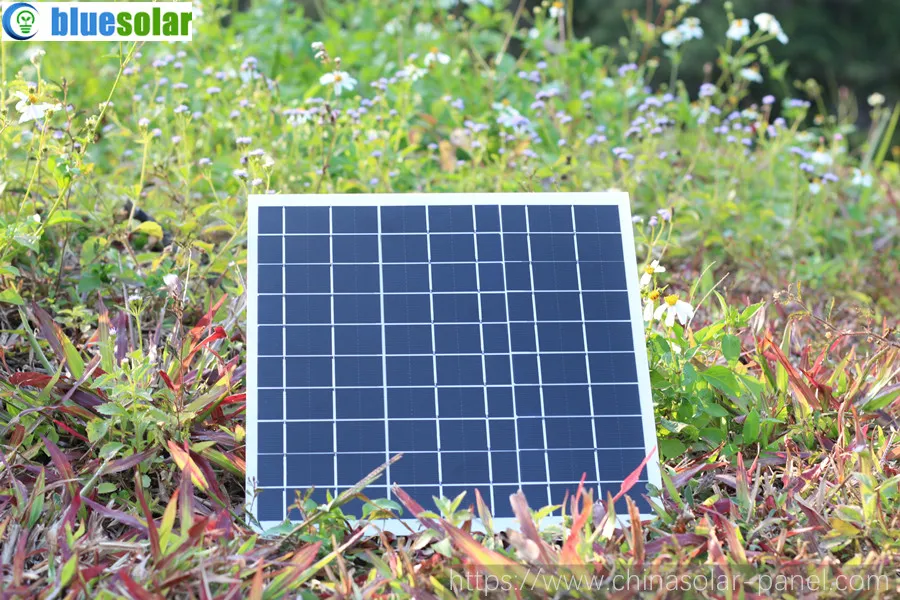
What is Mono PERC Solar Panel?

PERC stands for “passivated emitter and rear contact” or “rear cell”. Mono PERC solar panels are built with mono PERC solar cells, which have an additional layer on the back of the traditional mono solar cells. This additional layer allows more sunlight to be captured and turned into electricity, making mono PERC solar cells more efficient than traditional solar cells. Mono PERC solar panels are also able to mitigate rear recombination and prevent longer wavelengths from becoming heat that would impair the solar cell’s performance.

Mono PERC is an advanced version of mono-crystalline solar panels that are considered to have higher efficiency even in low-light conditions. 

What’s the benefit of adding the additional layer on the back of the solar cells? 

Let’s understand it by having a look at how standard mono solar panels and mono PERC solar panels behave when sunlight falls on their surface.

The sunlight that falls on the surface of a standard solar panel is either reflected, absorbed, or passed through the surface. 

On the other hand, the light passed through the solar cells can be used again in case of the PERC solar panels.

In mono PERC solar panels, a passivated layer is added on the rear side of the standard solar panels. This layer is capable of reflecting back the photons passed away from the solar panel. 
In this way, more light is absorbed by the solar panel & thus higher production. This is how mono PERC solar panels work. 

What are the advantages of mono PERC solar panels?

01. Efficiency

Efficiency is defined as the energy in the form of sunlight that can be converted into electricity by solar panels.Since more light is absorbed by the surface of mono PERC solar panels, thus the overall production per unit area is higher & hence higher efficiency.Conclusion: Mono PERC solar panels are more efficient in comparison to standard mono solar panels. 

02. Cost 

In terms of cost, mono-crystalline (standard) panels are slightly cheaper compared to perc modules. The extra cost associated with the use of passivated layers in mono-perc modules increases the overall pricing. However, if we compare price with per unit of energy produced – then it is the same for both modules.Conclusion: Mono PERC solar panels are expensive compared to standard mono panels. However, the price per unit of energy is somewhat equal in both technologies. 

03. Space Required 

While comparing mono PERC solar panels with standard mono-crystalline solar panels, we have found that the space requirement for mono PERC solar panels is less compared to standard ones.Here the space requirement refers to the area required by modules to produce a certain amount of energy. Conclusion: Lesser space is required for mono PERC solar panels.

Source of origin: https://chinasolar-panel.com/what-is-mono-perc-solar-panel/

Custom Solar Panels from WSL Solar

WSL Solar, a leading manufacturer and solution provider in the solar industry since 2006, offers high quality custom solar panels tailored to meet specific client requirements. With over 18 years of experience, our in-house R&D and management teams ensure the design and development of high-quality solar solutions. From diverse sizes and shapes to varied outputs, we provide comprehensive support from initial product development stage onwards.

https://www.wsl-solar.com

What are ETFE Solar Panels?

ETFE solar panels are simply photovoltaic (PV) solar panels with a protective, top layer made of ETFE film. ETFE, or Ethylene-Tetra-Fluoro-Ethylene, is a durable and long-lasting material that is perfect for protecting solar panels from the environmental elements.

Advantages of ETFE solar panels
ETFE solar panels have several advantages over traditional solar panels, including:

– Lightweight, thin and portable
– Durable against harsh weather and wind
– Eco-friendly and sustainable
– Self-cleaning, easy to clean and maintain

The Structure of ETFE Solar Panels 
ETFE solar panels are typically made with:
ETFE film | EVA film | IBC solar cells | PCB board
or ETFE film | EVA film | traditional solar cells | EVA film | backsheet

ETFE Solar Panel Applications
ETFE solar panels are widely used in IoT devices, wireless sensors, solar sea lighting, solar lights, solar toys, and charging devices for outdoor activities etc.

WSL Solar has been a quality and professional manufacturer of custom solar panels, solar mini panels, IoT solar panels and solar solution provider in China since 2006.

https://www.wsl-solar.com
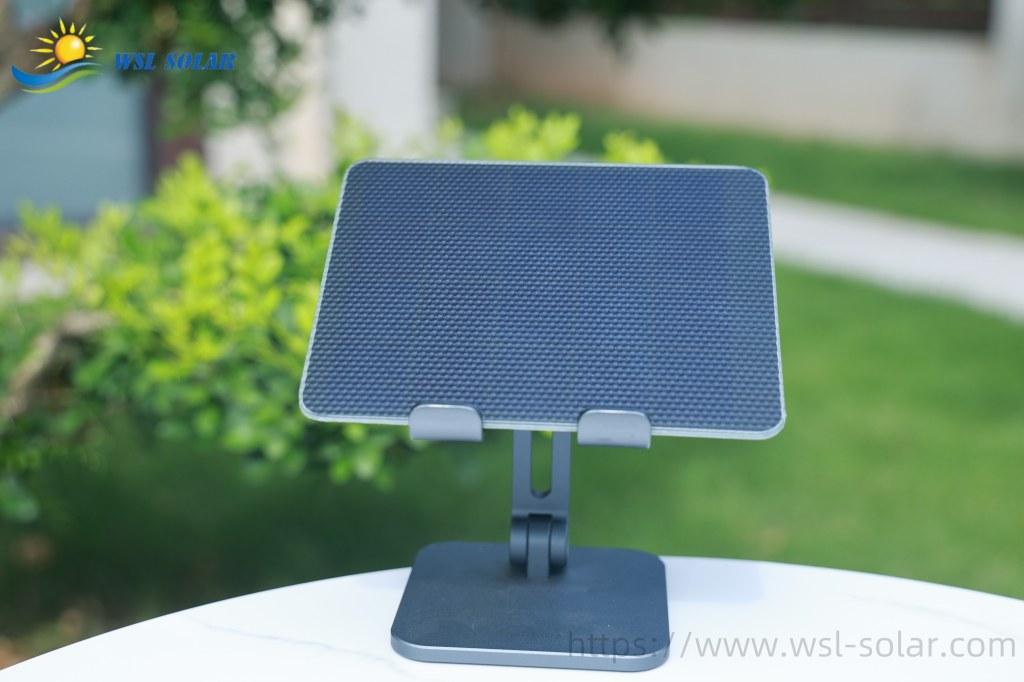
Source of origin: https://www.wsl-solar.com/Industry_News/2024/0325/what-are-etfe-solar-panels.html

Back Contact Solar Panels

Back contact solar panels adopt back contact solar cells, the cell efficiency can reach 23%, it can generate more power than traditional solar cells within the same area. The surface of this panel is ETFE film, which makes this solar panel very thin, lightweight, and portable. The back of this solar panel is PCB board. This kind of solar panel is widely used in wireless sensors, IoT devices, LED lights and other small electronic devices.

Introduced by Carrie Wong of WSL Solar.

WSL Solar has been a professional manufacturer of high quality custom solar panels and solar solution provider in China since 2006.

https://www.wsl-solar.com

Custom Solar Panels – WSL Solar

WSL Solar has been a professional manufacturer of high quality custom solar panels and solar solution provider in China since 2006. With our in-house R&D team and management team for over 17 years’ experience in solar industry, we design and develop a tailor-made solar panel in a variaty of sizes, shapes and outputs to meet our client’s specific requirement, and provide solution support start from initial product development stage.

https://www.wsl-solar.com

What kind of tests do photovoltaic solar modules face under high temperatures?

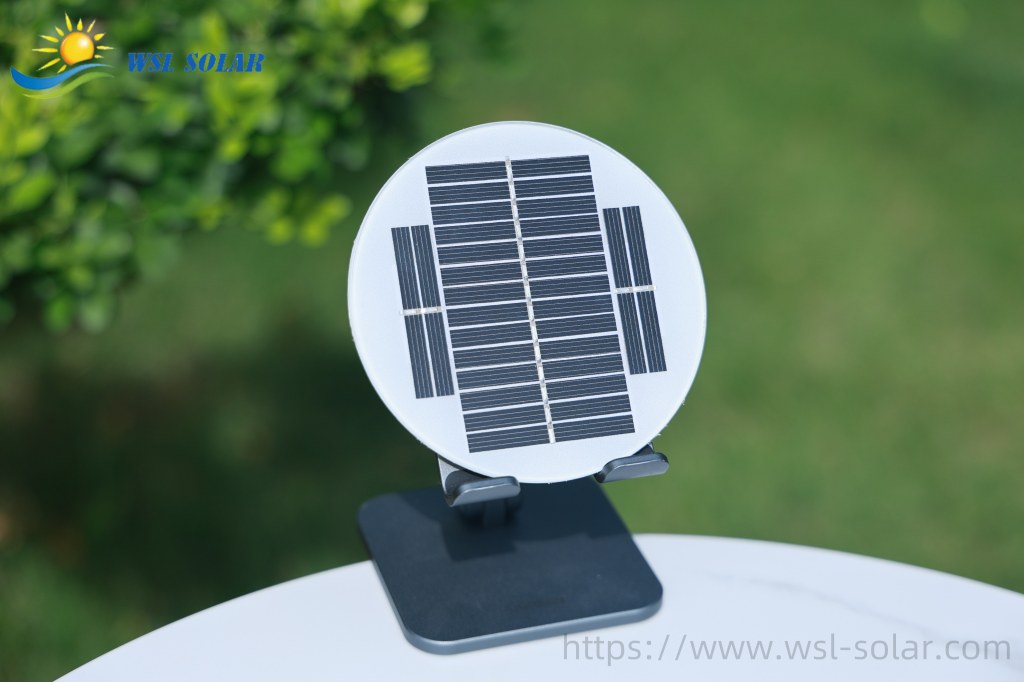
Recently, under the combined effect of the greenhouse effect and the El Niño phenomenon, extreme high temperature weather has generally occurred in various parts of the world. For photovoltaic modules exposed for a long time, high temperatures will reduce their power generation, affect the power generation efficiency of the modules, accelerate the loss of sensitive components, and reduce the insulation performance of the enameled wires of motor coils in photovoltaic modules, cables, inverters and other electrical equipment, causing a short circuit and ignition of the circuit. In severe cases, it may even cause a fire in the photovoltaic power station, endangering personal safety and property safety.

Since the design and operation cycle of photovoltaic power plants is as long as 25-30 years, they are bound to experience extreme weather many times during their long life cycle. So, what efforts have photovoltaic manufacturers made to ensure that modules operate reliably at high temperatures?

By observing the “peak power temperature coefficient” (Pmax) of the solar module, we can intuitively compare the power generation performance of photovoltaic modules from different manufacturers in high-temperature environments, and then evaluate their heat resistance. The peak power temperature coefficient is a negative number. The smaller its absolute value, the better the power generation performance of the component under high temperature conditions. Generally speaking, when the module operates at a standard operating temperature of 25°C, the module output power is 100%. After that, every time the operating temperature increases by 1°C, the module output power will decrease accordingly. For example, the peak power temperature coefficient of the mainstream PERC solar module currently on the market is -0.34%/°C. When the operating temperature of the solar module is higher than 25°C, its output power will decrease by 0.34% for every degree of increase.

In an era of frequent extreme weather, solar modules with smaller absolute peak power temperature coefficients are obviously more popular.

WSL Solar has been a quality and professional manufacturer of custom solar panels, solar mini panels, IoT solar panels and solar solution provider in China since 2006.
https://www.wsl-solar.com
Source of origin: https://www.wsl-solar.com/Industry_News/2023/1013/tests-solar-modules-high-temperatures.html

What is an Amorphous Silicon Solar Cell ?

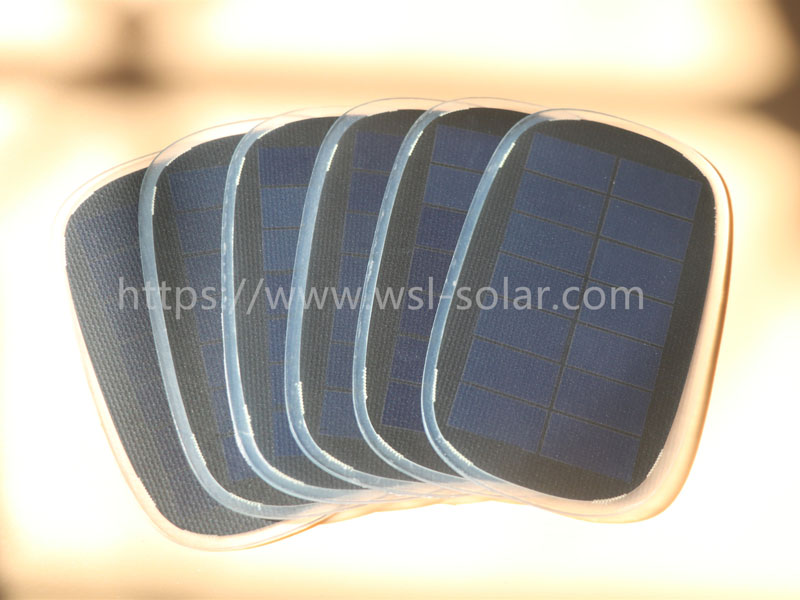
Amorphous silicon solar cells (a-Si solar cell) are devices that convert light energy into electrical energy through photoelectric or photochemical effects. Amorphous silicon cells are solar cells made of amorphous silicon thin films deposited on conductive glass substrates. This kind of solar cell features with low cost and good performance at weak light condition, it has been widely used in micro-low-power power supplies for indoor use, such as watch batteries, calculator batteries and self-powered wireless sensor etc . Welcome to watch this video to know more about a-Si solar cell.

Created by Carrie Wong | WSL Solar

WSL Solar has been a quality and professional manufacturer of custom solar panels and solar solution provider in China since 2006.

https://www.wsl-solar.com
Wind Turbines

This summer has been very hot, with temperatures reaching 36 degrees Celsius. But when we ascended the mountain, the summit was very cool, the temperature was only 26 degrees. The wind on the top of the mountain is very strong, and there are many wind turbines installed on it. Great to see more and more clean energy.

WSL Solar has been a professional manufacturer of high quality custom solar panels and solar solution provider in China since 2006.

https://www.wsl-solar.com
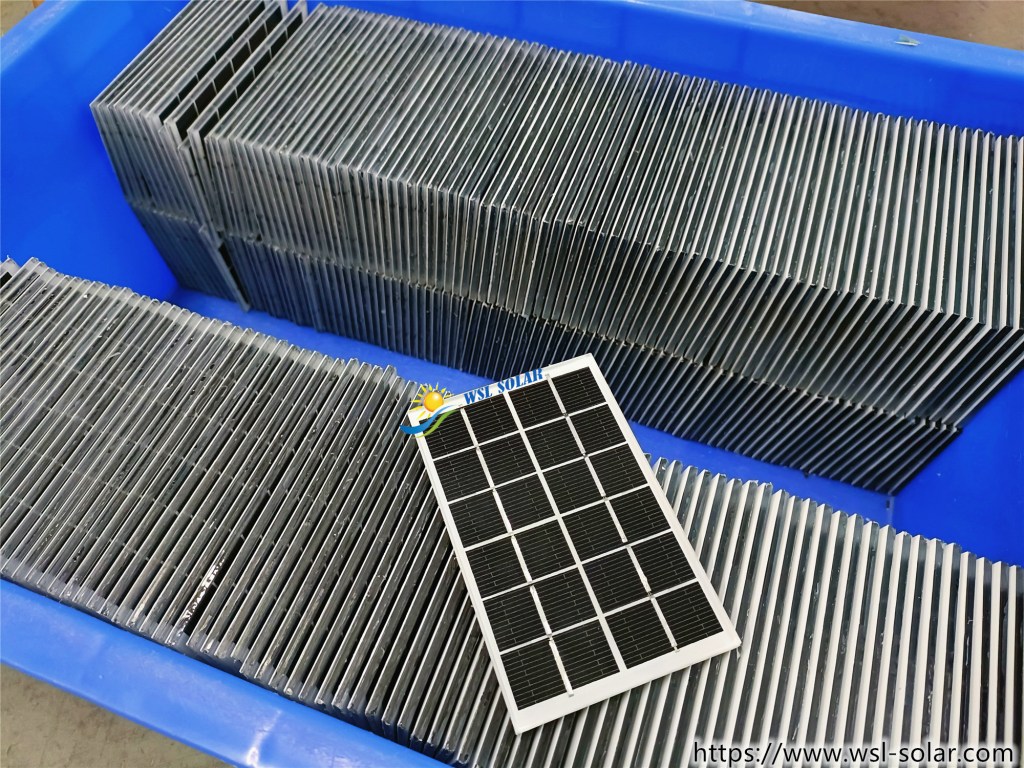
IoT Solar Panels

As a professional solar panel manufacturer in China since 2006, WSL offers a wide range of custom solar panels for IoT applications.

5V Solar Panel | 4W

WSL Solar’s 4W 5V IoT solar panel is built with the latest mono PERC solar cell. It is laminated by tempered glass, which is durable and robust. This custom solar panel is ideal for IoT applications. Solar panel size: 345x190x18mm

IoT Solar Panel, 3V 10W

3 Volt Solar Panel | 10W

WSL Solar’s 10W 3 volt solar panel is built with the latest mono PERC solar cell. It is laminated by tempered glass, which is durable and robust. This custom solar panel is ideal for IoT applications. Solar panel size: 345x190x18mm

IoT Solar Panel, 5V 2.5W

5V Solar Panel | 2.5W

This 2.5W 5V solar panel is built with the latest mono PERC solar cell. It is laminated by tempered glass, which is durable and robust. This custom shaped solar panel is great for charging your 3.7-volt DC batteries and ideal for IoT applications. Solar panel size: 176x86x4.5mm

IoT Solar Panel, 8V 2W

2 Watt Solar Panel | 8V

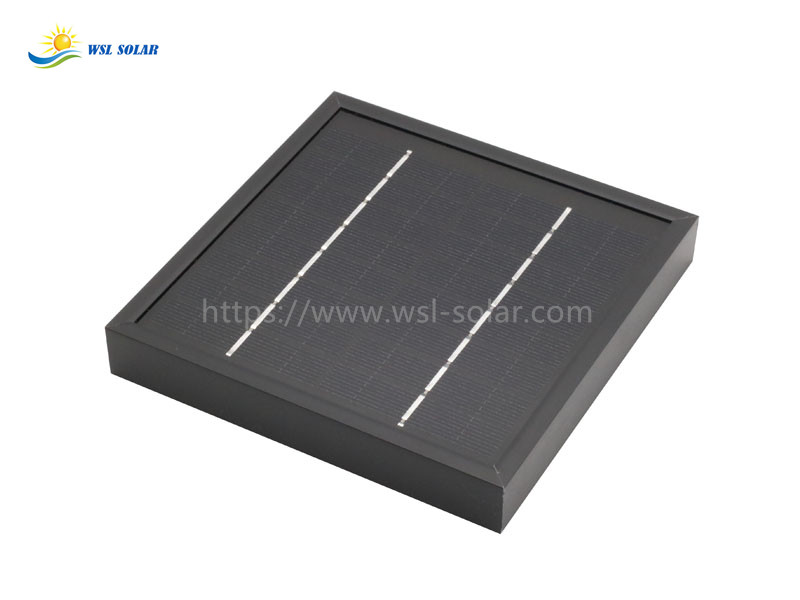
WSL Solar’s 2 watt solar panel is built with high efficiency mono PERC solar cell. It is laminated by tempered glass, which is durable and robust. This black solar panel comes with a black back sheet, a matte black frame and black solar cells, providing an all-black aesthetic. This custom solar panel is ideal for use in IoT applications. Solar panel size: 124x124x18mm

IoT Solar Panel, 6V 3W

6 Volt Solar Panel | 3W

WSL Solar’s 6 Volt solar panel 3W is built with the latest mono PERC mono solar cell. It is laminated by tempered glass, which is durable and robust. This custom solar panel is ideal for use in IoT applications. Solar panel size: 120x160x4.5mm

IoT Solar Panel, 9V 2W

9V Solar Panel | 2W

WSL Solar’s 2W 9V solar panel is built with the latest mono PERC mono solar cell. It is laminated by tempered glass, which is durable and robust. This 2 watt solar panel is ideal for use in IoT applications. Solar panel size: 130x140x17mm

IoT Solar Panel, 5V 0.6W

5V Solar Panel, 0.6W | ETFE Solar Panel

This 0.6W 5V solar panel is built with the super high efficiency IBC solar cell (23.5% efficiency). It is laminated by ETFE film, which is light weight and thin. This ETFE solar panel is great for charging your 3.2-volt DC batteries and ideal for use in IoT applications. Solar panel size: 65x65x2mm

IoT solar panels, IoT solar
IoT Solar Panel, 6V 1.2W

6V Solar Panel, 1.2W | IBC Solar Panel

This 6v 1.2w IBC solar panel is built with the super high efficiency IBC solar cell (23.5% efficiency). It is laminated by PET film, which is light weight and thin. This 6V solar panel is great for charging your 3.7-volt DC batteries and ideal for use in IoT applications. Solar panel size: 85x85x1.8mm

WSL Solar has been a professional manufacturer of high quality custom solar panels and solar solution provider in China since 2006. 

https://www.wsl-solar.com