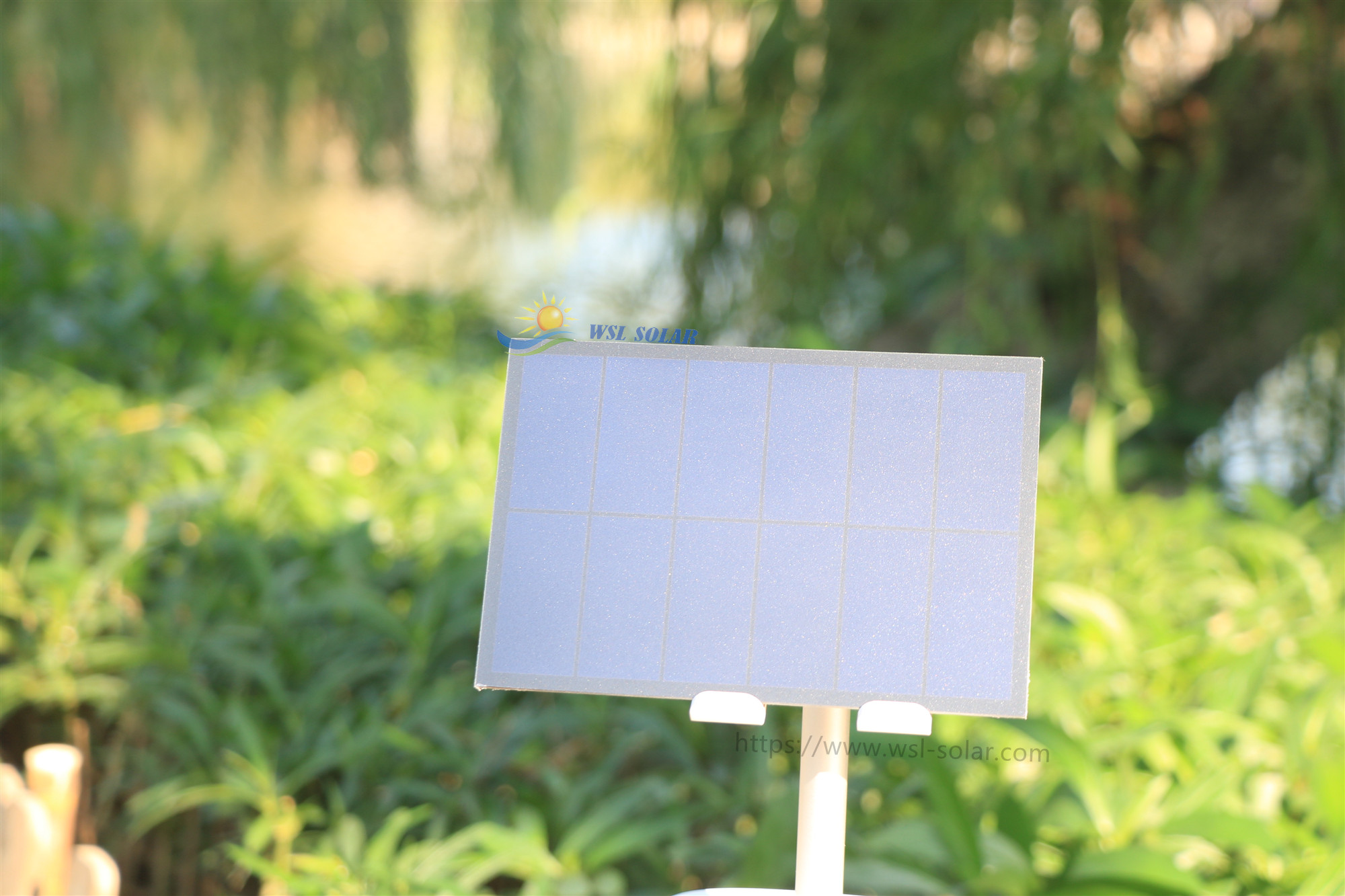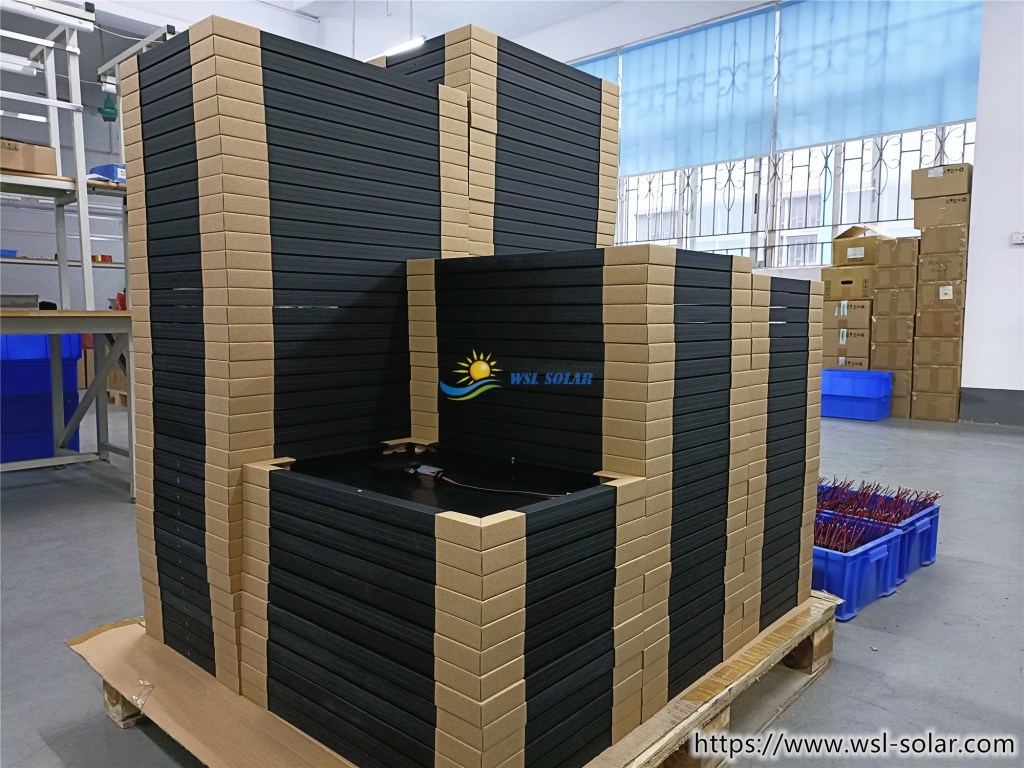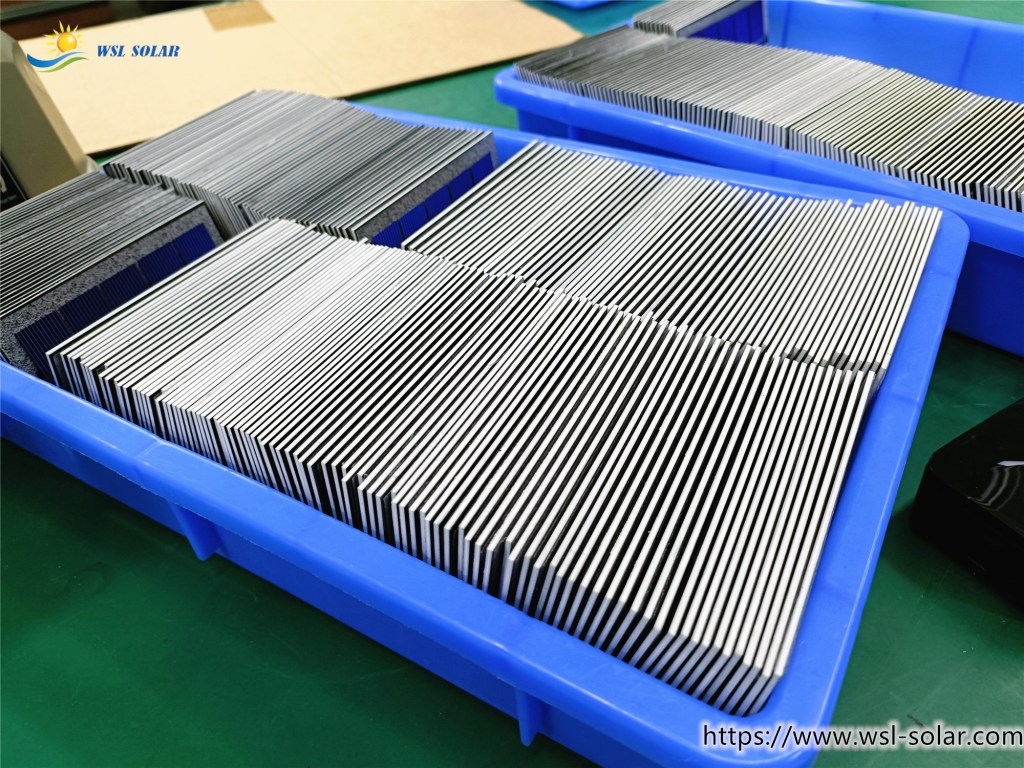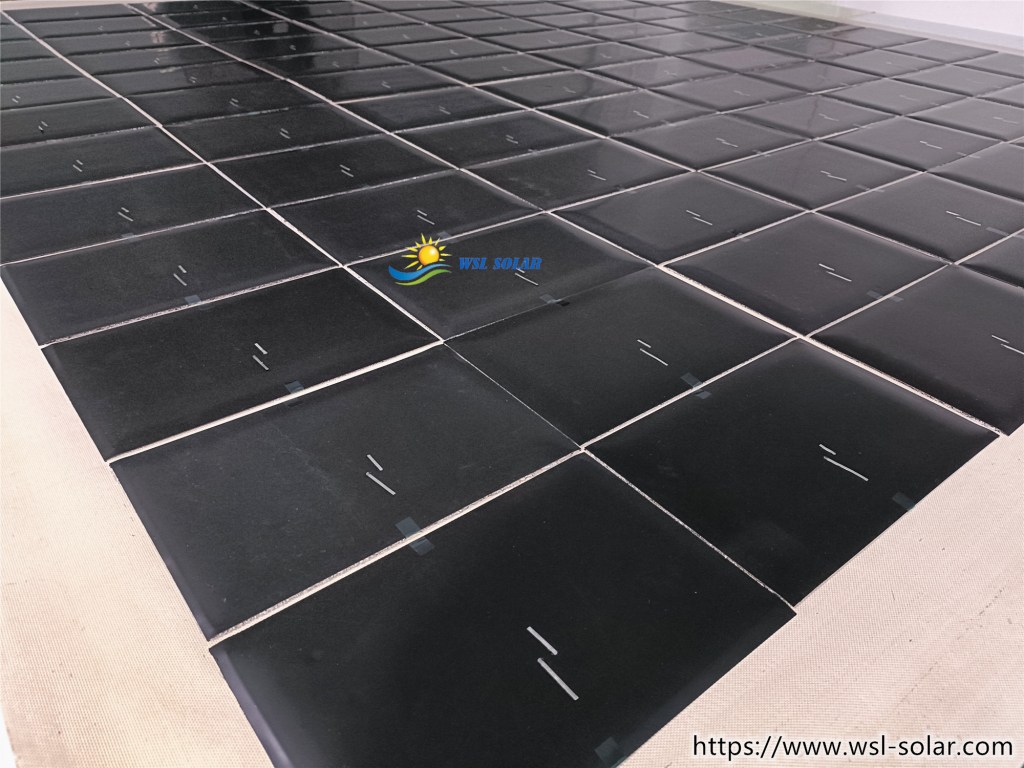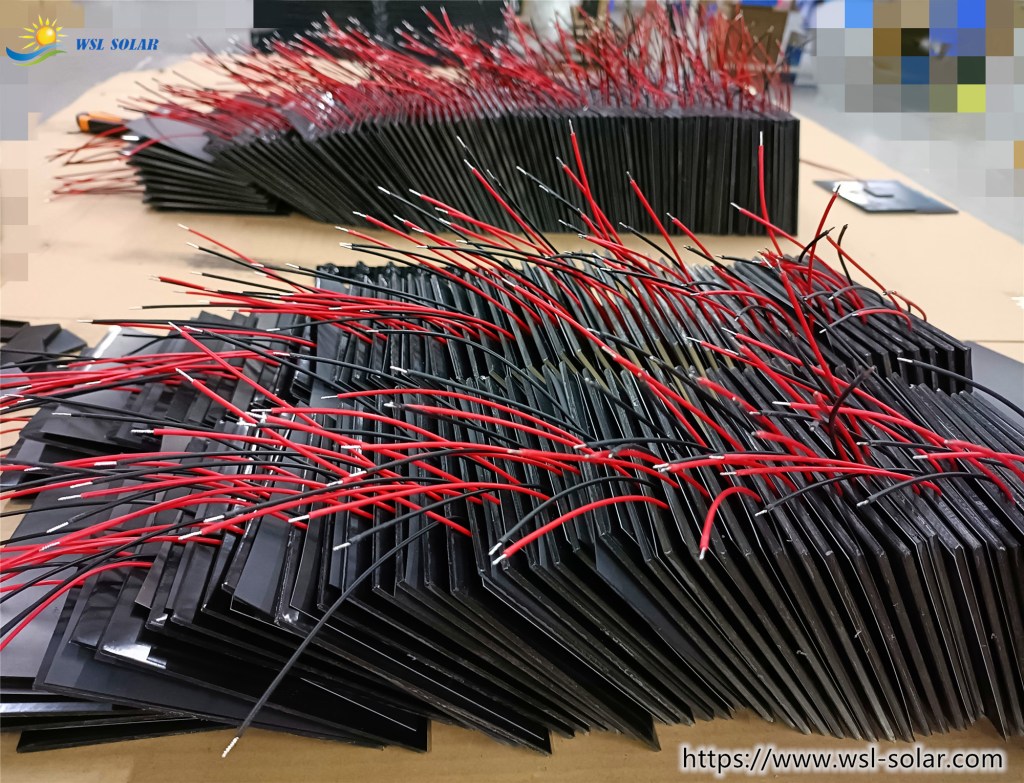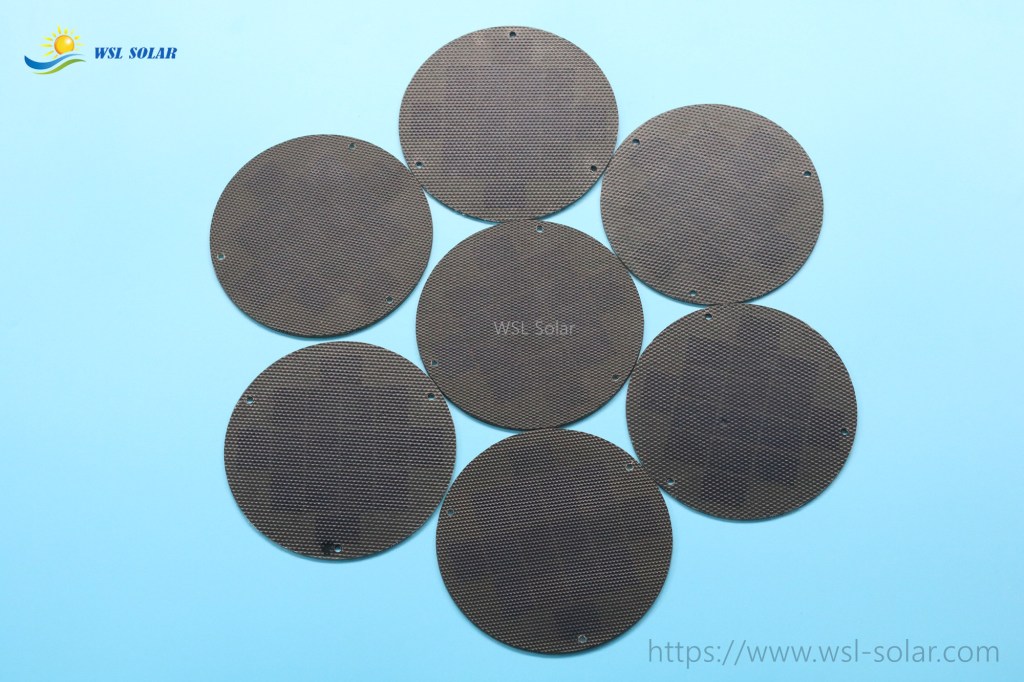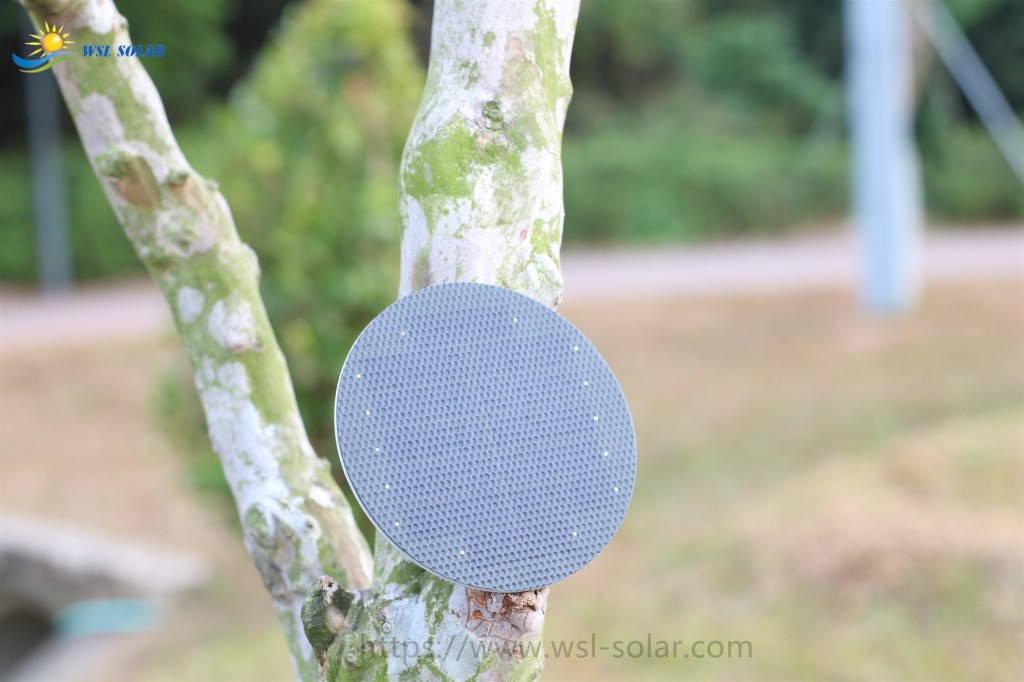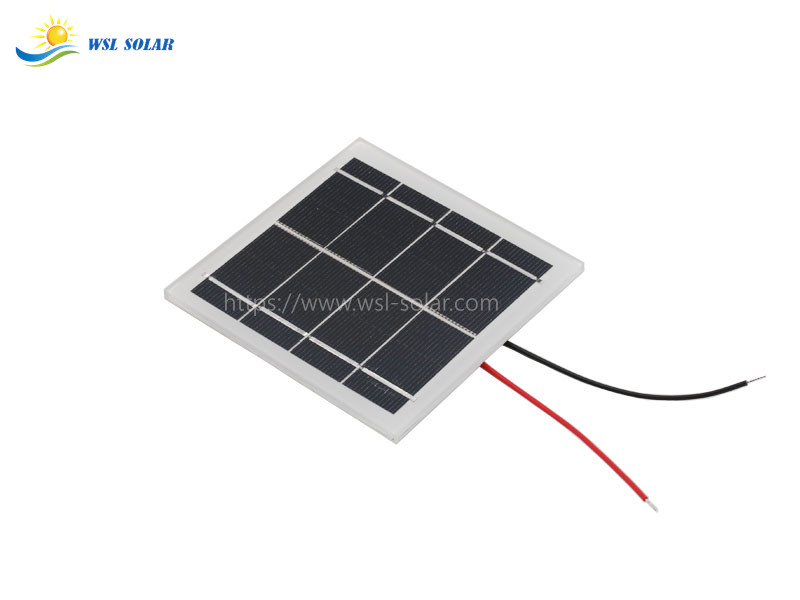
Custom Solar Panel – 4V 1W

Key Features:
– Utilize high efficiency mono PERC solar cell, up to 22.5% efficiency
– Laminated by tempered glass, rigid, durable and long lasting
– Waterproof, scratch resistant, and UV resistant
– Customized solar panels for industrial use

Description:
4.4V 1.3W Solar Panel

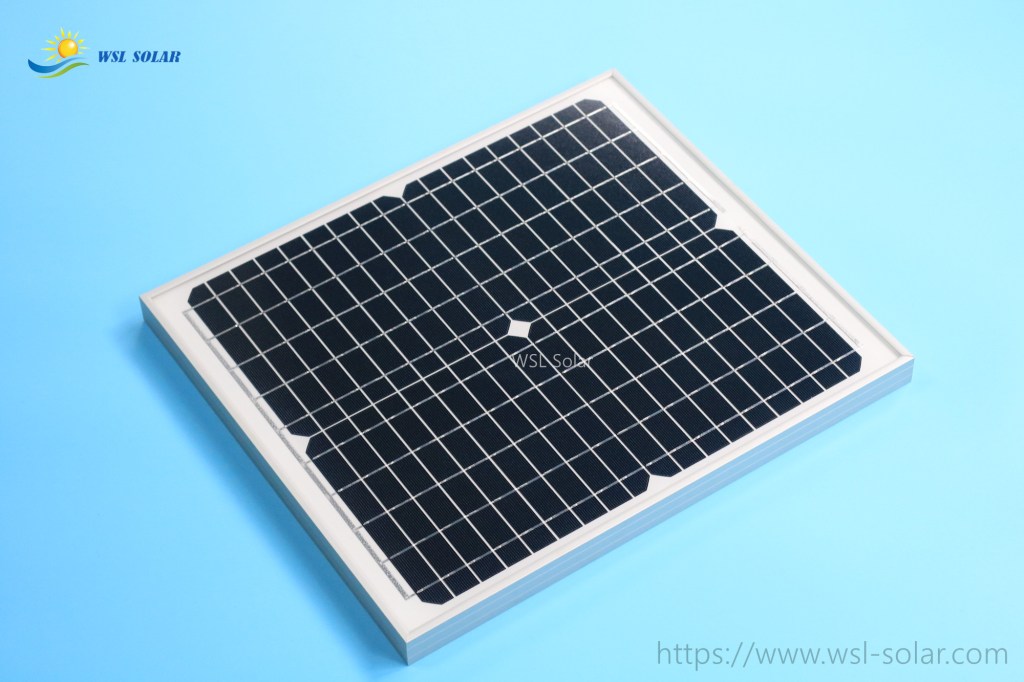
This custom solar panel utilizes high efficiency mono PERC solar cells with efficiency up to 22.5%, to ensure its high output. It is laminated by tempered glass to protect the solar cells inside, making it rigid, durable and long lasting. This rigid solar panel is waterproof, scratch resistant, and UV resistant, specially designed for long term outdoor use in any challenging condition.

Applications:
Tempered glass solar panels are widely used in IoT applications, marine buoys, wireless sensors, traffic warning devise, GPS devices, asset tracking, electric fence chargers, outdoor lighting systems, weather monitoring systems etc.


                                                       Solar Panel Specification

Item No.WSL-C033
Solar Panel Size95x95x4.8mm
Peak Power (Pmax)1.3W
Voltage at Pmax (Vmp)4.4V
Current at Pmax (Imp)295mA
Open Circuit Voltage (Voc)5.2V
Short Circuit Current (Isc)320mA
Solar Cell TypeMono PERC Solar Cell
Power Tolerance±5%
Encapsulation method3.2mm Tempered glass
Back sheetTPT
Product Warranty5 Years
Lead time25 Days
Storage temperature-40°C ~ 85°C
Working temperature-40°C ~ 85°C
Standard Test Conditions (STC)1000W/m2, 1.5AM, 25°C Cell temperature

Click here to watch the video of this type of custom solar panels. 

View More Custom Solar Panels

5V Solar Panels   |  6V Solar Panels   |  9V Solar Panels

WSL Solar has been a quality and professional manufacturer of custom solar panels and solar solution provider in China since 2006. 

Source of origin: https://www.wsl-solar.com/4V-1W-Solar-Panel.html
What is IBC solar cell?

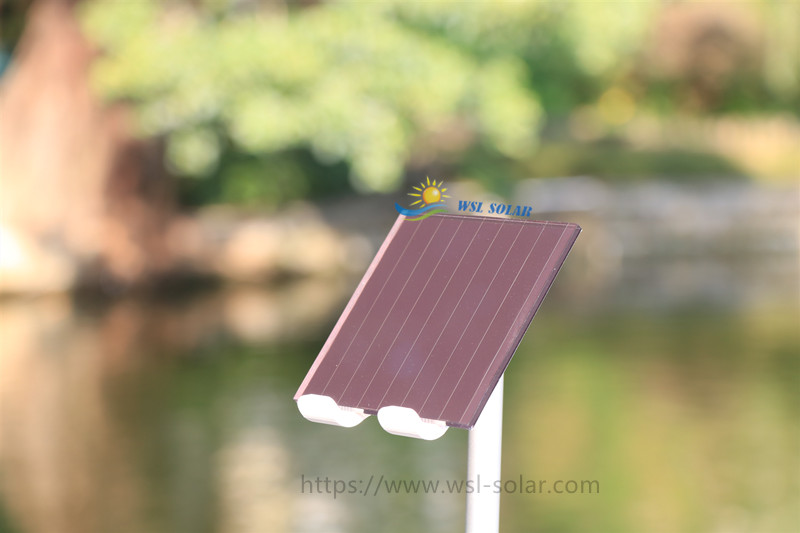
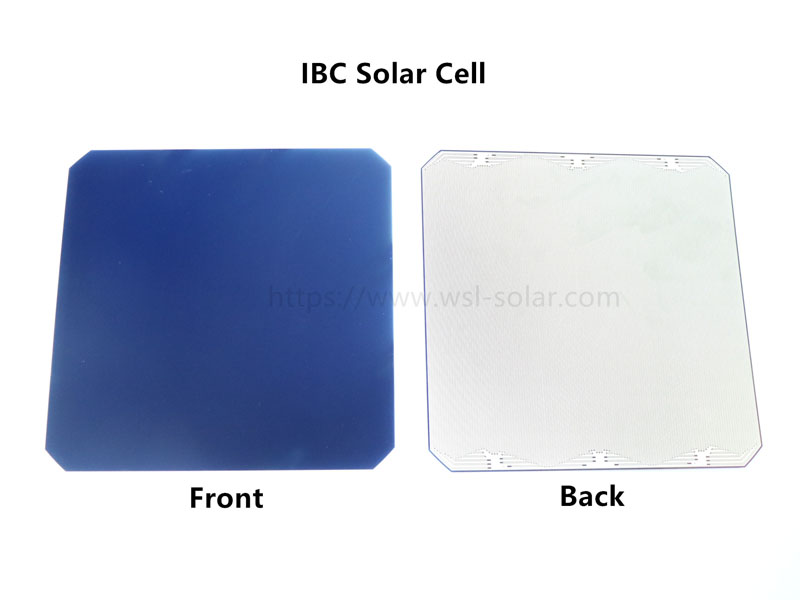
IBC (Interdigitated Back Contact) transfers all the electrode grid lines on the front side of the solar cell to the back side of the solar cell. The PN junction and metal contacts are all on the back side of the solar cell, arranged in an interdigitated manner to reduce the blocking of sunlight by the front grid lines. The light trapping structure composed of pyramid suede structure and anti-reflection layer can maximize the use of incident light. IBC solar cell mainly improves conversion efficiency through structural changes and is a relatively pure single-sided solar cell. This not only brings more effective power generation area to users, but also helps improve power generation efficiency and makes the appearance more beautiful.

Advantages and Disadvantages of IBC Solar Cells

The unique structural design of IBC solar cells gives it the following advantages:
1) There is no grid line shielding on the front of the solar cell, which can eliminate the light-shielding current loss of the metal electrode and maximize the utilization of incident photons. Compared with conventional solar cells, the short-circuit current can be increased by about 7%;
2) Both the positive and negative electrodes are on the back of the solar cell. There is no need to consider the grid line occlusion problem. The grid line ratio can be appropriately widened to reduce the series resistance and increase the fill factor FF;
3) Since the front side does not need to consider factors such as gate line shading and metal contact, the surface passivation and surface light trapping structure can be optimally designed to obtain a lower front surface recombination rate and surface reflection, thereby increasing the open circuit voltage Voc and Short circuit current Isc;
4) Beautiful appearance, especially suitable for building-integrated photovoltaic BIPV, with good commercial prospects;

At the same time, the production and manufacturing of IBC solar cells also faces many challenges:
1) It has higher requirements on the matrix material and requires a higher minority carrier lifetime. Because IBC solar cells are back junction cells, in order to prevent photogenerated carriers from being recombined as little as possible or not at all before reaching the back p-n junction, a higher minority carrier diffusion length is required.
2) IBC solar cells have higher requirements for passivation of the front surface. If the front surface recombination is high, the photogenerated carriers will be recombinated before reaching the back p-n junction area, which will significantly reduce the solar cell conversion efficiency.
3) The process is complex. The cross-shaped p-region and n-region on the back require multiple masking techniques during the production process. In order to prevent leakage, the gap area between the p-region and n-region also needs to be very precise, which undoubtedly increases the difficulty and cost of the process.

IBC Solar Panel

WSL Solar has been a quality and professional manufacturer of custom solar panels, solar mini panels, IoT solar panels and solar solution provider in China since 2006.

https://www.wsl-solar.com

Source of origin: https://www.wsl-solar.com/Product_News/2024/0315/what-is-ibc-solar-cell.html

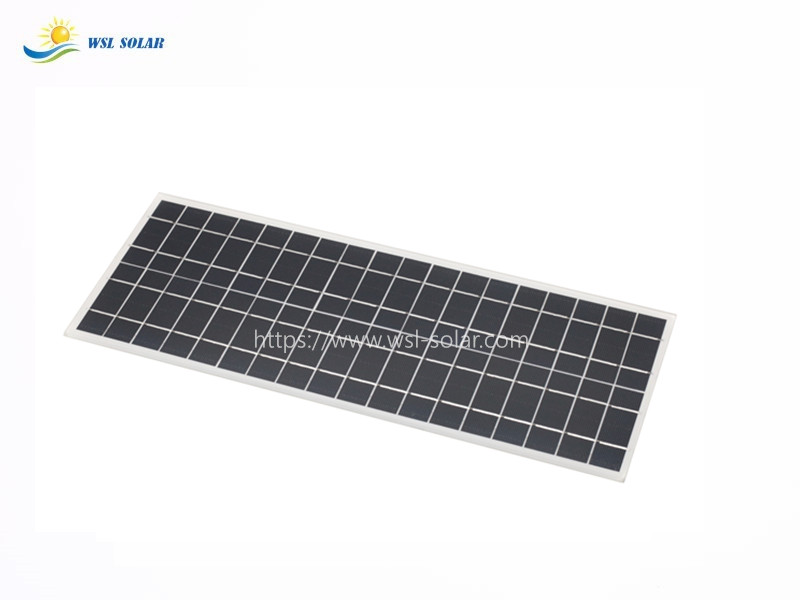
10 Watt Solar Panel

Key Features:

– Utilize high efficiency mono PERC solar cell, up to 22.5% efficiency
– Laminated by tempered glass, rigid, durable and long lasting
– Waterproof, scratch resistant, and UV resistant
– Customized solar panels for industrial use

Description:
10Watt Solar Panel
 
This custom solar panel utilizes high efficiency mono PERC solar cells with efficiency up to 22.5%, to ensure its high output. It is laminated by tempered glass to protect the solar cells inside, making it rigid, durable and long lasting. This rigid solar panel is waterproof, scratch resistant, and UV resistant, specially designed for long term outdoor use in any challenging condition.
 
Applications:
Tempered glass solar panels are widely used in IoT applications, marine buoys, wireless sensors, traffic warning devise, GPS devices, asset tracking, electric fence chargers, outdoor lighting systems, weather monitoring systems etc.

Solar Panel Specification

Item No.WSL-C032
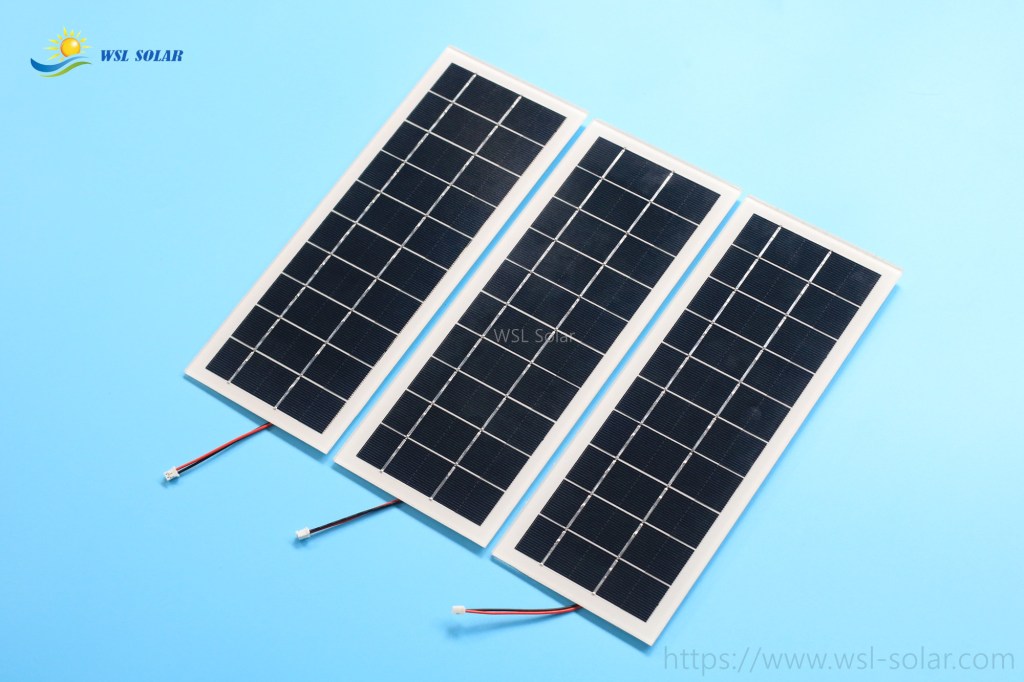
Solar Panel Size150x380x4.5mm
Peak Power (Pmax)10W
Voltage at Pmax (Vmp)19.8V
Current at Pmax (Imp)505mA
Open Circuit Voltage (Voc)23.1V
Short Circuit Current (Isc)550mA
Solar Cell TypeMono PERC Solar Cell
Power Tolerance±5%
Encapsulation method3.2mm Tempered glass
Back sheetTPT
Product Warranty5 Years
Lead time25 Days
Storage temperature-40°C ~ 85°C
Working temperature-40°C ~ 85°C
Standard Test Conditions (STC)1000W/m2, 1.5AM, 25°C Cell temperature

Click here to watch the video of this type of custom solar panels. 

View More Custom Solar Panels

5V Solar Panels   |  6V Solar Panels   |  9V Solar Panels

WSL Solar has been a quality and professional manufacturer of custom solar panels and solar solution provider in China since 2006. 

Source of origin: https://www.wsl-solar.com/10watt-solar-panel.html

Custom Solar Panels – WSL Solar

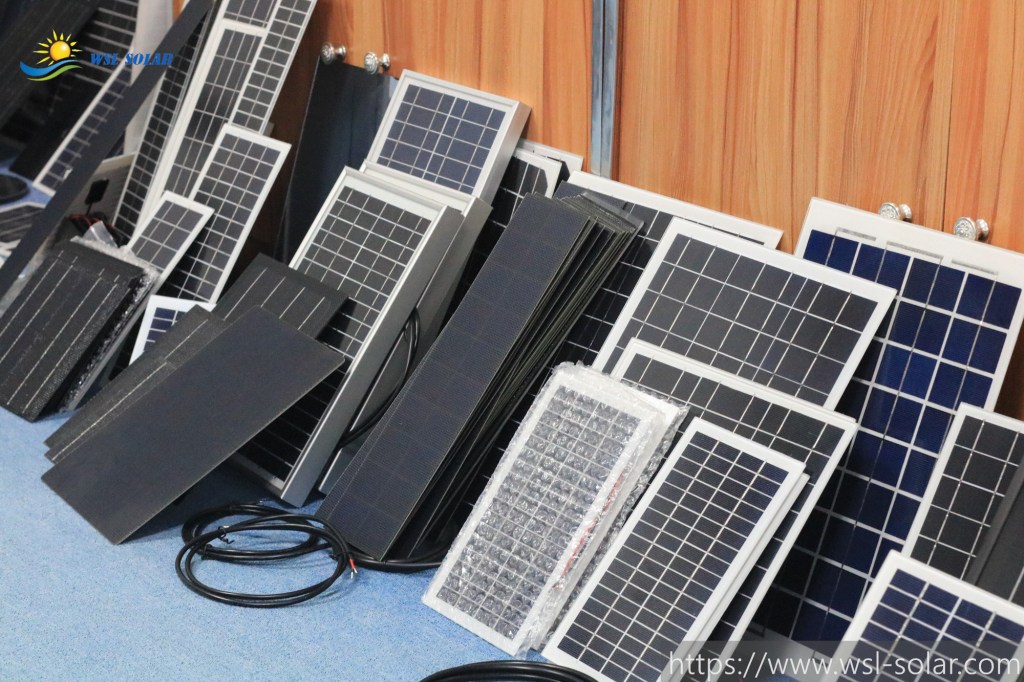
WSL Solar has been a professional manufacturer of custom solar panels and solar solution provider in China since 2006. With our in-house R&D team and management team for over 17 years’ experience in solar industry, we can design and develop customized solar panels in a variaty of sizes, shapes and outputs according to our client’s specific requirement, and provide solution support start from their initial product development stage.

Welcome to contact us for high quality customized solar panels.

https://www.wsl-solar.com

Custom Solar Panels – WSL Solar

WSL Solar has been a professional manufacturer of high quality custom solar panels and solar solution provider in China since 2006. With our in-house R&D team and management team for over 17 years’ experience in solar industry, we design and develop a tailor-made solar panel in a variaty of sizes, shapes and outputs to meet our client’s specific requirement, and provide solution support start from initial product development stage.

https://www.wsl-solar.com

How to Connect Solar Cells?

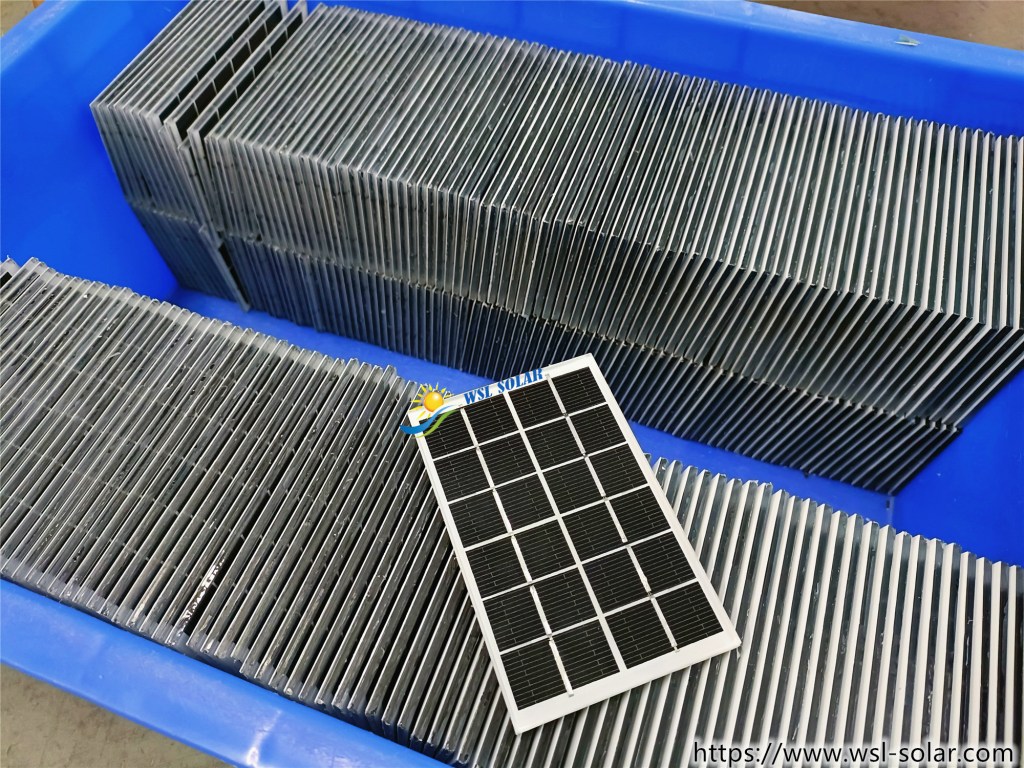
When we produce customized solar panels according to the specific needs of customers, we usually need to cut the solar cells into small pieces, and then connect the small pieces of solar cells in series or parallel as needed to form a solar cell string. Then, different numbers of solar cell strings are connected according to the required electrical performance to form a solar panel.

According to different types of solar cells and different production processes, there are usually two ways to connect solar cells.

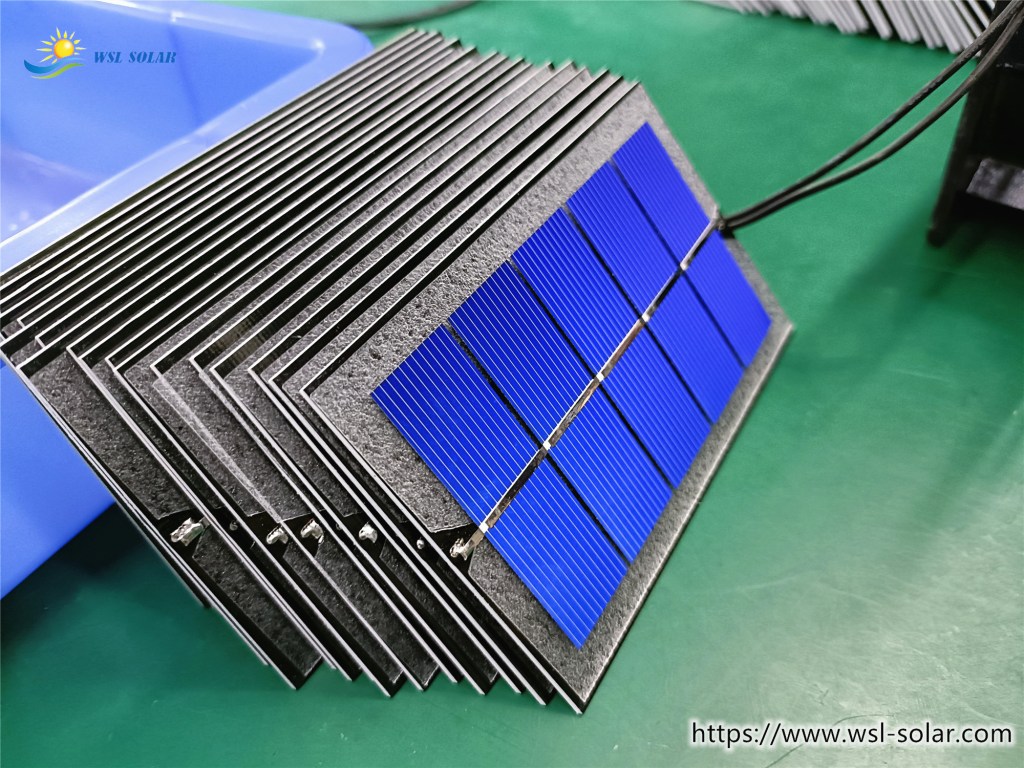
For traditional crystalline silicon solar cells, in mass production, the connection method is usually through an automatic string welding machine. The positive electrode of one solar cell is connected to the negative electrode of the adjacent solar cell with a soldering ribbon to form a solar cell string. Using a string welding machine can not only greatly improve production efficiency and save labor costs, but also ensure product consistency.

For back-contact solar cells, in mass production, the connection method is usually to attach the solar cells to the PCB board through an SMT machine in a designed way, and then solder the solar cells together through reflow soldering. Or use an automatic string welding machine to connect in series or parallel in the same way as traditional crystalline silicon solar cells.

WSL Solar has been a quality and professional manufacturer of custom solar panels, solar mini panels, IoT solar panels and solar solution provider in China since 2006.
https://www.wsl-solar.com

Source of origin: https://www.wsl-solar.com/Product_News/2023/1130/how-to-connect-solar-cells.html

Amorphous Solar Panel

Amorphous solar cell can harvest energy and generate electricity from environment light like sunlight or indoor light. It has good performance during weak light condition. This kind of solar cell can be used to power low-consumption electronic devices.

WSL Solar has been a quality and professional manufacturer of custom solar panels, solar mini panels, IoT solar panels and solar solution provider in China since 2006.
https://www.wsl-solar.com

What is a back contact solar panel?

A back contact solar panel is a type of photovoltaic solar panel that differs from conventional solar panels in the way that the photovoltaic solar cells are manufactured and arranged. In a back contact solar panel, the electrodes that collect the electrical current generated by the solar cells are located on the back of the cell, rather than on the front and sides as in a traditional solar panel. This configuration allows for a potentially higher electrical output per cell and an overall higher efficiency of the panel since there are fewer areas for energy loss or shading to occur.

Back contact solar panels are also known for their durability, as they don’t have any front-side wires that are vulnerable to breakage or corrosion. They are often used in special applications such as space satellites and outdoor equipment, where high efficiency and durability are important factors.

However, back contact solar panels may be more expensive to manufacture than traditional solar panels since they are built using more specialized manufacturing techniques.

WSL Solar has been a quality and professional manufacturer of custom solar panels, solar mini panels, IoT solar panels and solar solution provider in China since 2006.

https://www.wsl-solar.com