What is Household Photovoltaics?

In recent years, with the improvement of people’s environmental awareness and the deepening of energy reform, coupled with the reduction of industrial chain costs and the rise of various household station construction models, more and more families have begun to consider installing photovoltaic power generation systems on their roofs. According to data from the National Energy Administration, as of the end of March 2024, China’s total household photovoltaic installed capacity will be 122.94GW. The cumulative number of installed households has exceeded 5 million.

Although household photovoltaic installations have grown rapidly in the past two years, overall, the penetration rate of household photovoltaic market is still low. According to data from Sepu Consulting, the penetration rate of household photovoltaics in 2023 is only 8%, which means that there are at least 60 million roofs to be developed. There are still many people who do not know enough about rooftop photovoltaics or have misunderstandings. Today, let’s talk about household photovoltaics.

1. What is household photovoltaics?
Household photovoltaic is a type of distributed photovoltaic, that is, by installing solar photovoltaic panels on the roof or courtyard of the house, solar energy is converted into electricity for household use, and the excess electricity is sold to the grid (self-generation and self-use, surplus electricity is connected to the grid), or the generated electricity is directly sold to the grid in full to obtain electricity fee income (full access to the grid).

2. What are the benefits of household photovoltaic?
Economic benefits: By installing household photovoltaic systems, families can use solar energy to generate electricity, reduce dependence on grid electricity, and thus reduce electricity bills. Excess electricity can also be sold to the grid for additional income.

Environmental protection and energy saving: Photovoltaic power generation is a clean energy that does not produce pollutants such as carbon dioxide. It helps to reduce carbon footprint, protect the earth’s home, do a little to slow down global warming, and leave a safer and more livable home for future generations.

Increase the utilization rate of roofs/courtyards: Roofs and courtyards usually have large vacant areas. Installing photovoltaic panels can make full use of these spaces, and increase the value per unit area without affecting normal use, that is, increase the utilization rate.

Energy independence: Photovoltaic systems enable families to achieve energy independence to a certain extent, especially in areas with unstable power supply or high electricity prices. Improving the safety and stability of electricity is of great significance to improving people’s lives.

Beautiful: Modern photovoltaic panels are beautifully designed and can be perfectly integrated with the roof to enhance the appearance of the house.

3. Precautions for installing household photovoltaics
Before deciding to install a household photovoltaic system, you need to pay attention to the following aspects:

Roof conditions: Make sure the roof structure is stable, has enough space and a good orientation, and is not blocked by trees or other buildings.

System design: According to the family’s electricity demand and roof conditions, choose the appropriate photovoltaic module array and inverter to ensure the best performance of the system.

Policy support: Understand the local power grid’s open capacity, grid connection requirements and power companies’ photovoltaic grid-connected electricity prices, etc. These policies may affect the return on investment and the benefits obtained.

Professional installation: Choose a qualified and experienced installation company to ensure the quality and safety of the system installation and avoid later maintenance and safety hazards.

4. Answers to common problems
Many families may encounter some problems during the installation and use of photovoltaic systems. The following are common problems and their answers:

1)How long is the life of a photovoltaic system?
Generally speaking, the service life of a photovoltaic panel is about 25 years, while the life of an inverter is 10 to 25 years. Regular maintenance and care can extend the service life of the system.

2)Can the photovoltaic system still generate electricity on cloudy or rainy days?
Although the power generation efficiency of the photovoltaic system will decrease on cloudy or rainy days, it can still generate a certain amount of electricity. Therefore, this situation is usually taken into account when designing the system to ensure the stability of power supply throughout the year.

In addition, some new solar cell technologies can even generate electricity at night or on rainy days. These technologies generate electricity by storing the energy of visible and near-infrared light that is not absorbed and releasing this energy at the appropriate time.

3)How much does it cost to install a photovoltaic system?
The installation cost depends on the size of the system and the choice of components. Generally speaking, the initial investment is large, and the payback period is usually around 5 to 10 years, which varies depending on the region and the system design. For details, please consult the relevant power station construction companies.

4) Is it difficult to maintain the photovoltaic system?
The maintenance of the photovoltaic system is relatively simple but highly professional. The daily work mainly involves regular cleaning of photovoltaic panels, checking the operating status of the system and handling faults. Most installation companies will provide a certain period of warranty and after-sales service.

5) Is there a radiation problem with photovoltaic power stations?
Radiation can be divided into two types: ionizing radiation and non-ionizing radiation, and ionizing radiation is harmful to the human body. Photovoltaic power generation is non-ionizing radiation. Photovoltaic power generation mainly converts solar energy into electrical energy. Compared with daily household appliances, the radiation of the photovoltaic system is negligible, so it can be installed and used with confidence.

In general, installing a photovoltaic power station on the roof not only helps save electricity bills and protect the environment, but also improves asset utilization, and has become a new “green fashion”. However, before installation, it is very necessary to fully understand the characteristics of the photovoltaic system and related precautions to ensure long-term and stable returns.

WSL Solar has been a quality and professional manufacturer of custom solar panels, solar mini panels, IoT solar panels and solar solution provider in China since 2006.
https://www.wsl-solar.com

Revolution of Indoor Photovoltaic Technology: Challenges and Opportunities of Solar Cells in IoT Applications

Against the backdrop of today’s rapid technological development, the increasing popularity of indoor Internet of Things (IoT) applications has made the prospects of smart homes and industrial sensors more promising. However, providing continuous and efficient power to these numerous devices has become a major challenge faced by various industries. Especially in indoor environments, traditional power supply methods are stretched, and the rise of indoor photovoltaic (IPV) technology provides a potential solution to this problem. This article will explore in depth the challenges and opportunities of indoor photovoltaic technology in IoT applications and reveal the future development direction of this field.

First, the foundation of indoor photovoltaic technology lies in its ability to adapt to lighting conditions that are different from those outdoors. Outdoor solar cells are usually tested under standardized sunlight, while the intensity and spectrum of indoor light sources are more complex. For example, LED lamps configured indoors can be divided into warm and cool colors, and their spectral characteristics are very different from natural sunlight. For this reason, the design of indoor photovoltaic cells must take this into account to achieve optimal energy capture. Therefore, the development of photovoltaic materials suitable for low light intensity and specific spectrum has become an important direction of research and development.

Secondly, one of the main challenges of current indoor photovoltaic technology is how to improve the conversion efficiency of cells. Existing crystalline silicon solar panels perform well in outdoor environments, but their energy conversion efficiency drops significantly in indoor environments. This is attributed to the fact that the energy band width (bandgap) of crystalline silicon materials is much lower than the ideal condition required for indoor photovoltaics. To improve efficiency, researchers are exploring third-generation photovoltaic technologies including organic solar cells (OSCs) and perovskite solar cells (PSCs), which not only have the advantages of adjustable bandgap but also perform well under low light intensity conditions. In addition, reducing the manufacturing cost of materials and improving the flexibility and loadability of equipment are also key to promoting this technological innovation.

Not only that, the market potential of indoor photovoltaic technology should not be underestimated. According to industry analysis, the indoor photovoltaic market is expected to exceed US$1 billion by 2030. In addition, the role of the Internet of Things in improving energy efficiency and reducing carbon emissions is highly anticipated. By optimizing indoor photovoltaic technology, IoT devices can not only achieve energy self-sufficiency, but also reduce dependence on disposable batteries and reduce resource waste. This move is not only in line with the current trend of sustainable development, but also an important part of smart city construction.

However, the development of the industry also needs to solve the problem of standardized testing. At present, the testing standards for indoor photovoltaics are relatively weak, mainly due to the complexity brought by the diversity of indoor lighting conditions. The International Electrotechnical Commission (IEC) has introduced some specifications, but they still need to be improved. Establishing consistent testing standards will not only help improve the competitiveness of the industry, but also enhance consumers’ trust in technology, thereby accelerating the popularization of the market. In addition, although indoor photovoltaic solutions are theoretically feasible, in-depth research on their stability and security is still needed to meet the needs of various IoT applications.

In the future, indoor photovoltaic technology will play an increasingly important role in the Internet of Things. With the continuous innovation of technology, indoor photovoltaics can not only provide sustainable energy support for billions of low-power nodes, but also achieve smarter and more efficient space management. To achieve this goal, cooperation between governments, enterprises and academia is essential. By strengthening research investment, promoting technology sharing and optimizing the policy environment, we can jointly accelerate the maturity and development of this industry. The advancement and widespread application of indoor photovoltaic technology will inject new vitality into the Internet of Things and pave the way for the realization of smart life.

In summary, although indoor photovoltaic technology faces many challenges in IoT applications, it has great potential. Through technological innovation, standard setting and cross-border cooperation, we have reason to believe that indoor photovoltaics will provide a continuous source of power for future smart life and drive society towards sustainable development.

WSL Solar has been a quality and professional manufacturer of custom solar panels, solar mini panels, IoT solar panels and solar solution provider in China since 2006.
https://www.wsl-solar.com

What are the Performance Parameters and Types of Solar Panels?

The function of solar panels is to convert the sun’s light energy into electrical energy, and then output direct current to store in the battery. This is the core part of the solar photovoltaic power generation system. The quality and cost of solar panels will directly determine the quality and cost of the entire system. Today we will talk in detail about the performance parameters and types of solar panels.

Solar panel parameters

The performance parameters of solar panels mainly include: short-circuit current, open-circuit voltage, peak current, peak voltage, peak power, fill factor and conversion efficiency.

1. Short-circuit current (isc): When the positive and negative poles of the solar cell are short-circuited and u=0, the current at this time is the short-circuit current of the cell. The unit of short-circuit current is ampere (a), and the short-circuit current changes with the change of light intensity.

2. Open-circuit voltage (uoc): When the positive and negative poles of the solar cell are not connected to the load and i=0, the voltage between the positive and negative poles of the solar cell is the open-circuit voltage. The unit of open-circuit voltage is volt (v). The open circuit voltage of a single solar cell does not change with the increase or decrease of the cell area, and is generally 0.5~0.7V.

3. Peak current (im): Peak current is also called maximum operating current or optimal operating current. Peak current refers to the operating current when the solar cell outputs maximum power, and the unit of peak current is ampere (a).

4. Peak voltage (um): Peak voltage is also called maximum operating voltage or optimal operating voltage. Peak voltage refers to the operating voltage when the solar cell outputs maximum power, and the unit of peak voltage is v. Peak voltage does not change with the increase or decrease of the cell area, and is generally 0.45~0.5V, with a typical value of 0.48V.

5. Peak power (pm): Peak power is also called maximum output power or optimal output power. Peak power refers to the maximum output power of the solar cell under normal working or test conditions, that is, the product of peak current and peak voltage: pm=im×um. The unit of peak power is w (watt). The peak power of solar cells depends on the solar irradiance, solar spectrum distribution and the working temperature of the cell. Therefore, the measurement of solar cells should be carried out under standard conditions. The measurement standard is the European Commission’s Standard 101, which has the following conditions: irradiance lkw/㎡, spectrum aml.5, and test temperature 25℃.

6. Fill factor (ff): Fill factor, also called curve factor, refers to the ratio of the maximum output power of a solar cell to the product of the open circuit voltage and the short circuit current. The calculation formula is ff=pm/(isc×uoc). Fill factor is an important parameter for evaluating the output characteristics of solar cells. The higher its value, the more rectangular the output characteristics of the solar cell are, and the higher the photoelectric conversion efficiency of the cell is.

The series and parallel resistances have a great influence on the fill factor. The smaller the series resistance of the solar cell, the larger the parallel resistance, and the larger the coefficient of the fill factor. The coefficient of the fill factor is generally between 0.5 and 0.8, and can also be expressed as a percentage.

7. Conversion efficiency (η): Conversion efficiency refers to the ratio of the maximum output power of a solar cell when it is illuminated to the solar energy power irradiated on the cell. That is: η=pm (peak efficiency of the cell)/a (area of ​​the cell) × pin (incident light power per unit area), where pin=lkw/㎡=100mw/cm2.

Types of solar panels

1. Monocrystalline silicon photovoltaic cells

The photoelectric conversion efficiency of monocrystalline silicon solar cells is about 23%, and the highest reaches 26%. This is the highest photoelectric conversion efficiency among all types of solar cells at present, but the production cost is very high, so it cannot be widely and generally used. Since monocrystalline silicon is generally encapsulated with tempered glass and waterproof resin, it is sturdy and durable, and its service life can generally reach 15 years, and up to 25 years.

2. Polycrystalline silicon photovoltaic cells

The production process of polycrystalline silicon solar cells is similar to that of monocrystalline silicon solar cells, but the photoelectric conversion efficiency of polycrystalline silicon solar cells is much lower, and its photoelectric conversion efficiency is about 20%. In terms of production cost, it is cheaper than monocrystalline silicon solar cells, the material is simple to manufacture, and it saves electricity consumption. The total production cost is low, so it has been widely developed. In addition, the service life of polycrystalline silicon solar cells is also shorter than that of monocrystalline silicon solar cells. In terms of performance-price ratio, monocrystalline silicon solar cells are slightly better.

3. Amorphous silicon photovoltaic cells

Amorphous silicon solar cells are a new type of thin-film solar cells that appeared in 1976. They are completely different from single-crystal silicon and polycrystalline silicon solar cells in terms of manufacturing method. The process is greatly simplified, silicon material consumption is very low, and power consumption is lower. Its main advantage is that it can generate electricity even under weak light conditions. However, the main problem with amorphous silicon solar cells is that the photoelectric conversion efficiency is low, about 10%, and it is not stable enough. As time goes by, its conversion efficiency decays.

4. Multi-element photovoltaic cells

Multi-element solar cells refer to solar cells that are not made of single-element semiconductor materials. There are many varieties of research in various countries, most of which have not yet been industrialized. The main ones are as follows:

1) Cadmium sulfide solar cells;
2) Gallium arsenide solar cells;
3) Copper indium selenide solar cells (new multi-element bandgap gradient Cu (In, Ga) Se2 thin film solar cells.

The above is an introduction to the performance parameters and types of solar panels. In addition, packaging is a key step in the production of solar cells. Without a good packaging process, no matter how good the battery is, it will not produce a good solar panel. The packaging of the battery can not only ensure the life of the battery, but also enhance the battery’s resistance, so the packaging quality of the solar panel is very important.

WSL Solar has been a quality and professional manufacturer of custom solar panels, solar mini panels, IoT solar panels and solar solution provider in China since 2006.
What are Perovskite Solar Cells and Their Latest Significant Progress?

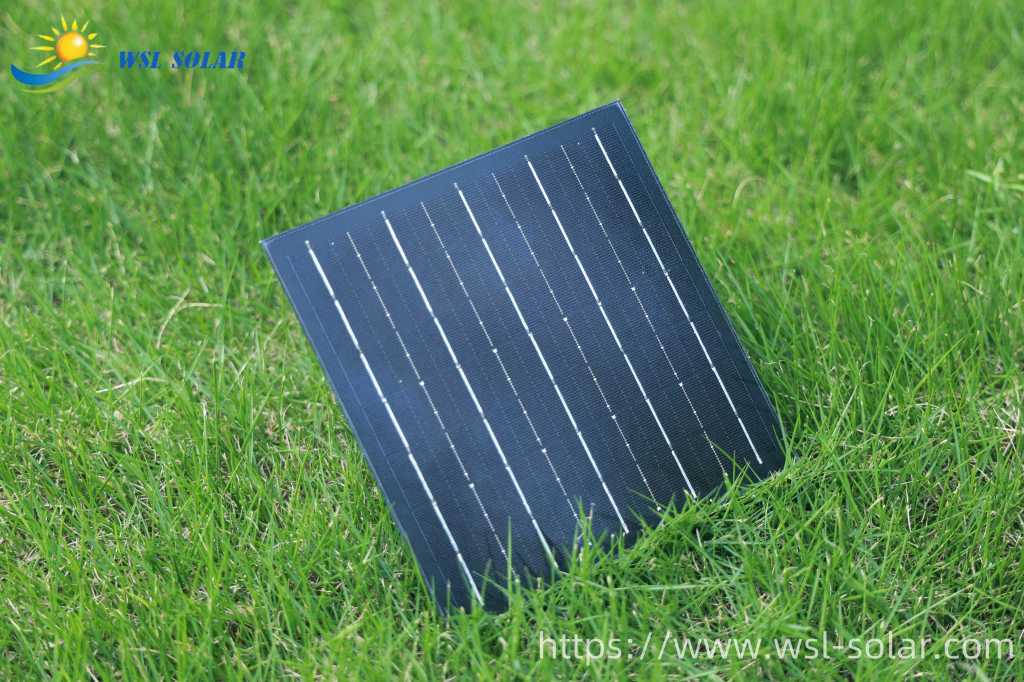
Perovskite solar cells are solar cells that use perovskite-type organic metal halide semiconductors as light-absorbing materials. They belong to the third generation of solar cells and are also called new concept solar cells.

Custom Solar Panels from WSL Solar

A recent study by Chinese scholars collaborating with international researchers has made significant progress in developing high-efficiency and high-temperature stable perovskite solar cells, achieving notable results by focusing on compositional engineering, defect management, and encapsulation techniques to enhance both efficiency and operational stability under extreme temperatures. 

Key points about the research:

High Efficiency:
The research has led to perovskite solar cells with significantly improved power conversion efficiency, reaching levels comparable to the best commercially available solar cells. 

High-Temperature Stability:
A key focus of the research has been on enhancing the stability of the perovskite solar cells under high temperatures, allowing them to operate effectively in harsh environments. 

Collaboration:
Chinese scholars have partnered with researchers from other countries, leveraging diverse expertise to tackle the complex challenges associated with developing highly stable perovskite solar cells. 

Potential applications:

Concentrated solar power:
The high-temperature stability of these perovskite solar cells could be particularly beneficial for concentrating solar power applications where high operating temperatures are encountered.

Desert environments:
Regions with extreme heat could benefit from the use of these solar cells due to their improved thermal stability. 

Challenges and future directions:

Scaling up production:
Further research is necessary to scale up the production of these high-performance perovskite solar cells to make them commercially viable. 

Material optimization:
Continued research on perovskite material composition and synthesis methods could further enhance efficiency and stability.

WSL Solar has been a quality and professional manufacturer of custom solar panels, solar mini panels, IoT solar panels and solar solution provider in China since 2006.
18V 5W Solar Panel

Key Features:

– Utilize high efficiency mono PERC solar cell,
  up to 22.5% efficiency
– Laminated by tempered glass, rigid, durable
  and long lasting
– Waterproof, scratch resistant, and UV resistant
– Customized solar panels for industrial use

Description:
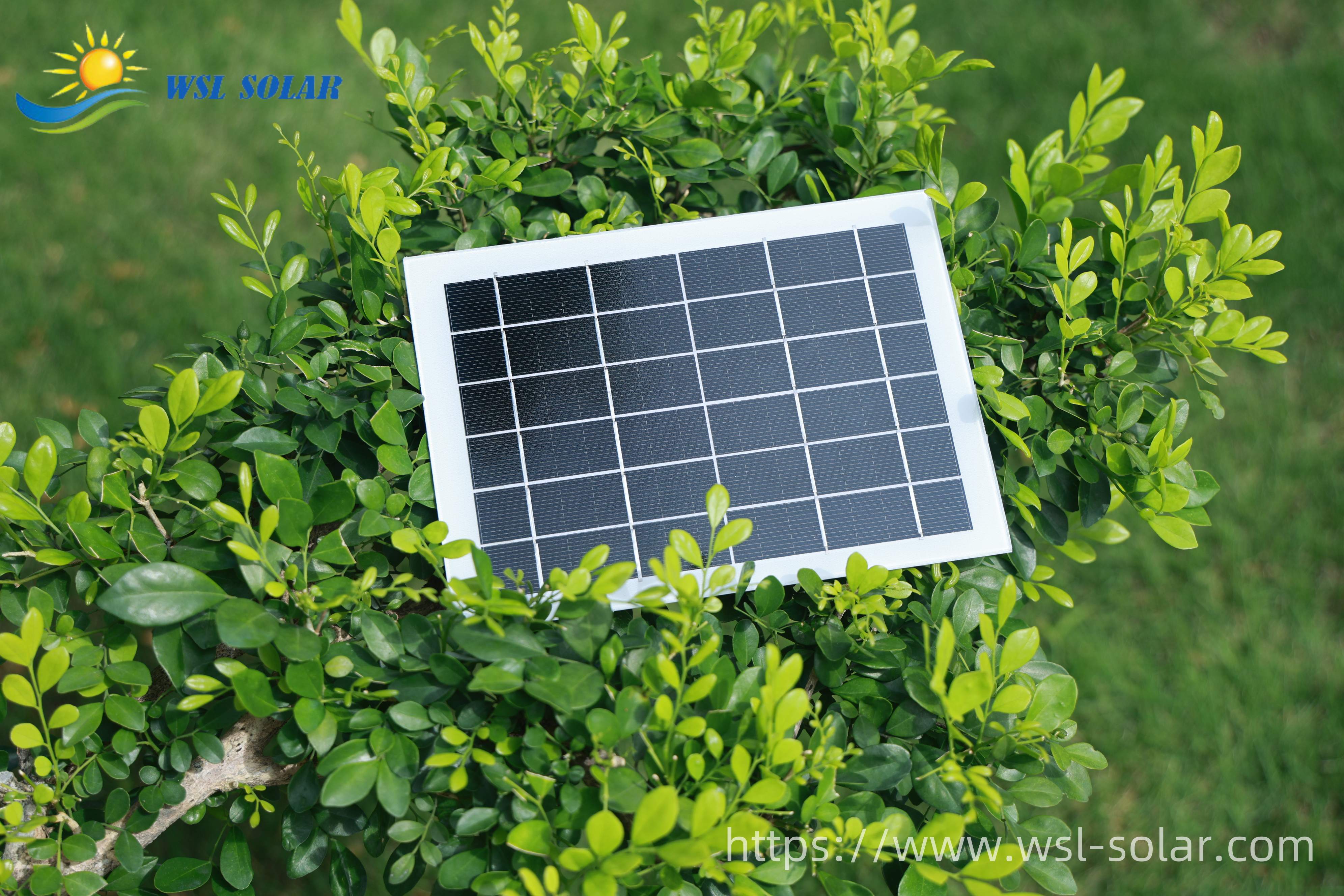
18V 5W Solar Panel

This 5W solar panel utilizes high efficiency mono PERC solar cells with efficiency up to 22.5%, to ensure its high output. It is laminated by tempered glass to protect the solar cells inside, making it rigid, durable and long lasting. This custom solar panel is waterproof, scratch resistant, and UV resistant, specially designed for long term outdoor use in any challenging condition.

Applications:
Tempered glass solar panels are widely used in IoT applications, marine buoys, wireless sensors, traffic warning devise, GPS devices, asset tracking, electric fence chargers, outdoor lighting systems, weather monitoring systems etc.


                  Solar Panel Specification

Item No.WSL-C036
Solar Panel Size125x300x4.5mm
Peak Power (Pmax)5.3W
Voltage at Pmax (Vmp)18V
Current at Pmax (Imp)294mA
Open Circuit Voltage (Voc)21.6V
Short Circuit Current (Isc)320mA
Solar Cell TypeMono PERC Solar Cell
Power Tolerance±5%
Encapsulation method3.2mm Tempered glass
Back sheetTPT
Product Warranty5 Years
Lead time25 Days
Storage temperature-40°C ~ 85°C
Working temperature-40°C ~ 85°C
Standard Test Conditions (STC)1000W/m2, 1.5AM, 25°C Cell temperature

Click here to watch the video of this type of custom solar panels. 

View More Custom Solar Panels

5V Solar Panels   |  6V Solar Panels   |  9V Solar Panels

WSL Solar has been a quality and professional manufacturer of custom solar panels and solar solution provider in China since 2006. 
Custom Solar Panels from WSL Solar

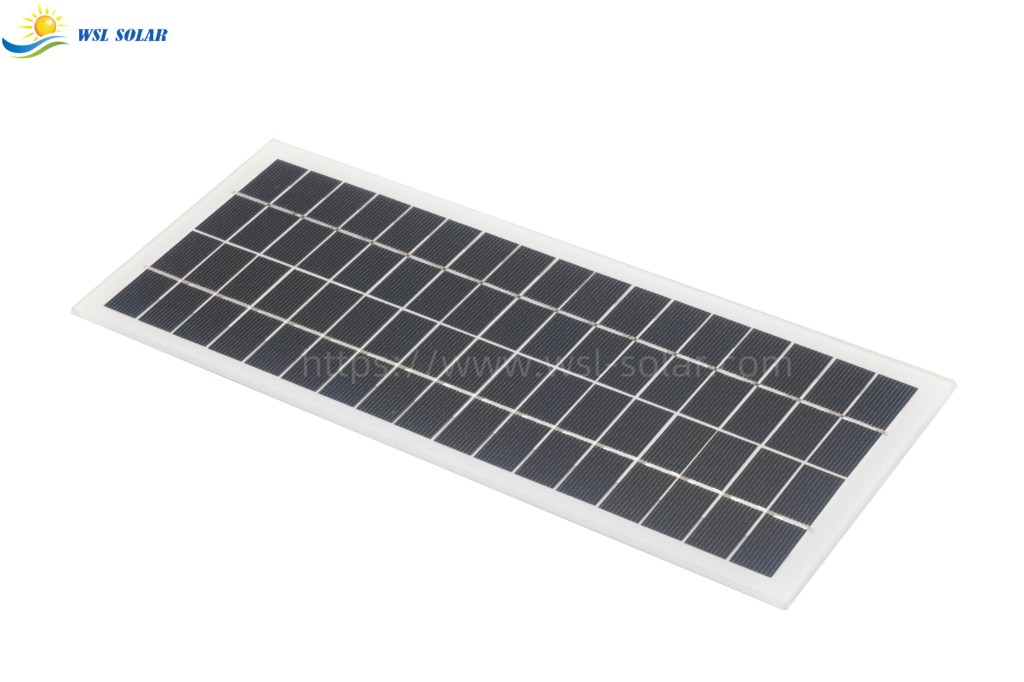
WSL Solar, a leading manufacturer and solution provider in the solar industry since 2006, offers high quality custom solar panels tailored to meet specific client requirements. With over 18 years of experience, our in-house R&D and management teams ensure the design and development of high-quality solar solutions. From diverse sizes and shapes to varied outputs, we provide comprehensive support from initial product development stage onwards.

https://www.wsl-solar.com

Custom Solar Module Manufacturer

Findy Solar has been designing and manufacturing high quality, high-efficiency custom solar panels in China since 2006.
 
With over 18 years of experience in the solar industry, we work closely with our customers to provide technical support and optimize solar panel design to meet their specific needs.
 
Our complete range of customized solar panels comes in a variety of sizes, shapes, materials, and outputs for a wide range of solar applications, including IoT devices, wireless sensors, transportation, marine, agriculture, parking, security, and weather monitoring. Trust Findy Solar to provide the perfect solar panel solution for your needs. https://www.findysolar.com

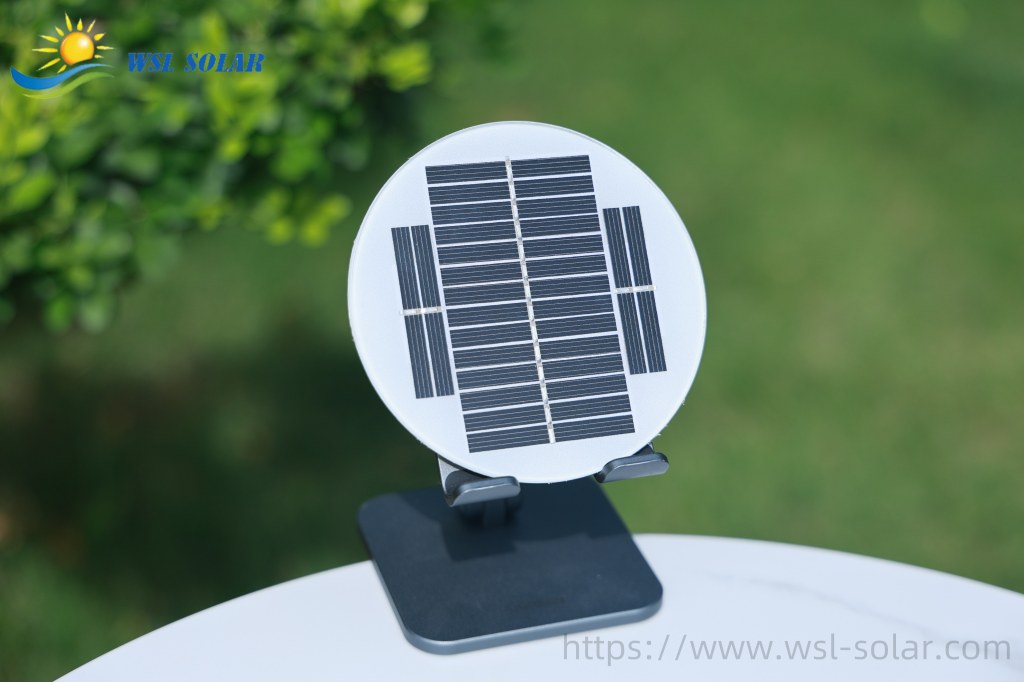
5V 2W Round Solar Panel

This 5V 2W solar panel is built with high-efficiency mono solar cells. It not only has stable output power, but also has good low light performance. This round solar panel is encapsulated with tempered glass, which makes it durable and long service life. This 5V 2W solar panel is also waterproof, UV resistant and scratch resistant.

Features:

– Built with high efficiency monocrystalline solar cell
– Tempered glass encapsulation, durable, long service life
– Positive tolerance power, consistent appearance
– Waterproof, UV- and scratch- resistant
– Excellent performance under low light environments

Applications:  
This round solar panel is widely used in wireless sensors, IoT devices,  marine devices, traffic signs, LED lights and other small electronics etc.
 
Item No.: FYD-CS006
Technical Details
Output:

Peak Power (Pmax): 2W
Voltage at Pmax (Vmp): 5V
Current at Pmax (Imp): 400mA
Open Circuit Voltage (Voc): 6V
Short Circuit Current (Isc): 430mA
Power Tolerance: ±5%
Solar Panel Size:  D=140mmx4.5mm
Cell Type:  High Efficiency Mono Solar Cell
Number of Cells: 10 pcs
Construction: Tempered glass / EVA / Solar Cell / EVA / Back sheet (TPT)
Product Warranty:                     5 Years
Storage temperature:              -20°C ~ 45°C
Working temperature:              -40°C ~ 65°C
Standard Test Conditions (STC):  1000W/m2, 1.5AM, 25°C Cell temperature 
Custom solar panel design and wire soldering service are available.

Findy Solar has been a solar panel solution provider and high efficiency custom solar panel manufacturer in China since 2006. Types of solar panels: custom solar modulesETFE solar panelsamorphous solar panels.
Welcome to contact us at info@findysolar.com.

https://www.findysolar.com

12V 3W Solar Panel

This 12V 3W solar panel is built with high-efficiency PERC solar cells, delivering up to 21% efficiency. It not only has stable output power, but also has good low light performance. This custom solar module is encapsulated with tempered glass, which makes it durable and long service life. This 3W solar panel is also waterproof, UV resistant and scratch resistant.

Features:

– Built with high efficiency PERC solar cell, upto 21% efficiency
– Tempered glass encapsulation, durable, long service life
– Positive tolerance power, consistent appearance
– Waterproof, UV- and scratch- resistant
– Excellent performance under low light environments


Applications:  
This custom solar module is widely used in wireless sensors, IoT devices,  marine devices, traffic signs, LED lights and other small electronics etc.

Item No.: FYD-CS005
Technical Details
Output:

Peak Power (Pmax): 3W
Voltage at Pmax (Vmp): 12V
Current at Pmax (Imp): 250mA
Open Circuit Voltage (Voc): 14V
Short Circuit Current (Isc): 270mA
Power Tolerance: ±5%
Solar Panel Size: 150x150x4.5mm
Cell Type:  High Efficiency Mono Solar Cell
Number of Cells: 24 pcs
Construction: Tempered glass / EVA / Solar Cell / EVA / Back sheet (TPT)
Product Warranty:                      5 Years
Storage temperature:                -20°C ~ 45°C
Working temperature:               -40°C ~ 65°C
Standard Test Conditions (STC):  1000W/m2, 1.5AM, 25°C Cell temperature 

Custom solar panel design and wire soldering service are available.

Findy Solar has been a solar panel solution provider and high efficiency custom solar panel manufacturer in China since 2006. Types of solar panels: custom solar modulesETFE solar panelsamorphous solar panels.
Welcome to contact us at info@findysolar.com.

https://www.findysolar.com