– Utilize high efficiency mono PERC solar cell, up to 24% efficiency – Laminated by tempered glass, rigid, durable and long lasting – Waterproof, scratch resistant, and UV resistant – Customized solar panels for industrial use
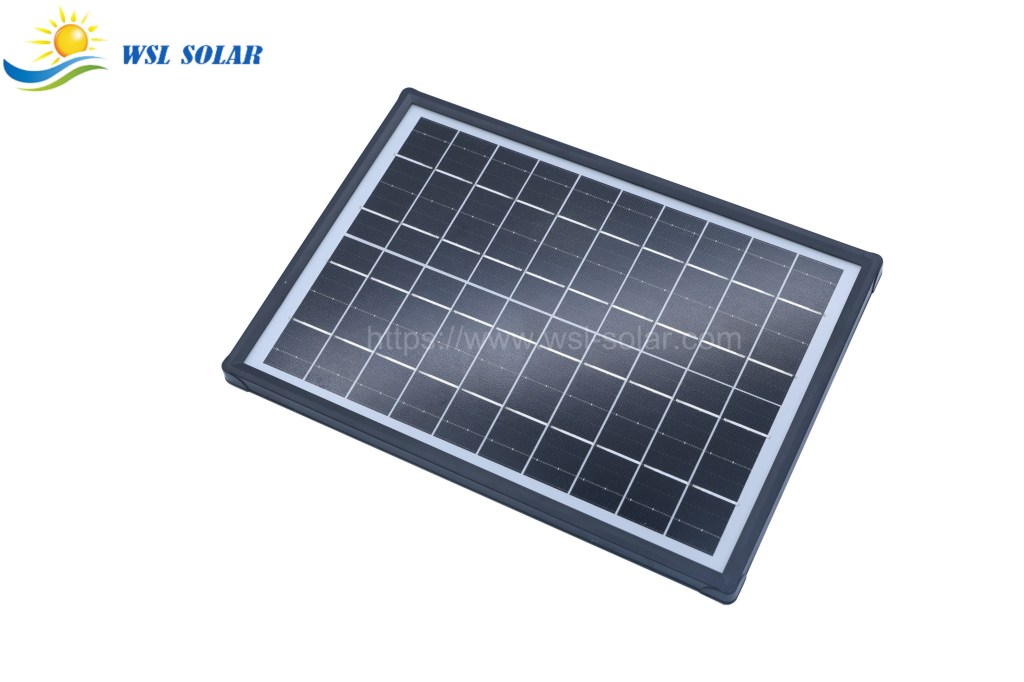
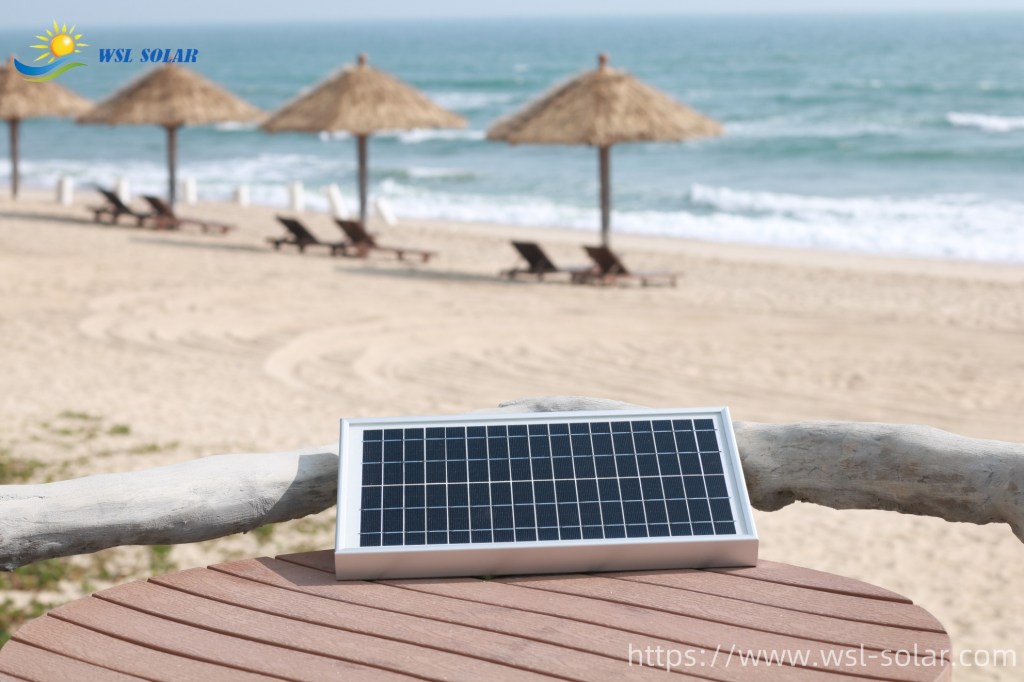
Description: 10V 7.5W Solar Panel
This 7.5W solar panel utilizes high efficiency mono PERC solar cells with efficiency up to 24%, to ensure its high output. It is laminated by tempered glass to protect the solar cells inside, making it rigid, durable and long lasting. This custom solar panel is waterproof, scratch resistant, and UV resistant, specially designed for long term outdoor use in any challenging condition.
Applications: Tempered glass solar panels are widely used in IoT applications, marine buoys, wireless sensors, traffic warning devise, GPS devices, asset tracking, electric fence chargers, outdoor lighting systems, weather monitoring systems etc.
– Utilize high efficiency mono PERC solar cell, up to 24% efficiency – Laminated by tempered glass, rigid, durable and long lasting – Waterproof, scratch resistant, and UV resistant – Customized solar panels for industrial use
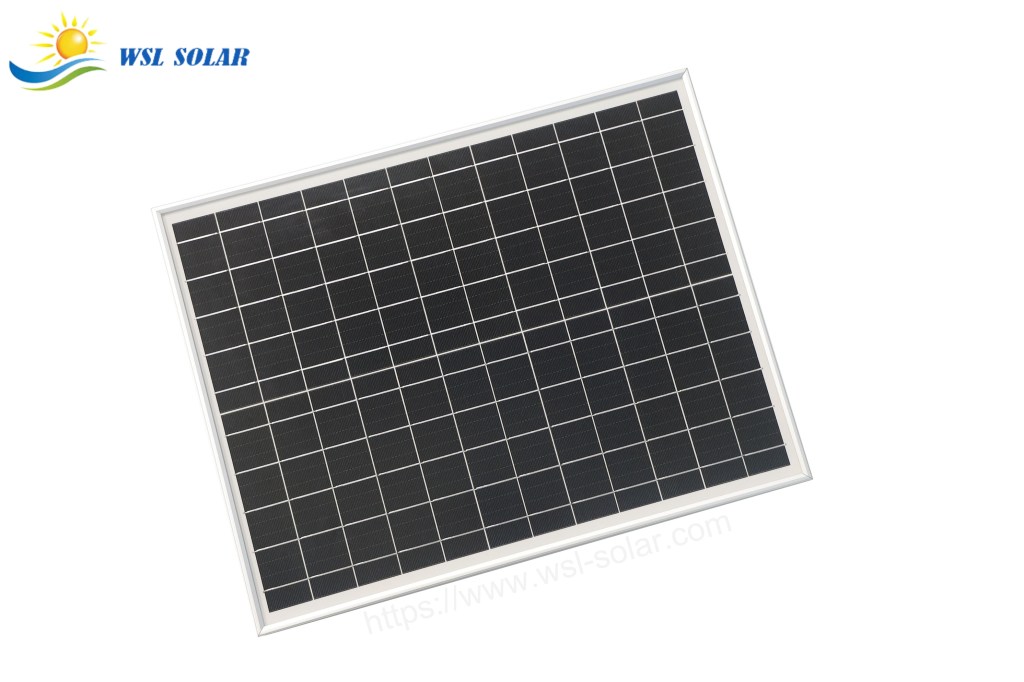
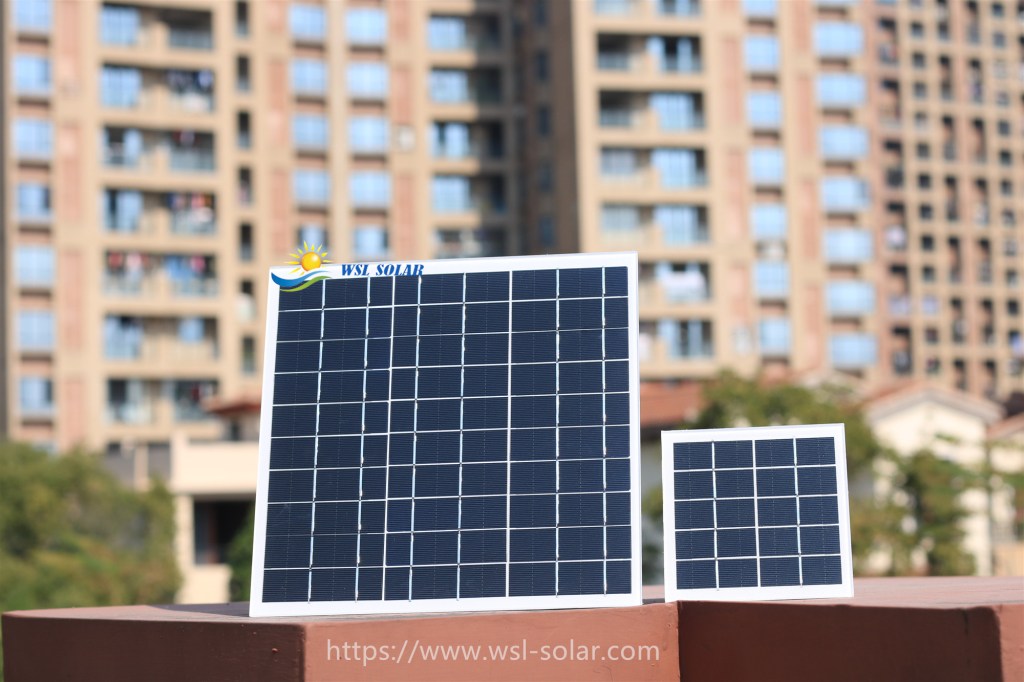
Description: 18V 25W Solar Panel
WSL Solar’s 25W solar panel utilizes high efficiency mono PERC solar cells with efficiency up to 24%, to ensure its high output. It is laminated by tempered glass to protect the solar cells inside, making it rigid, durable and long lasting. This custom solar panel is waterproof, scratch resistant, and UV resistant, specially designed for long term outdoor use in any challenging condition.
Applications: Tempered glass solar panels are widely used in IoT applications, marine buoys, wireless sensors, traffic warning devise, GPS devices, asset tracking, electric fence chargers, outdoor lighting systems, weather monitoring systems etc.
Solar Panel Specification
Item No.
WSL-C040
Solar Panel Size
350x450x25mm
Peak Power (Pmax)
27W
Voltage at Pmax (Vmp)
13.4V
Current at Pmax (Imp)
2.01A
Open Circuit Voltage (Voc)
16V
Short Circuit Current (Isc)
2.13A
Solar Cell Type
Mono PERC Solar Cell
Power Tolerance
±5%
Encapsulation method
3.2mm Tempered glass
Back sheet
TPT
Product Warranty
5 Years
Lead time
25 Days
Storage temperature
-40°C ~ 85°C
Working temperature
-40°C ~ 85°C
Standard Test Conditions (STC)
1000W/m2, 1.5AM, 25°C Cell temperature
WSL Solar has been a quality and professional manufacturer of custom solar panels, solar mini panels, IoT solar panels and solar solution provider in China since 2006.
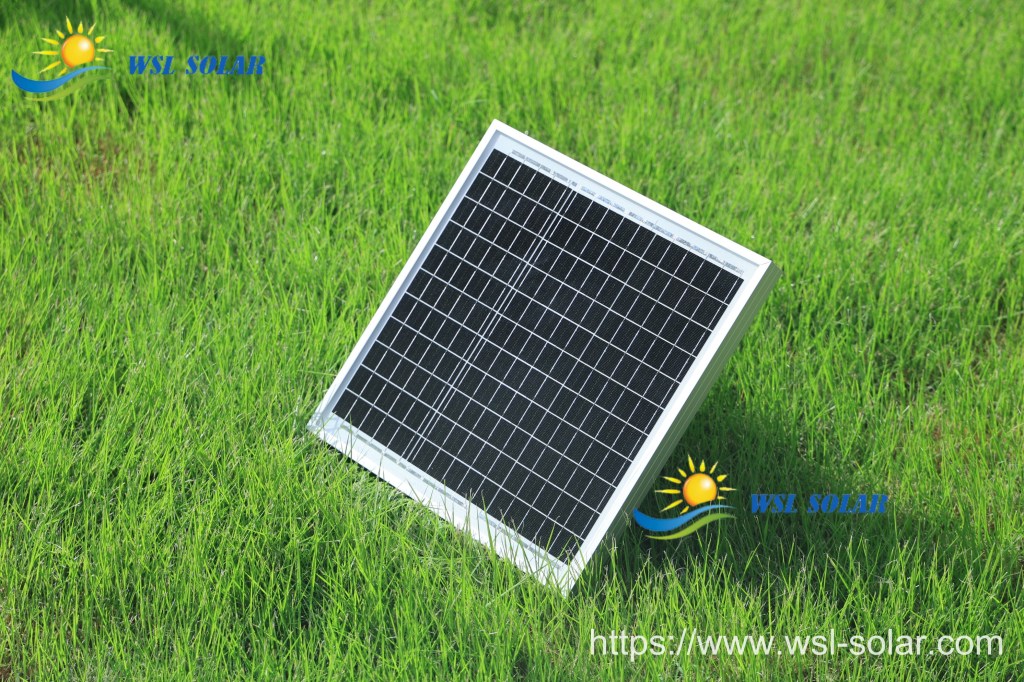
WSL Solar’s 10W solar panel utilizes high efficiency mono PERC solar cells with efficiency up to 24%, to ensure its high output. It is laminated by tempered glass to protect the solar cells inside, making it rigid, durable and long lasting. This custom solar panel is waterproof, scratch resistant, and UV resistant, specially designed for long term outdoor use in any challenging condition.
Key Features: – Utilize high efficiency mono PERC solar cell, up to 24% efficiency – Laminated by tempered glass, rigid, durable and long lasting – Waterproof, scratch resistant, and UV resistant – Customized solar panels for industrial use
Applications: Tempered glass solar panels are widely used in IoT applications, marine buoys, wireless sensors, traffic warning devise, GPS devices, asset tracking, electric fence chargers, outdoor lighting systems, weather monitoring systems etc.
PERC stands for “passivated emitter and rear contact” or “rear cell”. Mono PERC solar panels are built with mono PERC solar cells, which have an additional layer on the back of the traditional mono solar cells. This additional layer allows more sunlight to be captured and turned into electricity, making mono PERC solar cells more efficient than traditional solar cells. Mono PERC solar panels are also able to mitigate rear recombination and prevent longer wavelengths from becoming heat that would impair the solar cell’s performance.
Mono PERC is an advanced version of mono-crystalline solar panels that are considered to have higher efficiency even in low-light conditions.
What’s the benefit of adding the additional layer on the back of the solar cells?
Let’s understand it by having a look at how standard mono solar panels and mono PERC solar panels behave when sunlight falls on their surface.
The sunlight that falls on the surface of a standard solar panel is either reflected, absorbed, or passed through the surface.
On the other hand, the light passed through the solar cells can be used again in case of the PERC solar panels.
In mono PERC solar panels, a passivated layer is added on the rear side of the standard solar panels. This layer is capable of reflecting back the photons passed away from the solar panel. In this way, more light is absorbed by the solar panel & thus higher production. This is how mono PERC solar panels work.
What are the advantages of mono PERC solar panels?
01. Efficiency
Efficiency is defined as the energy in the form of sunlight that can be converted into electricity by solar panels.Since more light is absorbed by the surface of mono PERC solar panels, thus the overall production per unit area is higher & hence higher efficiency.Conclusion: Mono PERC solar panels are more efficient in comparison to standard mono solar panels.
02. Cost
In terms of cost, mono-crystalline (standard) panels are slightly cheaper compared to perc modules. The extra cost associated with the use of passivated layers in mono-perc modules increases the overall pricing. However, if we compare price with per unit of energy produced – then it is the same for both modules.Conclusion: Mono PERC solar panels are expensive compared to standard mono panels. However, the price per unit of energy is somewhat equal in both technologies.
03. Space Required
While comparing mono PERC solar panels with standard mono-crystalline solar panels, we have found that the space requirement for mono PERC solar panels is less compared to standard ones.Here the space requirement refers to the area required by modules to produce a certain amount of energy. Conclusion: Lesser space is required for mono PERC solar panels.
When it comes to solar panels, the type of solar cell used is critical. There are several different types of solar cells on the market, each with its own unique characteristics.
Crystalline Silicon Solar Cells (Mono & Poly)
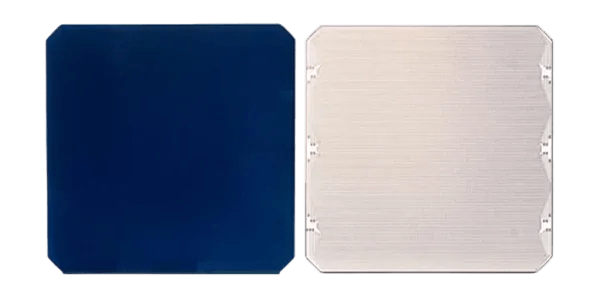
Crystalline silicon solar cells, which are currently the most common, come in two types: monocrystalline and polycrystalline. Monocrystalline solar cells are more efficient, with an efficiency range of 20% – 24%, while polycrystalline solar cells have an efficiency range of 18% – 20%. Additionally, monocrystalline solar cells are more expensive than polycrystalline ones. However, as technology improves and production costs decrease, the price difference between the two is becoming less significant.
Monocrystalline Solar Cell
IBC Solar Cells
IBC (Interdigitated Back Contact) solar cell transfers all the electrode grid lines on the front side of the solar cell to the back side of the solar cell. IBC solar cell mainly improves conversion efficiency through structural changes. This not only brings more effective power generation area to users, but also helps improve power generation efficiency and makes the appearance more beautiful. IBC solar cells are the most efficient solar cells on the market, with an efficiency of over 23%. However, they are also the most expensive.
IBC Solar Cell
When choosing a solar panel, it’s important to consider the specific needs of the application. For small solar panels with limited use areas, monocrystalline solar panels are a better option. Encapsulation methods for crystalline silicon solar panels include glass lamination, PET, ETFE lamination, or epoxy. For IBC solar panels, encapsulation methods include PET or ETFE lamination.
Remember, choosing the right solar cell is essential for the overall efficiency and effectiveness of your solar panel.
Amorphous silicon (a-Si, Amorphous Silicon) solar cells are a kind of thin film solar cells. Compared with traditional crystalline silicon (monocrystalline/polycrystalline) cells, it has good weak light performance, low cost, and flexibility, but the conversion efficiency is low (about 5%-10%). The following are its main application areas:
1. Consumer electronics & portable devices – Solar calculators and electronic watches: The most common application in the early days, using the characteristics of amorphous silicon that can still generate electricity in weak light indoors. – Power bank/solar backpack: Flexible amorphous silicon film can be integrated into portable devices to power low-power devices such as mobile phones. – Wireless keyboard/mouse: Some low-power electronic products use amorphous silicon cells as auxiliary power sources.
2. Building integrated photovoltaics (BIPV) – Photovoltaic glass curtain wall: Amorphous silicon film can be made into semi-transparent or colored components for building facades, taking into account both power generation and aesthetics. – Solar awnings/skylights: Flexible or lightweight design, suitable for curved or special-shaped building structures. – Rooftop solar tiles: Combined with building materials, suitable for low-load bearing or special-shaped roofs.
3. Outdoor & Emergency Power Supply – Solar camping lights/garden lights: Taking advantage of weak light power generation, suitable for outdoor scenes with unstable lighting. – Emergency charging equipment: Such as temporary power supply for disaster relief and power supply for field monitoring equipment. – Solar traffic signs: Provide energy for low-power LED indicator lights.
4. Flexible & Wearable Devices – Flexible solar panels: Used for curved installation scenarios such as tents, car roofs, and sails. – Wearable devices: Such as solar hats and clothes, powering smart watches or sensors (but with lower power).
5. Agriculture & Internet of Things (IoT) – Agricultural sensor power supply: Such as soil moisture monitoring, weather stations and other low-power devices. – Remote monitoring equipment: off-grid applications such as forest fire prevention cameras and wireless communication relay stations.
6. Special environment applications – Aerospace: Some early satellites used amorphous silicon batteries (now mostly replaced by high-efficiency batteries such as GaAs). – High temperature environment: Amorphous silicon has a good temperature coefficient and has less performance degradation in high temperature environments.
Advantages and Disadvantages of Amorphous Silicon Cells
Advantages
Advantages
Good performance in weak light (usable on cloudy days/indoors)
Short life (about 10-15 years, lower than crystalline silicon)
Good high temperature performance
Low power density, large footprint
Future Trends Although amorphous silicon cells are not as efficient as crystalline silicon or emerging perovskite cells, their low cost, weak light adaptability, and flexibility still allow them to maintain a certain market in BIPV, Internet of Things, consumer electronics and other fields. In the future, efficiency may be improved through layering technology (such as stacking with amorphous silicon/microcrystalline silicon) or combining with perovskite.
Posted by Carrie Wong / WSL Solar
WSL Solar has been a quality and professional manufacturer of custom solar panels, solar mini panels, IoT solar panels and solar solution provider in China since 2006.
– Utilize high efficiency mono PERC solar cell, up to 22.5% efficiency – Laminated by tempered glass, rigid, durable and long lasting – Waterproof, scratch resistant, and UV resistant – Customized solar panels for industrial use
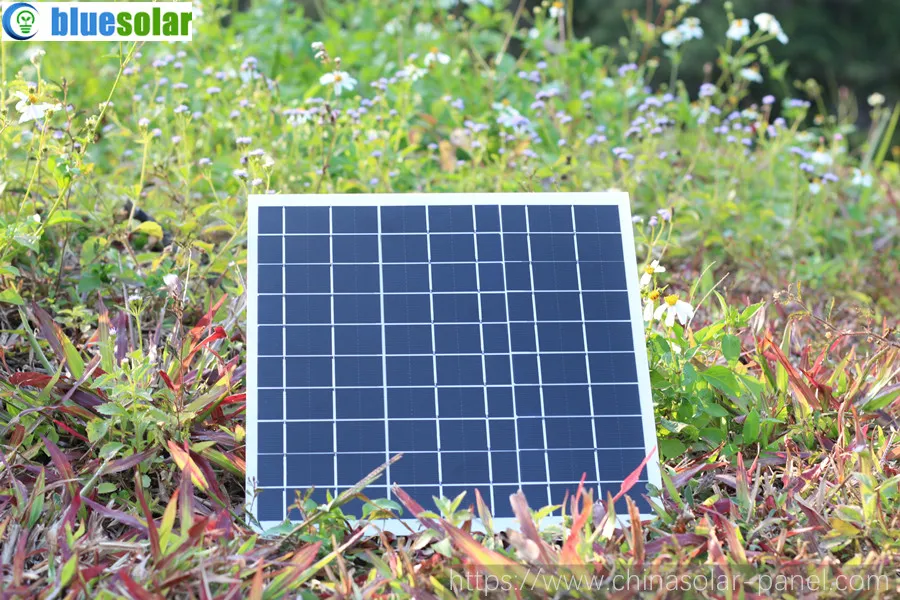
Description: 18V 9W Solar Panel
This 9W solar panel utilizes high efficiency mono PERC solar cells with efficiency up to 22.5%, to ensure its high output. It is laminated by tempered glass to protect the solar cells inside, making it rigid, durable and long lasting. This custom solar panel is waterproof, scratch resistant, and UV resistant, specially designed for long term outdoor use in any challenging condition.
Applications: Tempered glass solar panels are widely used in IoT applications, marine buoys, wireless sensors, traffic warning devise, GPS devices, asset tracking, electric fence chargers, outdoor lighting systems, weather monitoring systems etc.
The assembly process of a crystalline silicon solar panel involves several precise steps to transform individual solar cells into a fully functional solar panel. Here’s a detailed breakdown of the process:
1. Cell Testing and Sorting – Each solar cell is tested for electrical performance (efficiency, current, and voltage). – Cells are sorted into groups with similar electrical characteristics to ensure uniformity in the final panel.
2. Stringing and Tabbing – Tabbing: Thin metal strips (usually made of copper coated with solder, called tabbing ribbons) are soldered onto the front and back contacts of each solar cell. – Stringing: The tabbed cells are connected in series by soldering the tabbing ribbons of one cell to the back of the next cell. This forms a “string” of cells.
3. Layering the Solar Panel – Glass Layer: A sheet of tempered glass (with high transparency and durability) is placed on the bottom. This will be the front side of the panel, facing the sun. – Encapsulant Layer: A layer of ethylene-vinyl acetate (EVA) is placed on top of the glass. EVA is a transparent, adhesive material that protects the cells and ensures proper light transmission. – Cell Strings: The interconnected strings of solar cells are carefully placed on top of the EVA layer. – Backsheet: Another layer of EVA is added, followed by a backsheet (usually made of a polymer like Tedlar). The backsheet provides electrical insulation and protects the panel from environmental factors.
4. Lamination – The layered assembly (glass, EVA, cell strings, EVA, backsheet) is placed in a laminator. – The laminator applies heat (around 140-150°C) and vacuum pressure to bond the layers together, ensuring there are no air gaps or moisture trapped inside. – This process takes about 10-15 minutes and creates a durable, weatherproof panel.
5. Framing – The laminated panel is framed with aluminum for structural support and durability. – The frame protects the edges of the panel and makes it easier to mount on rooftops or other structures. – Silicone sealant is applied to the edges to ensure a watertight seal.
6. Junction Box Installation – A junction box is attached to the back of the panel. – The junction box contains diodes that allow current to flow in one direction and prevent reverse current flow (which can reduce efficiency). – The tabbing ribbons from the solar cells are connected to the junction box, which provides the electrical output terminals.
7. Cleaning and Inspection – The panel is cleaned to remove any dust, fingerprints, or residues. – It undergoes a visual inspection to check for defects, such as cracks, misaligned cells, or poor soldering.
8. Electrical Testing – The panel is tested for electrical performance under standard test conditions (STC): – Open-circuit voltage (Voc): Voltage when no load is connected. – Short-circuit current (Isc): Current when the terminals are shorted. – Maximum power (Pmax): The panel’s peak power output. – These tests ensure the panel meets its specified power rating.
9. Quality Assurance and Certification – The panel undergoes additional quality checks, including: – Durability testing: Exposure to extreme temperatures, humidity, and mechanical stress. – Safety certifications: Compliance with international standards (e.g., UL, IEC, TUV). – Panels that pass these tests are certified for use.
10. Packaging and Shipping – The finished solar panels are packed in protective materials to prevent damage during transportation. – They are then shipped to distributors, installers, or end-users.
Summary of Key Components in a Solar Panel: 1. Solar Cells: The core component that converts sunlight into electricity. 2. Tempered Glass: Protects the cells and allows sunlight to pass through. 3. EVA Encapsulant: Bonds the layers and protects the cells. 4. Backsheet: Provides insulation and environmental protection. 5. Aluminum Frame: Adds structural strength and ease of mounting. 6. Junction Box: Manages electrical connections and output.
This assembly process ensures that crystalline silicon solar panels are efficient, durable, and ready to generate electricity for 25-30 years or more.
Posted by Carrie Wong / WSL Solar
WSL Solar has been a quality and professional manufacturer of custom solar panels, solar mini panels, IoT solar panels and solar solution provider in China since 2006.
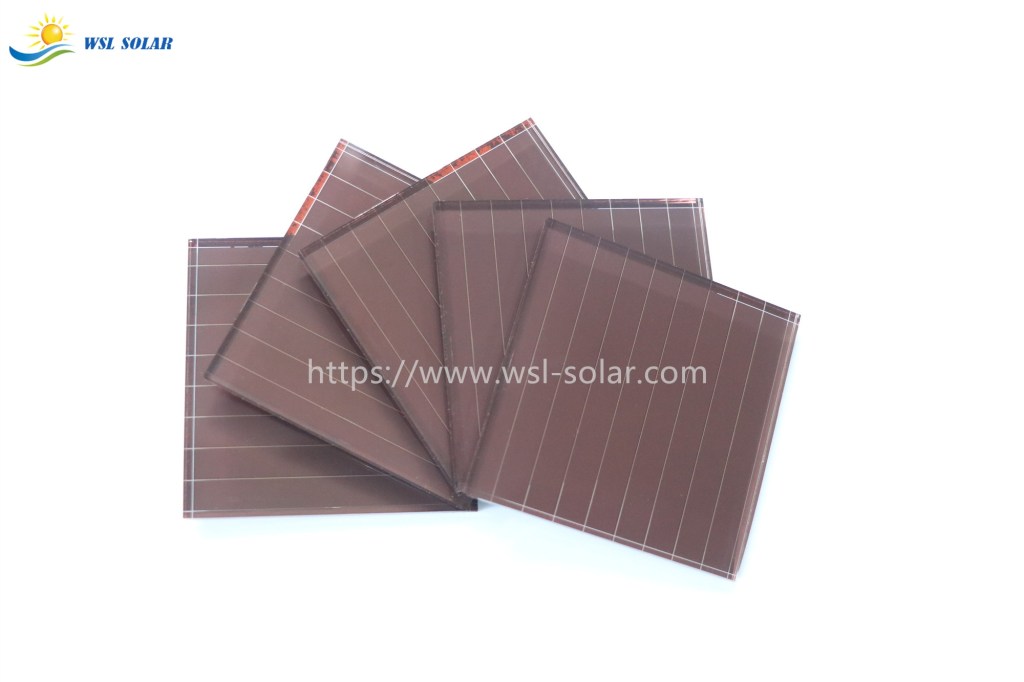
An amorphous solar panel is a type of thin-film solar panel made from amorphous silicon (a-Si), a non-crystalline form of silicon. Unlike traditional crystalline silicon solar panels (monocrystalline or polycrystalline), which have a structured, lattice-like arrangement of silicon atoms, amorphous silicon lacks this ordered structure. This gives it unique properties and applications.
– Amorphous solar panels are extremely thin and lightweight, making them flexible and adaptable to various surfaces.
– They can be applied to curved or irregular surfaces, unlike rigid crystalline panels.
2. Manufacturing Process:
– Amorphous silicon is deposited in thin layers onto substrates like glass, plastic, or metal using a process called chemical vapor deposition (CVD).
– This process is less energy-intensive and cheaper compared to producing crystalline silicon.
3. Efficiency:
– Amorphous solar panels typically have lower efficiency (around 6-10%) compared to crystalline panels (15-25%).
– However, they perform better in low-light conditions (e.g., cloudy days or indirect sunlight) and high temperatures.
4. Cost:
– They are generally cheaper to produce due to the lower amount of silicon required and simpler manufacturing processes.
5. Durability:
– Amorphous panels are less prone to cracking or damage because of their flexible nature.
– However, they may degrade faster over time compared to crystalline panels (a phenomenon called the **Staebler-Wronski effect**).
6. Applications:
– Used in small-scale applications like solar-powered calculators, watches, and portable chargers.
– Ideal for building-integrated photovoltaics (BIPV), such as solar windows or roofing materials.
– Suitable for large-scale installations where lightweight and flexible panels are needed.
Advantages:
– Better performance in low-light and high-temperature conditions.
– Lightweight and flexible, enabling unique applications.
– Lower production costs.
Disadvantages:
– Lower efficiency compared to crystalline panels.
– Shorter lifespan and potential degradation over time.
– Requires more space to generate the same amount of power as crystalline panels.
In summary, amorphous solar panels are a versatile and cost-effective option for specific applications, particularly where flexibility, lightweight design, or performance in challenging conditions is needed. However, they are less efficient and durable than traditional crystalline silicon panels.
Posted by Carrie Wong / WSL Solar
WSL Solar has been a quality and professional manufacturer of custom solar panels, solar mini panels, IoT solar panels and solar solution provider in China since 2006.
Crystalline silicon solar panels and amorphous silicon solar panels are two distinct types of photovoltaic technologies, differing in their structure, efficiency, cost, and applications.
Crystalline Silicon Solar Panel
Amorphous Silicon Solar Panel
Here’s a breakdown of the key differences:
1. Structure and Composition
– Crystalline Silicon Solar Panels:
– Made from silicon atoms arranged in a highly ordered, crystalline structure.
– Two main types:
– Monocrystalline Silicon**: Made from a single crystal structure, giving it a uniform appearance and high efficiency.
– Polycrystalline Silicon**: Made from multiple silicon crystals, resulting in a less uniform appearance and slightly lower efficiency.
– Amorphous Silicon Solar Panels:
– Made from non-crystalline (amorphous) silicon, where atoms are arranged in a disordered, random structure.
– Typically deposited as a thin film on substrates like glass, metal, or plastic.
2. Efficiency
– Crystalline Silicon:
– Higher efficiency due to the ordered structure, which allows for better electron movement.
– Monocrystalline panels: ~20-23% efficiency.
– Polycrystalline panels: ~18-20% efficiency.
– Amorphous Silicon:
– Lower efficiency due to the disordered structure, which hinders electron movement.
– Typically ~6-10% efficiency.
3. Cost
– Crystalline Silicon:
– Generally more expensive to produce due to the energy-intensive manufacturing process and high-purity silicon requirements.
– Amorphous Silicon:
– Cheaper to produce because it uses less silicon and can be manufactured using simpler processes like thin-film deposition.
4. Flexibility and Applications
– Crystalline Silicon:
– Rigid and heavy, making them suitable for traditional rooftop installations and large-scale solar farms.
– Amorphous Silicon:
– Lightweight and flexible, enabling use in unconventional applications like curved surfaces, portable devices, and building-integrated photovoltaics (BIPV).
5. Performance in Low Light and High Temperatures
– Crystalline Silicon:
– Performs better under standard test conditions but can lose efficiency in high temperatures.
– Amorphous Silicon:
– Performs better in low-light conditions (e.g., cloudy weather) and is less affected by high temperatures.
6. Lifespan and Durability
– Crystalline Silicon:
– Longer lifespan (25-30 years or more) and higher durability.
– Amorphous Silicon:
– Shorter lifespan and may degrade faster over time (e.g., due to light-induced degradation).
7. Aesthetic Appeal
– Crystalline Silicon:
– Monocrystalline panels have a sleek, black appearance, while polycrystalline panels have a blue, speckled look.
– Amorphous Silicon:
– Thin-film panels have a uniform, dark appearance and can be integrated into building materials for a more aesthetic look.
Summary Table:
Feature
Crystalline Silicon
Amorphous Silicon
Structure
Ordered crystal structure
Disordered, random structure
Efficiency
18-23%
6-10%
Cost
Higher
Lower
Flexibility
Rigid
Flexible
Applications
Rooftops, solar farms
BIPV, portable devices
Low-Light Performance
Moderate
Better
Lifespan
25-30+ years
Shorter
Aesthetic
Sleek black(mono) or blue speckled (poly)
Uniform, dark appearance
In summary, crystalline silicon panels are more efficient and durable but costlier, while amorphous silicon panels are cheaper, flexible, and better suited for specific applications like BIPV or portable devices. The choice depends on the specific needs and constraints of the project.
Posted by Carrie Wong / WSL Solar
WSL Solar has been a quality and professional manufacturer of custom solar panels, solar mini panels, IoT solar panels and solar solution provider in China since 2006.



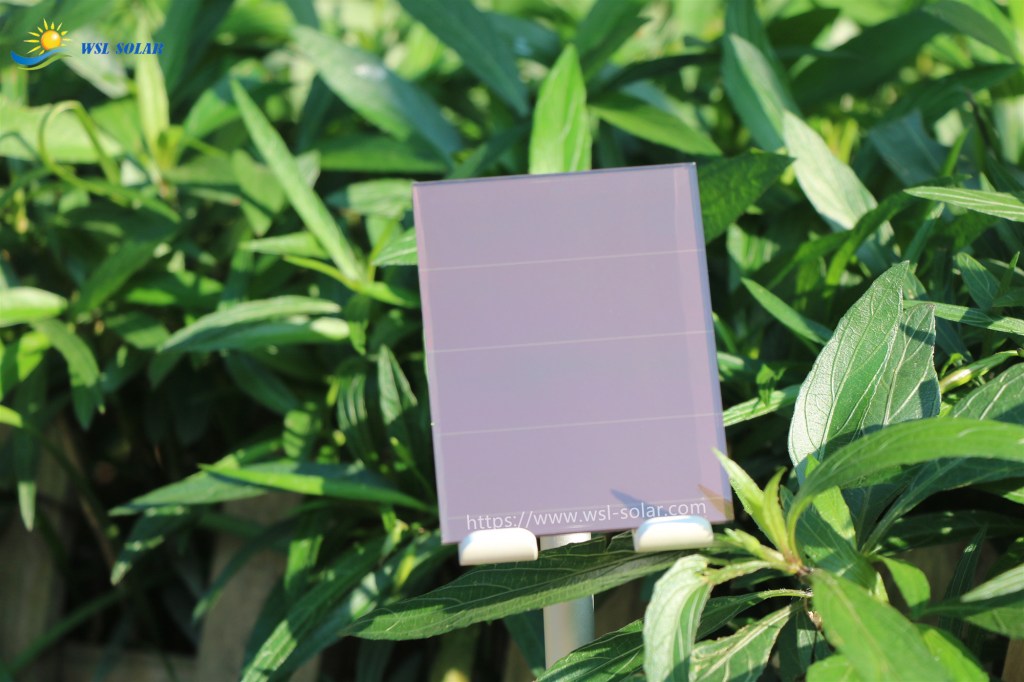
 Custom Solar Panel