Are you looking for the right solar panel to charge your battery? Here are some tips to help you choose the right one.
When selecting a solar panel to charge your battery, it is essential to ensure that the voltage of the solar panel is greater than the fully charged voltage of the battery by 20-30%. For instance, a 6V battery requires an 8-9V solar panel, and a 12V battery requires a 15-18V solar panel.
Another crucial factor to consider is the solar panel’s Voltage Open Circuit (VOC), which should be between 1.4 and 1.8 times the nominal battery bank voltage. Suppose you have a 24-volt system, in that case, the VOC should be between 33.6V and 43.2 volts.
In addition to voltage, also consider the amperage of the solar cell. The amperage will fluctuate with sun exposure and determine how long it takes to recharge the battery. By keeping these factors in mind, you can choose the perfect solar panel to power your battery.
Choosing the right solar panel for your battery is crucial to ensure optimal performance and longevity. Keep these tips in mind when selecting your solar panel, and you’ll be on your way to powering your devices with renewable energy.
Findy Solar has been a custom solar solution provider and high efficiency custom solar panels manufacturer in China since 2006.
Since 2006, Findy Solar has been committed to designing and manufacturing premium quality and high efficiency customized solar panels. They work closely with their clients from the initial stage of product development, to providing technical support and optimized solar panel design options, to fulfil the specific needs of our client’s requirements.
With their 15+ years of experience in solar industry, Findy Solar has developed a complete range of customized solar panels, in a variety of sizes, shapes, materials and outputs, for a wide range of solar applications including IoT devices (internet of things), wireless sensors, transportation, marine, agriculture, parking, security, and weather monitoring etc.
Experienced team & highly skilled staff
Their R&D and management teams have more than 15 years of experience in the solar industry. They have a very high sensitivity to the entire industry.
With many years of rich experience, their team knows how to adopt the latest solar technology in time and how to improve the equipment to apply it to actual production; how to layout and design solar cell arrays in order to achieve the highest power output in the most compact size; how to choose high quality and suitable raw materials, etc.
They employ the highest skilled and trained employees within the industry, and our staff turnover is the lowest.
Advanced production & testing equipment
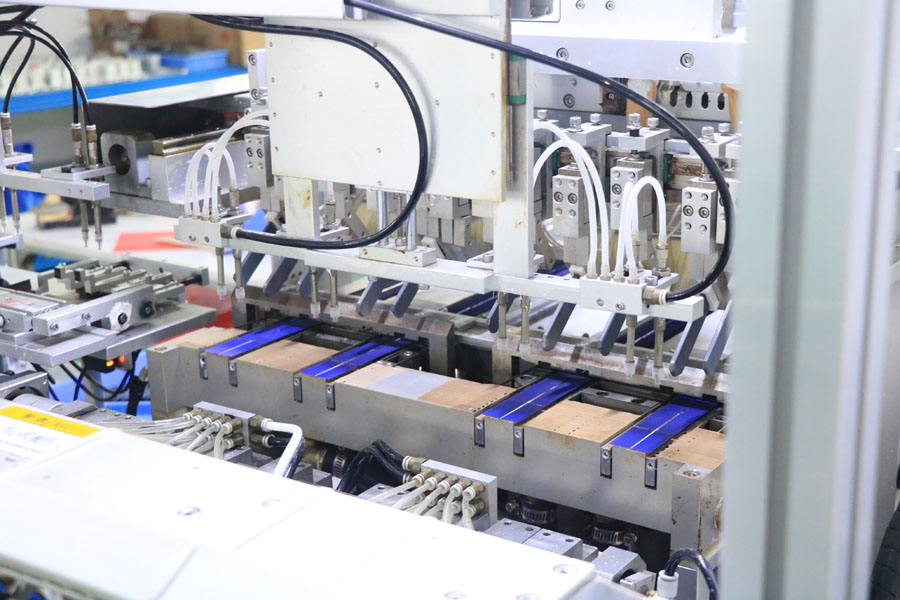
Findy Solar utilize the most advanced and cutting edge technology within the industry, and they have automated solar cell laser cutting machines, automated solar cell stringing machines, solar panel laminators, EL testers, and other professional solar panel testing equipment. This advanced equipment not only improves their production efficiency, it also ensures the consistency of products, and saves a lot of labor costs.
High efficiency solar cells
The core component of a solar panel is the solar cell, which directly affects the electrical performance and stability of the solar panel itself. Therefore, to achieve optimal & maximum efficiency, it is of paramount importance that we only utilize high-quality and the most efficient solar cell configuration. Findy Solar always choose solar cells that are both highly efficient and have superior low-light performance.
In addition to using traditional high efficiency crystalline silicon solar cells, they also actively adopt high efficiency back-contact solar cells to meet the specific needs of each of our individual clients.
Strict quality control
Throughout every stage of the production process, starting with the selection of the raw materials, to ending with the finished products Findy Solar employ the stricted quality control measures and procedures within the industry.
They are highly selective and only choose premium quality solar cells, and then they have to pass our stringent testing procedures before assembly. All of their solar panels have to pass a final visual inspection test and our 100% electrical performance test before they are ready for packaging and shipping.
Excellent customer service
Honesty and trustworthiness are their primary operating principles. They are committed to providing clients with the highest quality, and the most efficient solar panels at the most competitive prices.
Findy Solar provide their clients with advice, feedback and they offer constant and open communication throughout every stage of the ordering process.
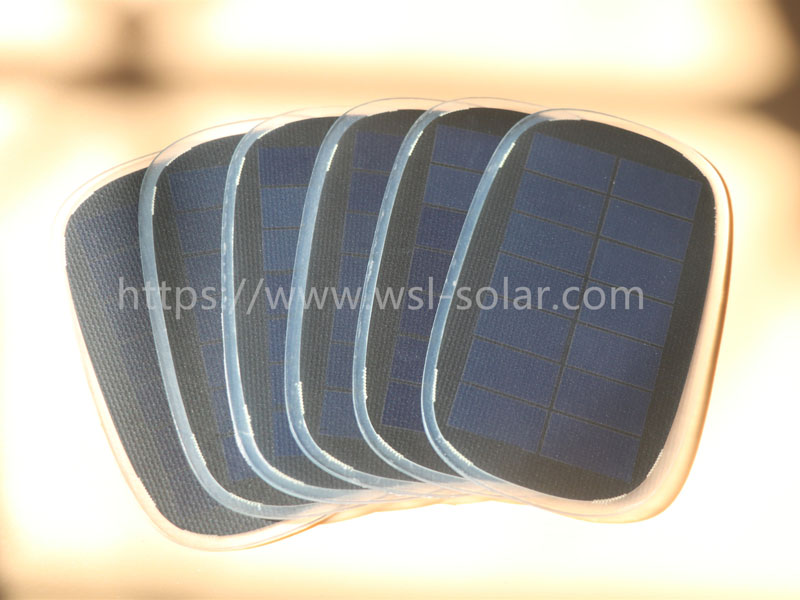
ETFE solar panels are simply photovoltaic (PV) solar panels with a protective, top layer made of ETFE film. ETFE, or Ethylene-Tetra-Fluoro-Ethylene, is a durable and long-lasting material that is perfect for protecting solar panels from the environmental elements.
Advantages of ETFE solar panels ETFE solar panels have several advantages over traditional solar panels, including:
– Lightweight, thin and portable – Durable against harsh weather and wind – Eco-friendly and sustainable – Self-cleaning, easy to clean and maintain
The Structure of ETFE Solar Panels ETFE solar panels are typically made with: ETFE film | EVA film | IBC solar cells | PCB board or ETFE film | EVA film | traditional solar cells | EVA film | backsheet
ETFE Solar Panel Applications ETFE solar panels are widely used in IoT devices, wireless sensors, solar sea lighting, solar lights, solar toys, and charging devices for outdoor activities etc.
WSL Solar has been a quality and professional manufacturer of custom solar panels, solar mini panels, IoT solar panels and solar solution provider in China since 2006.
Key Features: – Utilize high efficiency mono PERC solar cell, up to 22.5% efficiency – Laminated by tempered glass, rigid, durable and long lasting – Waterproof, scratch resistant, and UV resistant – Customized solar panels for industrial use
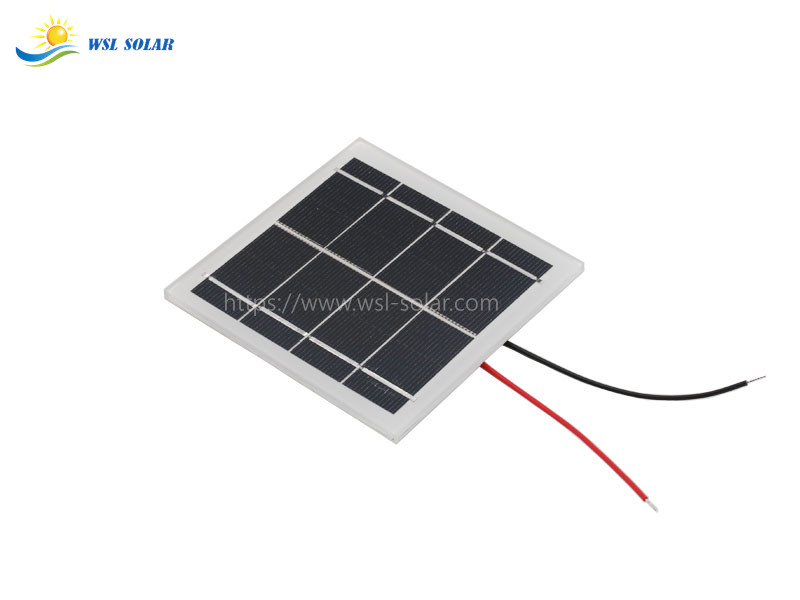
Description: 4.4V 1.3W Solar Panel
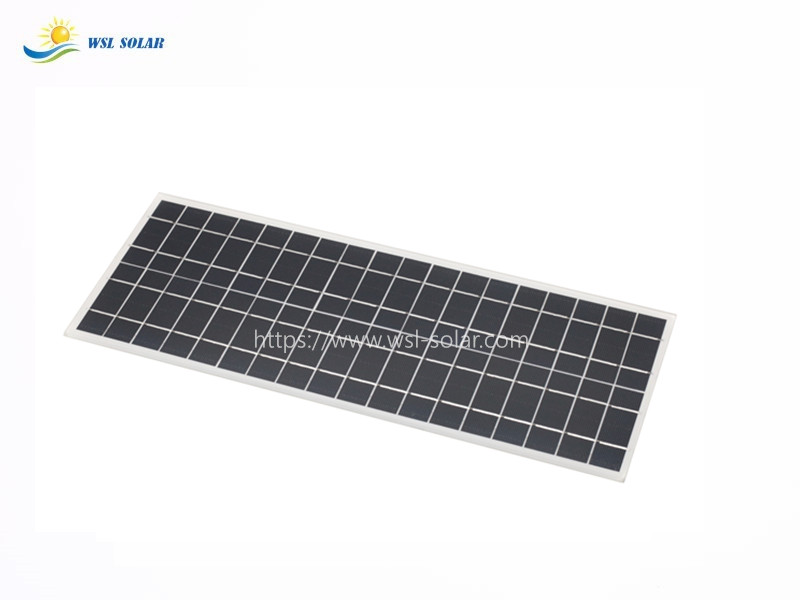
This custom solar panel utilizes high efficiency mono PERC solar cells with efficiency up to 22.5%, to ensure its high output. It is laminated by tempered glass to protect the solar cells inside, making it rigid, durable and long lasting. This rigid solar panel is waterproof, scratch resistant, and UV resistant, specially designed for long term outdoor use in any challenging condition.
Applications: Tempered glass solar panels are widely used in IoT applications, marine buoys, wireless sensors, traffic warning devise, GPS devices, asset tracking, electric fence chargers, outdoor lighting systems, weather monitoring systems etc.
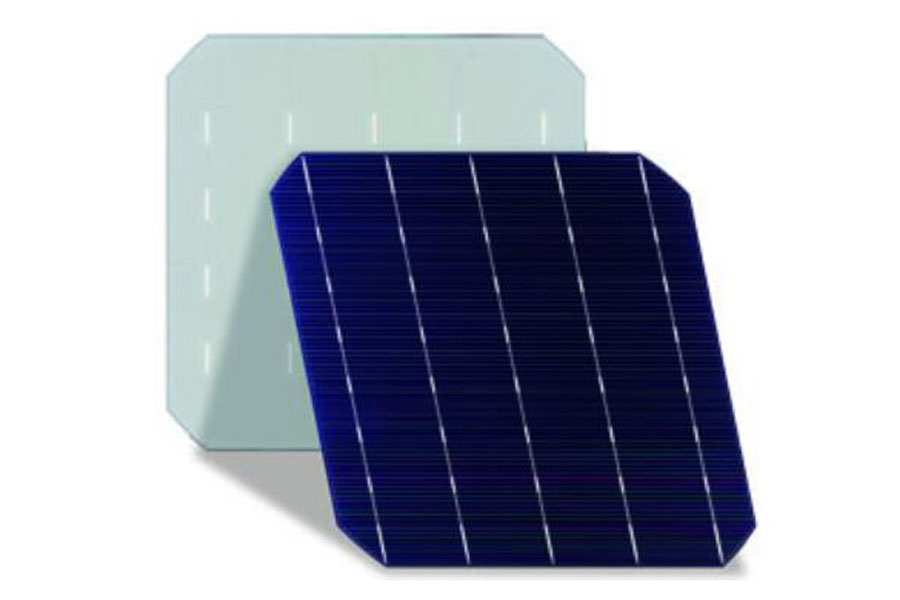
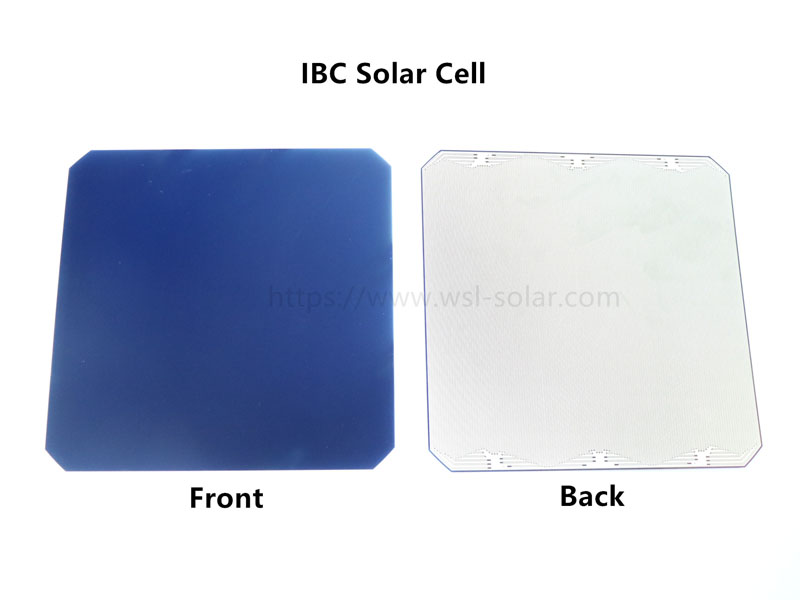
IBC (Interdigitated Back Contact) transfers all the electrode grid lines on the front side of the solar cell to the back side of the solar cell. The PN junction and metal contacts are all on the back side of the solar cell, arranged in an interdigitated manner to reduce the blocking of sunlight by the front grid lines. The light trapping structure composed of pyramid suede structure and anti-reflection layer can maximize the use of incident light. IBC solar cell mainly improves conversion efficiency through structural changes and is a relatively pure single-sided solar cell. This not only brings more effective power generation area to users, but also helps improve power generation efficiency and makes the appearance more beautiful.
Advantages and Disadvantages of IBC Solar Cells
The unique structural design of IBC solar cells gives it the following advantages: 1) There is no grid line shielding on the front of the solar cell, which can eliminate the light-shielding current loss of the metal electrode and maximize the utilization of incident photons. Compared with conventional solar cells, the short-circuit current can be increased by about 7%; 2) Both the positive and negative electrodes are on the back of the solar cell. There is no need to consider the grid line occlusion problem. The grid line ratio can be appropriately widened to reduce the series resistance and increase the fill factor FF; 3) Since the front side does not need to consider factors such as gate line shading and metal contact, the surface passivation and surface light trapping structure can be optimally designed to obtain a lower front surface recombination rate and surface reflection, thereby increasing the open circuit voltage Voc and Short circuit current Isc; 4) Beautiful appearance, especially suitable for building-integrated photovoltaic BIPV, with good commercial prospects;
At the same time, the production and manufacturing of IBC solar cells also faces many challenges: 1) It has higher requirements on the matrix material and requires a higher minority carrier lifetime. Because IBC solar cells are back junction cells, in order to prevent photogenerated carriers from being recombined as little as possible or not at all before reaching the back p-n junction, a higher minority carrier diffusion length is required. 2) IBC solar cells have higher requirements for passivation of the front surface. If the front surface recombination is high, the photogenerated carriers will be recombinated before reaching the back p-n junction area, which will significantly reduce the solar cell conversion efficiency. 3) The process is complex. The cross-shaped p-region and n-region on the back require multiple masking techniques during the production process. In order to prevent leakage, the gap area between the p-region and n-region also needs to be very precise, which undoubtedly increases the difficulty and cost of the process.
IBC Solar Panel
WSL Solar has been a quality and professional manufacturer of custom solar panels, solar mini panels, IoT solar panels and solar solution provider in China since 2006.
– Utilize high efficiency mono PERC solar cell, up to 22.5% efficiency – Laminated by tempered glass, rigid, durable and long lasting – Waterproof, scratch resistant, and UV resistant – Customized solar panels for industrial use
Description: 10Watt Solar Panel
This custom solar panel utilizes high efficiency mono PERC solar cells with efficiency up to 22.5%, to ensure its high output. It is laminated by tempered glass to protect the solar cells inside, making it rigid, durable and long lasting. This rigid solar panel is waterproof, scratch resistant, and UV resistant, specially designed for long term outdoor use in any challenging condition.
Applications: Tempered glass solar panels are widely used in IoT applications, marine buoys, wireless sensors, traffic warning devise, GPS devices, asset tracking, electric fence chargers, outdoor lighting systems, weather monitoring systems etc.
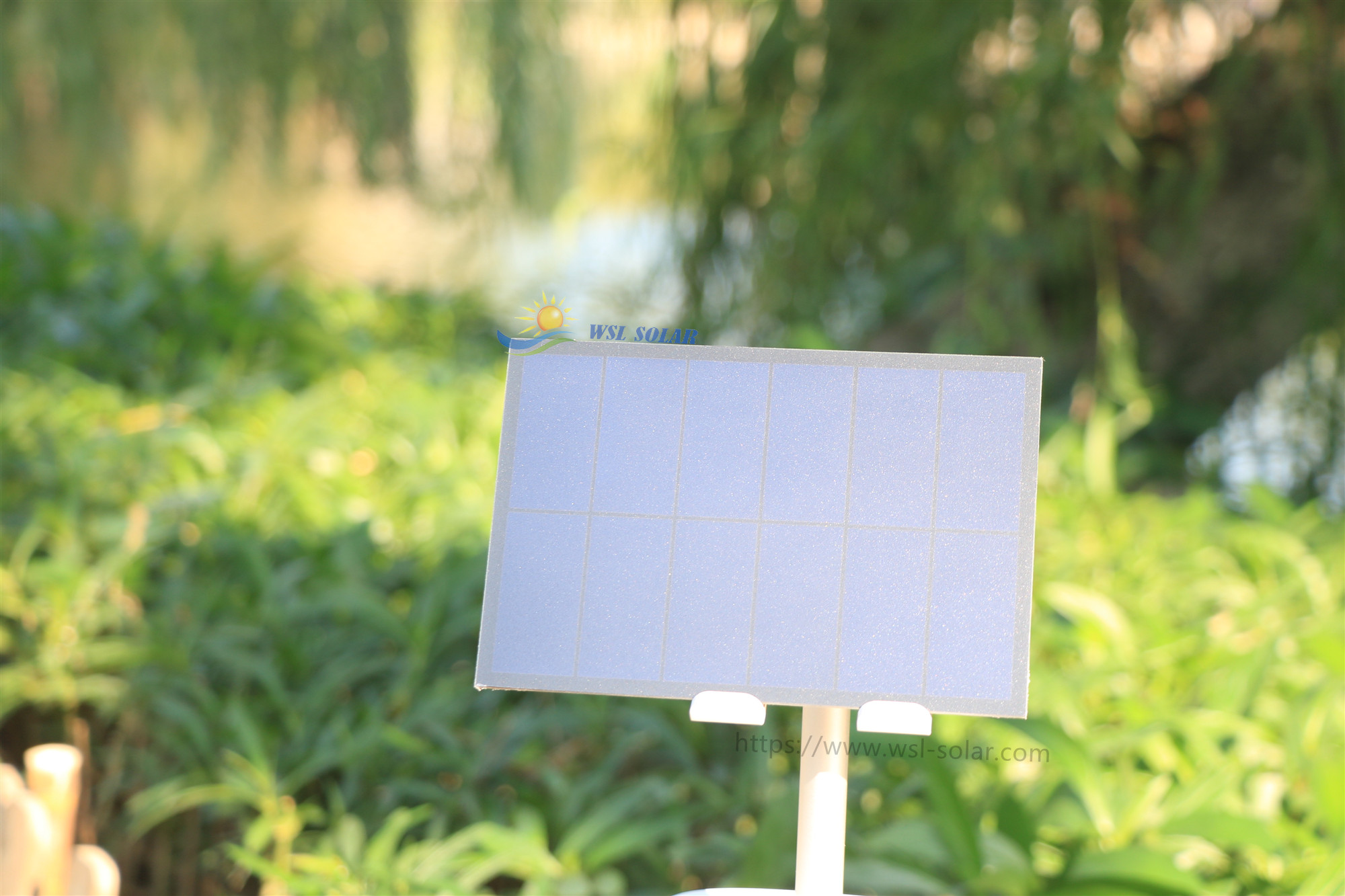
Back contact solar panels adopt back contact solar cells, the cell efficiency can reach 23%, it can generate more power than traditional solar cells within the same area. The surface of this panel is ETFE film, which makes this solar panel very thin, lightweight, and portable. The back of this solar panel is PCB board. This kind of solar panel is widely used in wireless sensors, IoT devices, LED lights and other small electronic devices.
Introduced by Carrie Wong of WSL Solar.
WSL Solar has been a professional manufacturer of high quality custom solar panels and solar solution provider in China since 2006.
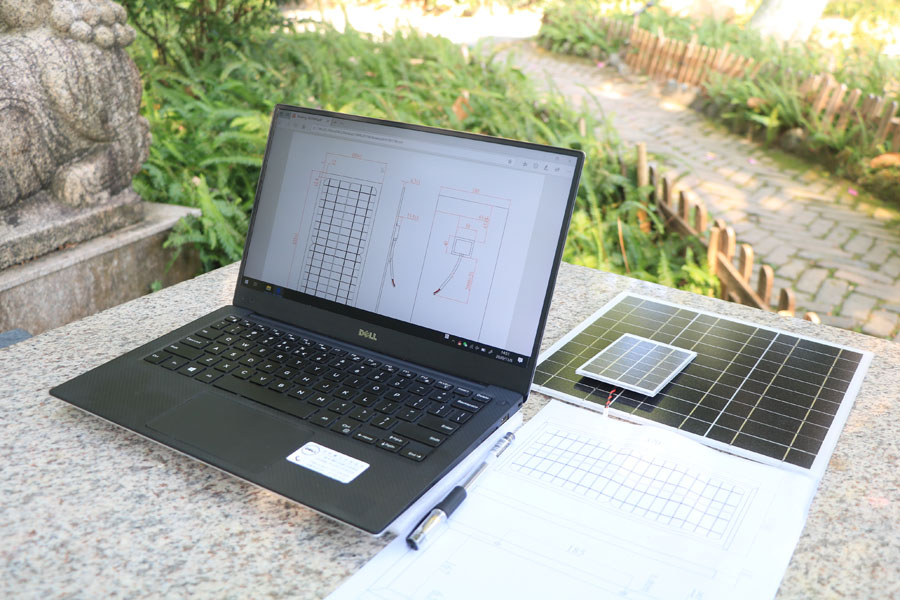
WSL Solar has been a professional manufacturer of custom solar panels and solar solution provider in China since 2006. With our in-house R&D team and management team for over 17 years’ experience in solar industry, we can design and develop customized solar panels in a variaty of sizes, shapes and outputs according to our client’s specific requirement, and provide solution support start from their initial product development stage.
Welcome to contact us for high quality customized solar panels.
WSL Solar has been a professional manufacturer of high quality custom solar panels and solar solution provider in China since 2006. With our in-house R&D team and management team for over 17 years’ experience in solar industry, we design and develop a tailor-made solar panel in a variaty of sizes, shapes and outputs to meet our client’s specific requirement, and provide solution support start from initial product development stage.
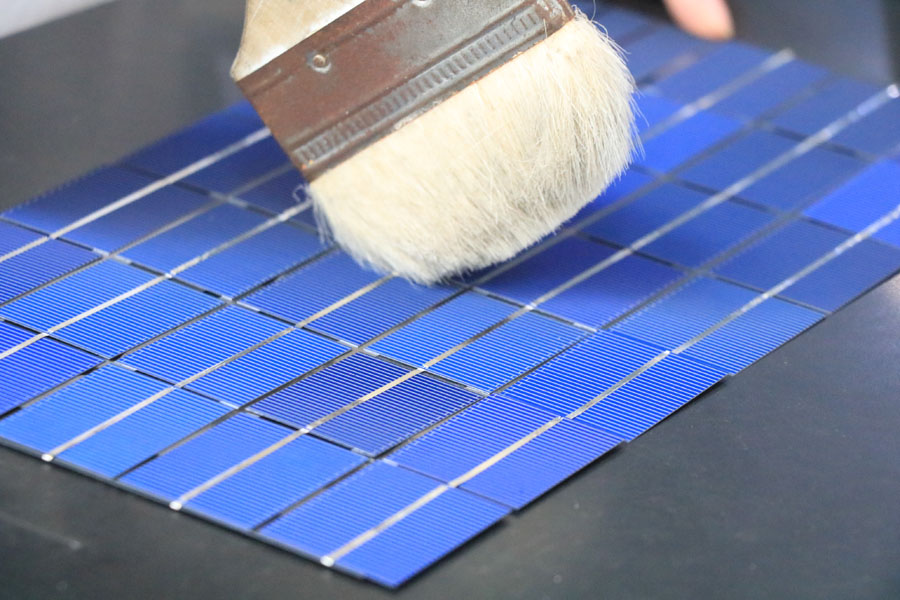
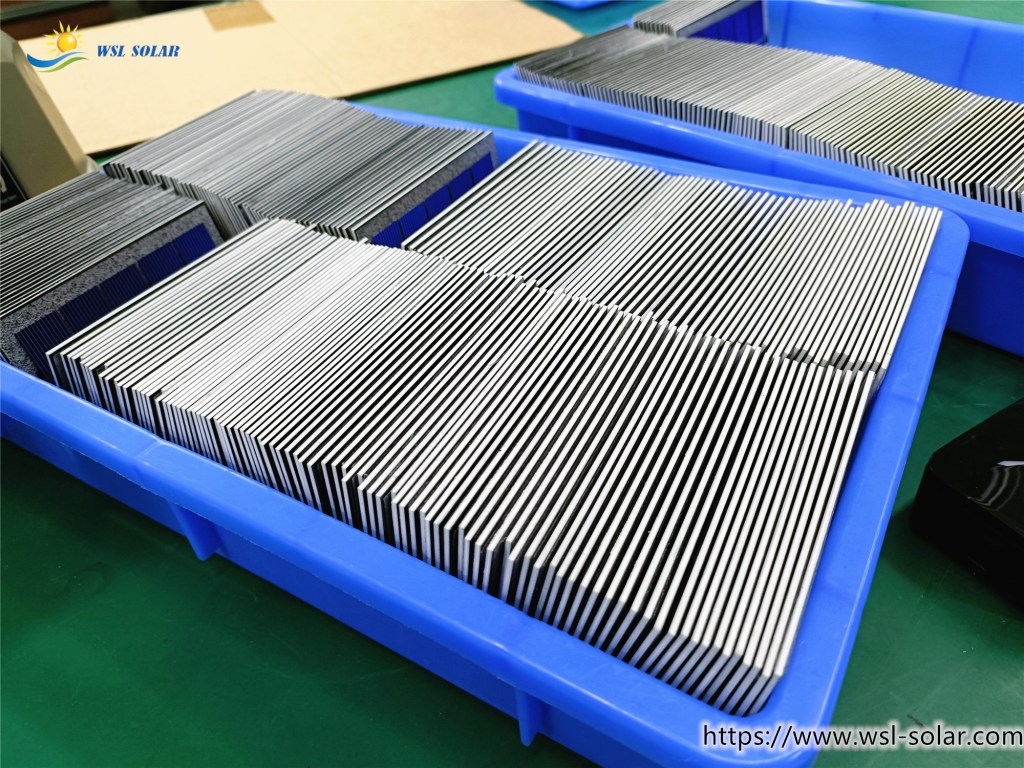
When we produce customized solar panels according to the specific needs of customers, we usually need to cut the solar cells into small pieces, and then connect the small pieces of solar cells in series or parallel as needed to form a solar cell string. Then, different numbers of solar cell strings are connected according to the required electrical performance to form a solar panel.
According to different types of solar cells and different production processes, there are usually two ways to connect solar cells.
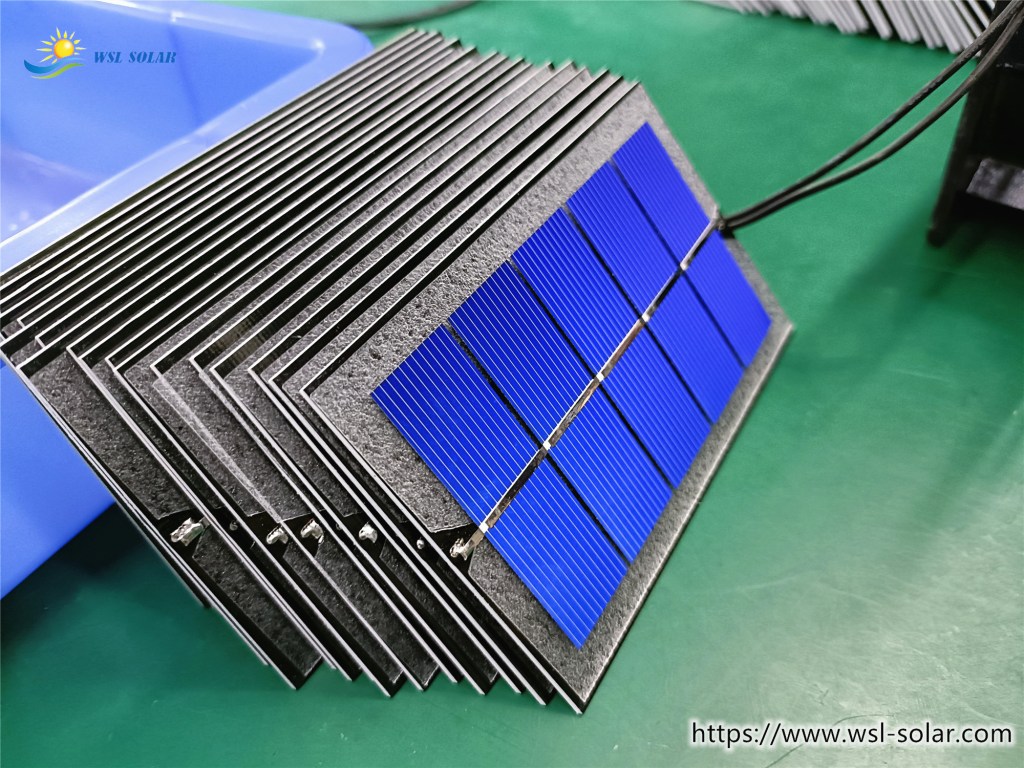
For traditional crystalline silicon solar cells, in mass production, the connection method is usually through an automatic string welding machine. The positive electrode of one solar cell is connected to the negative electrode of the adjacent solar cell with a soldering ribbon to form a solar cell string. Using a string welding machine can not only greatly improve production efficiency and save labor costs, but also ensure product consistency.
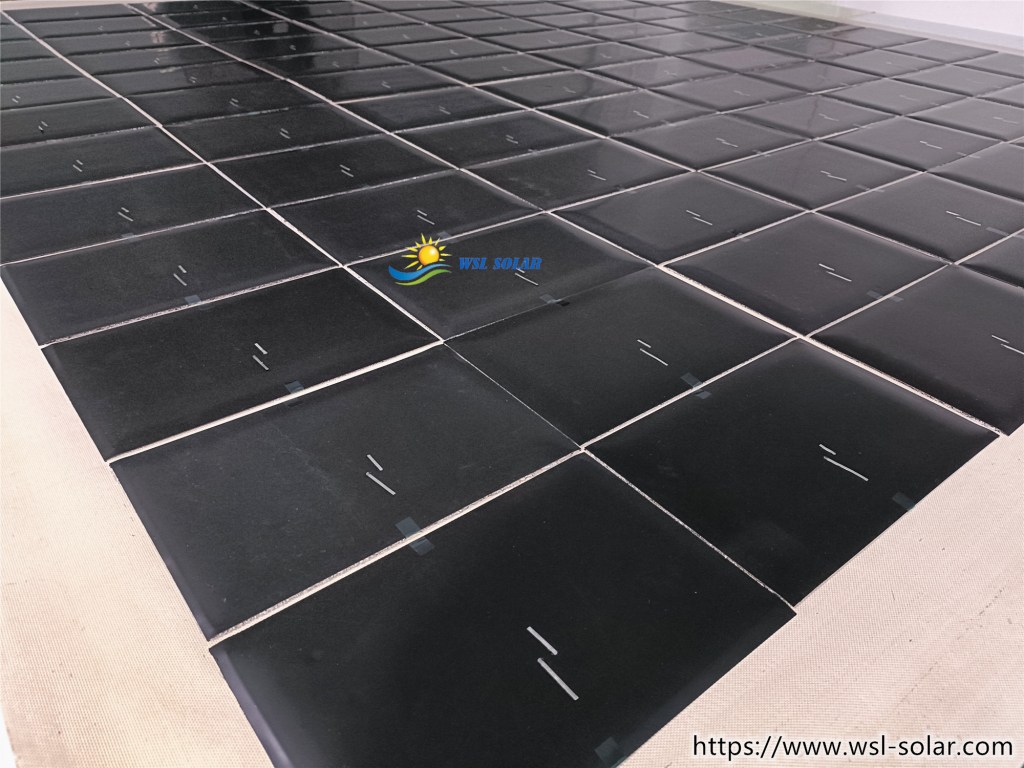
For back-contact solar cells, in mass production, the connection method is usually to attach the solar cells to the PCB board through an SMT machine in a designed way, and then solder the solar cells together through reflow soldering. Or use an automatic string welding machine to connect in series or parallel in the same way as traditional crystalline silicon solar cells.
WSL Solar has been a quality and professional manufacturer of custom solar panels, solar mini panels, IoT solar panels and solar solution provider in China since 2006. https://www.wsl-solar.com



 Custom Solar Panel